Mason Jar Snow Globe: Easy DIY Craft for Kids and Gifts
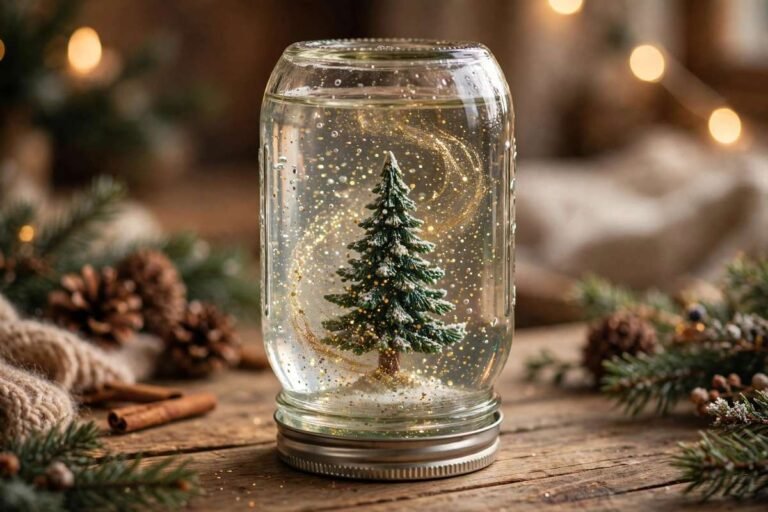
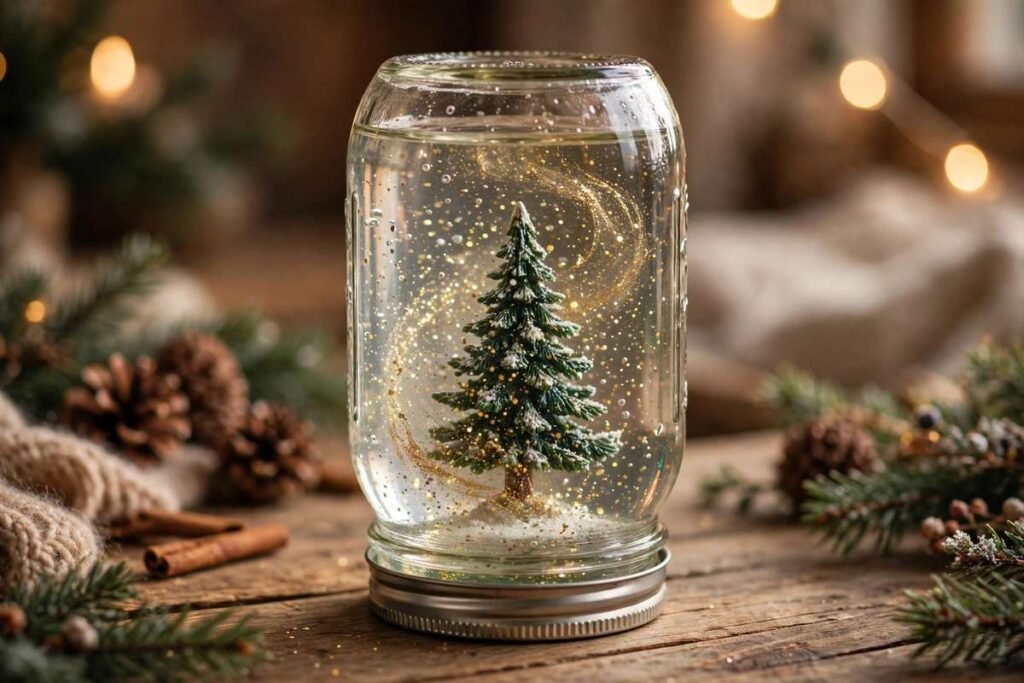
A mason jar snow globe is a holiday craft you can finish in about 25 minutes with a clean jar, one small waterproof figurine, distilled water, clear glue and glitter. The jar flips upside down and the lid becomes the base, so it’s a real globe. Most recipes call for 1 to 2 teaspoons of glitter and a jar filled almost to the top.
The glitter is the easy part.
What sinks a homemade globe is usually the glue letting go of the figurine or the lid letting water out. Both are fixable if you pick the right supplies up front.
I keep a few washed-out jars on the pantry shelf for projects like this. The jar is the one part you can’t improvise, so it’s the part worth saving.
What You Need for a Mason Jar Snow Globe
Almost everything here is already in a craft stash or the recycling bin. That’s why you’ll like this project on a tight holiday budget.
Dollar-store figurines and leftover glitter keep your cost near the price of the jar. And the jar is usually free!
In my house the glitter lives in a coffee can and the figurines live in a shoe box. That counts as a craft stash.
- Clean glass jar with a tight lid: a wide-mouth pint jar is easiest to fill and see through. Wash it well and dry it inside.
- Small waterproof figurine: a plastic ornament, mini tree, toy animal or smooth stone. It must sit flat on the lid and fit inside the jar.
- Distilled water: the kind that leaves no cloudy film. A budget bottle works fine.
- Clear glue: Elmer’s clear is the usual choice. It gets stirred into the water to slow the glitter down.
- Glitter: 1 to 2 teaspoons per globe, in a color that matches your figurine.
- Hot glue gun and sticks, or aquarium silicone: hot glue for speed, silicone for a hold that survives hard shaking.
- Optional riser: a small plastic lid or cap, upside down, raises a short figurine above the rim.
The kid-friendly split is simple. My kid picks the figurine, pours the glitter and does the shake test. You handle your glue gun, the silicone and the lid seal.
How to Make a Mason Jar Snow Globe
The build takes about 25 minutes once the supplies are out. The order matters: you’ll glue the figurine to the lid first, while the jar is still empty.
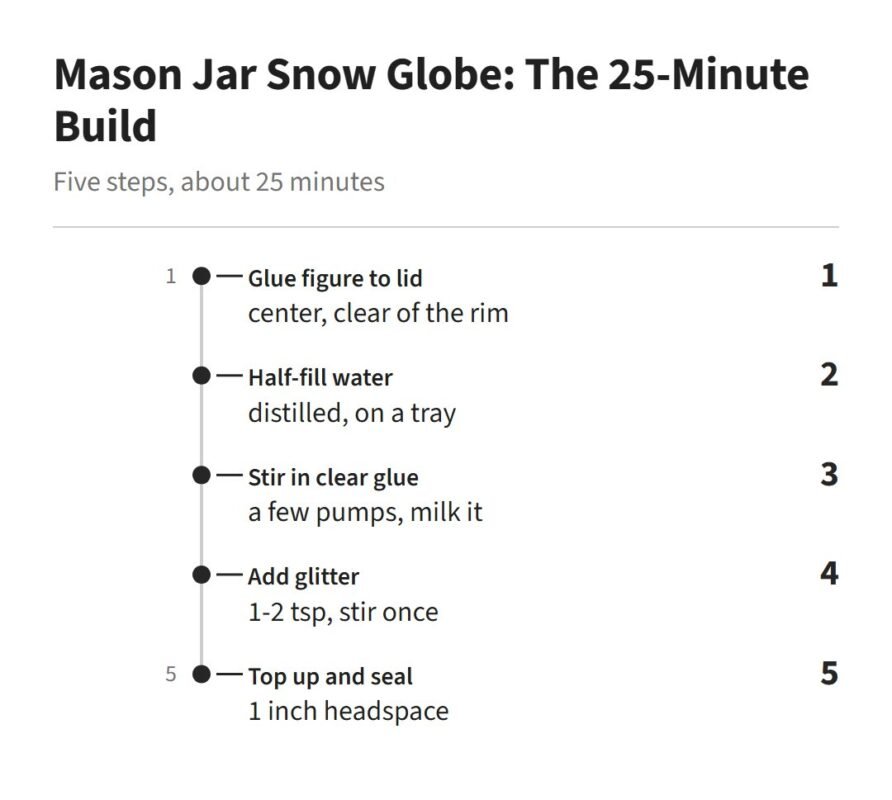
- Pick the figurine and the jar. The figure should be waterproof, meaning plastic, ceramic or a holiday ornament, and about as wide as the jar’s mouth. A mini tree, a toy deer or a smooth stone all work.
- Glue the figurine to the inside center of the lid. Use hot glue and keep it in the middle, clear of the rim, or the lid won’t screw down flat. A short figure can sit on a small plastic lid turned upside down.
- Fill the jar about halfway with distilled water. A tray under the jar catches the drips.
- Squirt in a few pumps of clear glue and stir. The water turns milky and thicker, which is what makes the glitter drift instead of drop.
- Add 1 to 2 teaspoons of glitter and stir once more. Too much glitter clumps at the bottom instead of floating.
- Top up with distilled water to about an inch below the rim. That headspace lets you shake the globe without water pushing past the lid.
- Screw the lid on tight, flip the jar and shake gently. The glitter should fall slowly past the figurine.
Two things catch people out after the build. A figurine with bendable joints can work itself loose over time, so super glue the joints before it goes in.
And always do the flip test over a sink the first time, because a lid that seeps a little is easier to fix empty than full. You’ll know it’s working when the glitter drifts instead of dropping, and it really does look like snow!
Hot Glue, Silicone or Super Glue: Pick for How Hard It Gets Shaken
For a globe a kid will shake every day, aquarium silicone is the longest-lasting hold. Hot glue is the fastest choice and fine for a display piece. Super glue is the repair for a figurine that works loose, not the first choice for the main bond.
Hot glue grabs in seconds, which is why most tutorials reach for it first. It also lets go.
A commenter on the Welcome to Nanas snow globe tutorial reported figurines coming unglued after shaking. That reader’s batch also had twist-off lids leaking when shaken and glitter clumping.
“I agree with hot glue but aquarium silicone would also be great and more flexible and last longest.”
– r/crafts (11 upvotes)
Aquarium silicone is the same stuff used to seal fish tanks, so it stays flexible underwater and holds longer than hot glue. The trade-off is patience: it needs a full cure before the globe gets shaken, and I usually make that version a day ahead so it gets its cure.
Which should you grab first? Match it to how your globe will be used. Silicone for anything a kid will shake, hot glue for a display piece on a shelf.
The lid decides the rest. Twist-off lids are the usual leak point when a globe gets shaken hard, so a regular mouth lid seals better. If your kids will be tempted to open it later, run a thin bead of glue around the rim after the water test.
Super glue has its own job. It sets rigid and fast, which makes it wrong for the main bond but perfect for re-seating a joint that keeps working loose.
What Liquid Makes the Snow Fall Slowly
Distilled water plus a few pumps of clear glue is the standard answer: the water stays clear while the glue thickens it, so glitter drifts down instead of dropping like sand. Glycerin works the same way, with an even slower fall.
Tap water works in a pinch, but the minerals leave a cloudy film and tiny floaties over time. Distilled water doesn’t leave that haze, which is why nearly every version calls for it.
What if you can’t find distilled water? Tap water that’s sat out overnight helps a little, though it never gets as clear.
Clear glue is also the no-glycerin answer: you don’t need glycerin at all. One Instructables builder reported finding glycerin at Walmart in the men’s health aisle for about $4, but clear glue does the same job for nearly every globe and washes out with plain water.
The same tutorial floats baby oil as another thickener, though its author says she hasn’t used it herself and can’t vouch for it. Treat it as a maybe, not a plan.
Whatever liquid you pick, keep your fill to about three-quarters of the jar or an inch below the rim. Leave that headspace so shaking stays inside the glass.
Ways to Change It Up
The base recipe stays the same while the scene changes completely. Swap your glitter color to match your figurine, or mix two colors for a swirled snow. Focal points beyond trees work too: a toy reindeer, a small bell, a smooth stone or a holiday ornament.
For a party or classroom, make a set. Each kid picks a different figurine in the same color family, and your globes look like a matching collection on the mantel.
A small laminated photo or printed card sealed in a tiny zip bag adds a personal touch. Plain paper isn’t going to survive; it wrinkles and swells, so keep anything paper-based sealed tight.
As gifts, these land well for teachers and grandparents because they’re personal and cost almost nothing beyond the toy. The jar comes from the recycling bin, the water and glue run a few dollars, and the glitter keeps for years. With jars and supplies already on hand, a batch of three is mostly the cost of the toys.
If your kids want more jar projects, our Mason Jar Christmas Crafts roundup has six more they can help with. The Christmas Mason Jar Ideas page covers jar decor beyond crafts. And for a jar gift that is food instead of craft, the cookie mix in a jar recipe layers up a quart jar in minutes.
Mason Jar Snow Globe FAQ
Can you make a mason jar snow globe without glycerin?
Yes. Clear glue is the usual substitute and is what most mason jar versions use. It thickens the water the same way glycerin does, washes out with plain water and it’s sold everywhere glue is.
Can I use a plastic jar instead of glass?
It works, but expect a slightly cloudy look through the plastic. A commenter on the same tutorial confirmed a plastic jar holds up fine; glass just stays clearer and shows the scene better.
Why does my glitter sink too fast?
The water is too thin. Unscrew the lid, add another squirt of clear glue or a capful of glycerin, stir, top up and test again. If the snow still races, your jar may be overfilled, so check that headspace too.
Related Posts



I love having dance parties in the kitchen with my family, traveling, and mason jar creations.
Follow on Pinterest