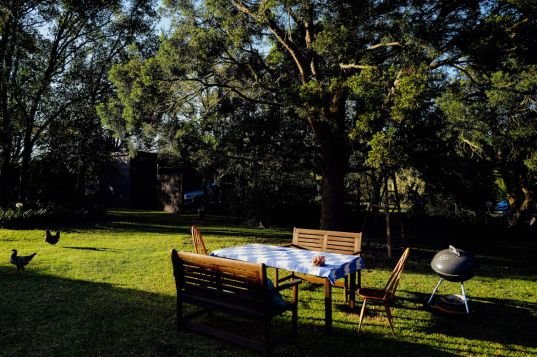
A dedicated outdoor dining area gives your backyard a clear purpose and makes everyday meals feel like a welcome change of pace. Instead of carrying plates toward a random cluster of chairs, you have a comfortable place where everyone knows to gather.
The setup can be simple: a sturdy table, enough seating and a little protection from direct sun. Once those basics are in place, the space can handle quick breakfasts, weekend lunches and relaxed family dinners without requiring an elaborate outdoor kitchen.
Shift Family Mealtime Outside
Eating outdoors creates a natural break from screens, chores and the usual indoor routine. Start with one regular meal each week, such as Saturday breakfast or Friday dinner, so the dining zone becomes part of family life.
Keep a tray near the back door for carrying plates, napkins and condiments in one trip. A lidded container can hold outdoor-only supplies such as reusable cups, placemats and serving utensils. If young children use the space, choose wipeable seat cushions and leave enough room around the table for easy movement. Even a small patio can work when benches tuck neatly beneath the tabletop after the meal.
Define the Room with a Pergola
A pergola helps an open patio feel like a true outdoor room. Its posts create visual boundaries while the overhead structure gives the dining table a strong focal point. Before choosing one, measure the table with every chair pulled out, then allow at least 36 inches of open space behind each seat.
Homeowners comparing Scandinavian-inspired outdoor structures with practical engineering details can browse hansohome.com as part of their planning. Consider where afternoon sunlight falls, how people will walk between the house and table and where rainwater should drain. A centered pendant-style outdoor light or a strand of warm bulbs can further define the dining zone after sunset.
Pick Sturdy Gathering Tables
Choose a table based on the number of people you serve most often, not the largest party you might host once a year. A rectangular six-seat table generally works well for family meals while a round table encourages conversation in a more compact area. Folding chairs can handle occasional extra guests.
Look for weather-resistant materials and solid joinery, then check the care instructions before buying. Some wood tables need seasonal sealing while powder-coated metal usually needs little more than mild soap and water. Make sure chair arms fit beneath the tabletop and test the table for wobbling. Adjustable feet are especially useful on stone patios or slightly uneven pavers.
Dress the Table with Farmhouse Accents
Farmhouse style suits outdoor dining because its textures feel relaxed and useful. Try a washable striped runner, woven placemats and a low centerpiece in a mason jar or small pitcher. Herbs such as rosemary, basil and mint add color without blocking anyone’s view across the table.
Limit the palette to two or three colors so the arrangement doesn’t feel busy. Cream dishes, blue napkins and natural wood make an easy combination. For breakfast, set out fruit in a shallow bowl and serve jam in small jars. Store fabric pieces indoors between meals since constant sun exposure can fade them. Battery-operated candles add a soft glow without dripping wax onto the tabletop.
Extend the Season into Cooler Months
Cool weather doesn’t have to close the dining zone. Add washable seat pads, keep a basket of lightweight blankets near the door and serve food in covered dishes that hold warmth. Outdoor-rated lighting also makes early sunsets feel less abrupt.
Follow basic outdoor food safety guidance from USDA.gov even when temperatures drop. Return perishable dishes to the refrigerator promptly and use an insulated carrier when food will sit outside before serving. On crisp evenings, bring out mugs of soup or hot cider and place warm bread in a lined basket. Those small comforts can turn an ordinary weeknight meal into the reason everyone lingers at the table.
Related Posts




I love having dance parties in the kitchen with my family, traveling, and mason jar creations.
Follow on Pinterest