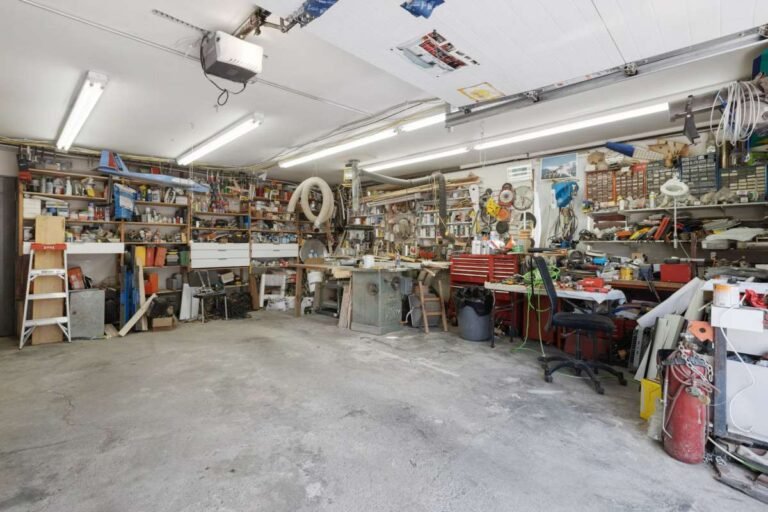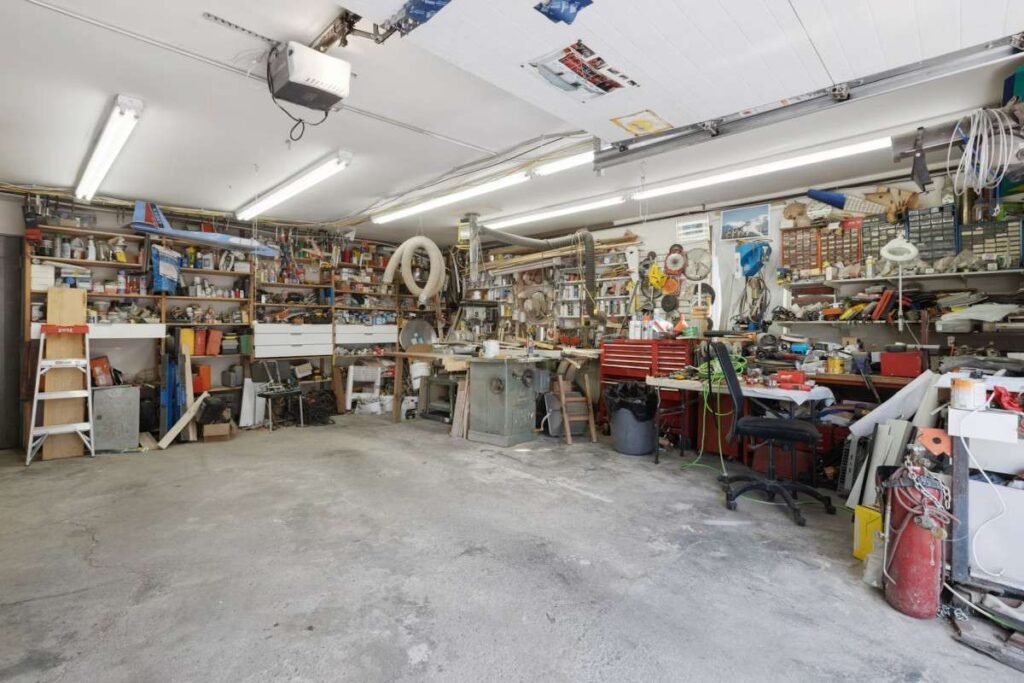
An underused garage can become a practical workshop for woodworking, repairs and creative projects without requiring a full renovation. The key is to give every tool a logical home while keeping the floor clear and the main work area comfortable. Start with the storage problems that cause the most frustration, then build the workshop around the projects you plan to complete most often.
Declutter and Group Essential Supplies
Empty shelves and cabinets so you can see what has collected over time. Sort everything into clear groups such as hand tools, power tools, painting supplies and project materials. Dispose of dried products, recycle empty containers and donate usable duplicates.
Keep frequently used items near the planned workbench. Seasonal equipment can go on higher shelves or in less accessible corners. This is also a good time to arrange garage door maintenance if the door hesitates, makes unusual sounds or has visible wear. Addressing access issues before installing permanent storage helps protect your new layout from disruption. For more ideas, these garage storage solutions cover cabinets, shelving and overhead options.
Maximize Wall Space with Pegboards
Pegboard turns an empty wall into flexible storage while keeping tools visible. Install a panel above the workbench for items you reach for regularly, such as measuring tapes, clamps, brushes and safety glasses. Leave space between tool groups so you can remove one item without knocking down several others.
A framed panel creates a small gap behind the board, giving hooks room to fit securely. This DIY pegboard storage wall offers useful inspiration for arranging tools and adding small bins. Trace around larger tools or label their positions if several people use the workshop. Empty spots will then show exactly what hasn’t been put away.
Ensure Smooth and Quiet Access
A creative workshop still needs a clear route from the house to the garage opening. Mark this path before placing benches, rolling carts or supply bins. A walkway about three feet wide gives you enough room to carry boards and storage boxes without catching corners.
Check that shelves, hanging cords and stacked materials stay clear of moving door components. Store lightweight items near the access area and place heavier supplies against stable walls at floor level. If the door shakes, closes unevenly or produces new scraping sounds, stop using it until a qualified technician can inspect it. Never attempt to adjust high-tension components yourself. A reliable entrance makes it easier to move projects in and out without disturbing your setup.
Set Up Task Lighting and Workbenches
Place the main workbench where natural light is useful but won’t cast your body’s shadow across the project. Add an adjustable task lamp above the bench and bright overhead fixtures for general visibility. Bulbs with a color temperature near 4000K provide a neutral light that works well for measuring, assembly and color matching.
Choose a bench height that suits your work. Around 34 to 36 inches is comfortable for many standing tasks, though detailed crafts may call for a seated surface. Include a sturdy lower shelf for heavier tools and add a power strip where cords won’t cross the floor. If you’re deciding what deserves bench space, this guide to essential workshop power tools offers a practical starting point.
Incorporate Upcycled Storage Containers
Every workshop needs containers for small pieces that disappear easily. Clean glass jars work well for screws, washers, buttons and other supplies because their contents remain visible. Mounting jar lids beneath a wooden shelf can free up drawer space, provided the shelf is sturdy and the jars are light enough to handle safely.
Food tins, shoe boxes and clean plastic tubs can also become useful organizers. Smooth any sharp edges, add large labels and group related containers inside trays. A divided muffin tin is handy for sorting small parts during a project, while an old cutlery tray can organize pencils, rulers and brushes inside a drawer. Consistent labels help you reset the workshop quickly once a project is finished.
Leave one small section of the workbench completely empty. That clear surface gives you a dependable place to sketch an idea, repair a household item or begin a new project without first moving yesterday’s clutter.
Related Posts





I love having dance parties in the kitchen with my family, traveling, and mason jar creations.
Follow on Pinterest