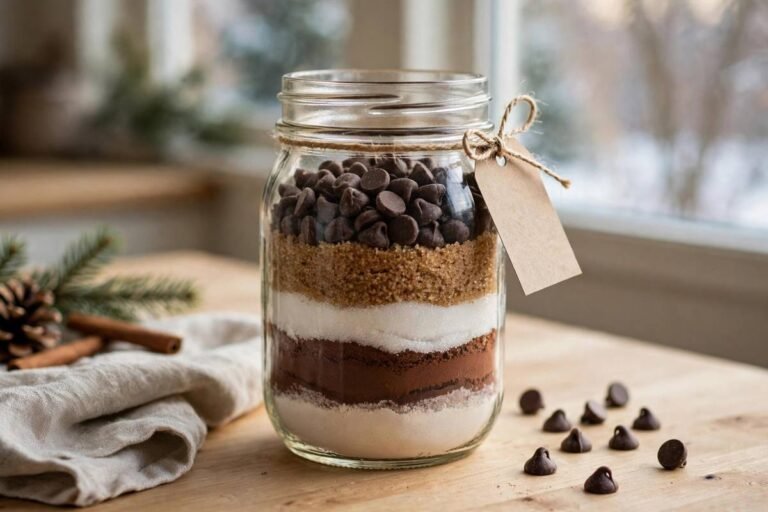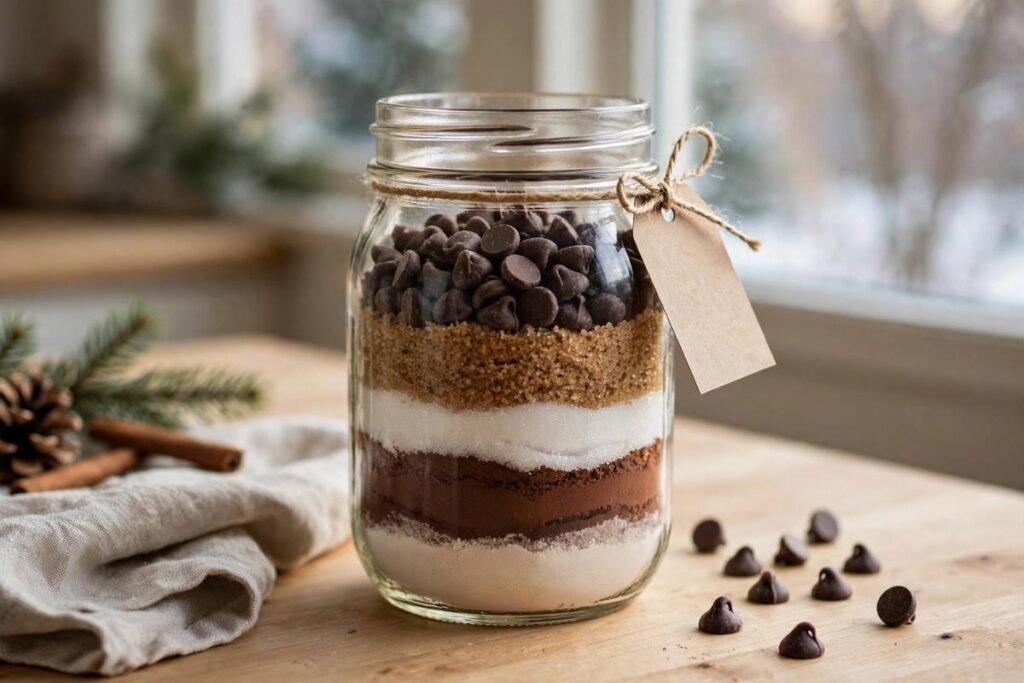
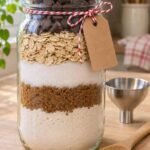
Brownie mix in a jar is 1 cup of flour, 2/3 cup of cocoa, 1 1/3 cups of sugar and 1/2 cup of chocolate chips, layered in a quart jar.
The person who gets it adds 2 eggs, 1/2 cup of oil and 1 tsp of vanilla, then bakes it in an 8-inch pan for 25 to 30 minutes. Nine fudgy squares come out, and the jar goes back into the cupboard for flour or rice.
I fill a row of these every December for the teachers, the mail carrier and the neighbor who feeds our cat. A jar takes about five minutes once the bags are open, and the layers do their own decorating. You don’t need wrapping paper or a gift bag.
The Ratio That Fits a Quart
Roughly 3.5 cups of dry goods is what a quart jar holds once everything settles, and that really is the ceiling! Go heavier and you’ll be pressing chips against the lid. Go lighter and the jar looks picked over.
- Jar: 1 quart wide-mouth, 32 oz, washed and bone dry
- Flour layer: 1 cup all-purpose flour, 1/2 tsp salt, 1/4 tsp baking powder
- Cocoa layer: 2/3 cup unsweetened cocoa powder
- Sugar layers: 2/3 cup granulated, 2/3 cup packed brown
- Top: 1/2 cup semisweet chocolate chips
- Wet, for the tag: 2 eggs, 1/2 cup vegetable oil, 1 tsp vanilla
- Bake: 350F, 8×8 pan, 25 to 30 minutes
- Yield: 9 squares
Every layer has a job. Flour with the salt and baking powder gives the brownies their structure and their lift.
Cocoa carries the chocolate flavor and most of the color. Brown sugar keeps the crumb chewy and moist, while the white sugar helps that thin crackly top form. Chips stay whole in the oven, so you get pockets instead of a solid block of chocolate.
The sugar total is the part to watch. A jar holds 1 1/3 cups of sugar before the layers stop fitting around it, and that is already a sweet brownie. If you add more, you’ll be pressing the chips into the lid and the jar will look crowded.
Cocoa choice changes the jar more than you’d expect. Natural cocoa is sharper and lighter in color, while Dutch-process cocoa is darker, milder and less acidic.
Either one works here because the baking powder brings its own lift, but Dutch-process gives you deeper brown stripes and a rounder chocolate taste. Does it have to be unsweetened cocoa? Yes, every time: sweetened drinking cocoa already carries sugar and milk powder, and it turns the bake gummy.
Nothing wet goes into the jar. Butter, eggs and vanilla all have to stay out, or you’ve made a science experiment instead of a gift. The tag carries the wet list. That’s what keeps the jar shelf-stable for months.
The pan arithmetic is simple. One jar fills one 8×8 pan, cut three by three for nine squares. Two jars and a 9×13 pan give you eighteen, which is the version I make when the list runs long.
Brownie Mix in a Jar, Layer by Layer
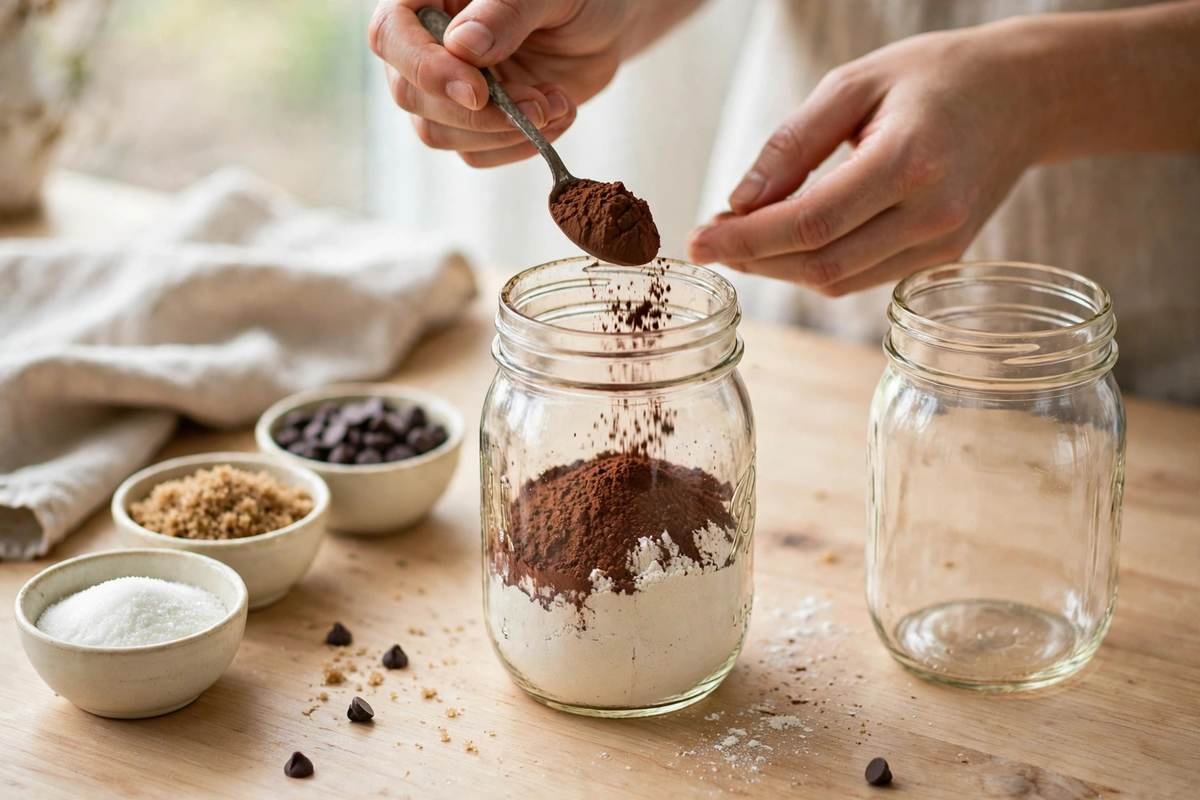
Whisk the flour, salt and baking powder in a bowl before anything goes into the jar. A quarter teaspoon of baking powder dropped in as a lump won’t distribute itself later, and the flour needs to be loose, not packed.
Then layer from the bottom up: flour, granulated sugar, cocoa, brown sugar, chips. What if you’d rather start with the cocoa? It’ll look fine on day one and muddy by week two, because there’s nothing heavy above it to keep it in place.
The cocoa sits between the two sugars for a reason. It’s the finest powder in the jar, and fine powder works its way down through the gaps in everything else.
Put cocoa straight on top of flour and the layers start to blur within a week of riding around in a gift bag. Sugar crystals are coarser, so they act as a buffer on both sides.
Use a spoon to add each layer, not the measuring cup itself. Tap the jar on the counter between layers, then stop 1/2 inch below the rim and press the chips down gently with the back of the spoon.
Spoon, tap, repeat.
This is the step a kid can do. Mine spoon the sugars while I handle the cocoa, which manages to cloud up the whole counter.
A finished jar should show five clean stripes through the glass: white, white, dark brown, tan, then chips. It’s the same five-band look as my cookie mix in a jar, with cocoa standing in for the chips.
If your cocoa has already dusted the flour by the time the lid goes on, you poured too fast or skipped the tap between layers.
Write the date on the lid before you fill anything. A permanent marker on clean glass takes two seconds, and it’s the only way you’ll know which jar is oldest in February.
Only have narrow-mouth jars on hand? A funnel works for the sugar and flour, but you’ll still want a spoon for the cocoa.
What the Tag Has to Say
A jar with no tag is a jar of powder. Five lines cover the bake: wet ingredients, pan size, oven temperature, bake time, and what the toothpick should look like when it’s done.
The sixth line is the one most jars skip. Same dry mix, two different brownies, and the tag tells the recipient which one they’re getting.
Brownie Mix in a Jar. Add 2 eggs, 1/2 cup vegetable oil and 1 tsp vanilla. Stir until just combined. Spread in a greased 8×8 pan. Bake at 350F for 25 to 30 minutes, until a toothpick comes out with moist crumbs. Cool before cutting. For cakey brownies, use 3 eggs and 1/2 cup melted butter instead.
Five lines, one card. That’s the whole instruction set.
Oil keeps the crumb soft because it stays liquid as the brownies cool. Butter firms back up, and the extra egg adds structure, so the butter version bakes taller and tastes more like a chocolate cake.
Neither is the wrong choice. They’re different desserts from the same jar, and the circle on the card settles which one you meant.
A pinch of flaky salt scattered over the batter before it goes into the oven is the cheapest upgrade in the whole recipe. It cuts the sweetness and makes the chocolate taste darker. Write that on the tag too, or the recipient will never think of it.
The tag itself can be a 3×5 index card, a hole punch and a length of twine. That’s the whole job! Print nothing if you’d rather not. Handwriting makes it look like a person made it, which is the whole point of a jar gift.
Circle the finish you mean before you tie the card on. A circle around “fudgy” or “cakey” settles the argument at the counter, and it stops the recipient from guessing which set of wet ingredients you had in mind.
Keep the bake time honest for the pan you name. A 9×13 pan needs closer to 20 minutes, and a loaf pan needs longer. If you’re giving two jars to the same household, write the pan size on each card.
Scratch Jar or Boxed Mix in a Jar?
Boxed mix in a jar is a real option, and it’s the one I reach for when the list gets past a dozen. A standard 18- to 20-ounce box plus 1/2 cup of chips fills a quart jar, and the tag says to follow the box and add the chips.
The tradeoff is honest. Boxed mix is consistent and cheap, and it comes with an ingredient label you can hand to a parent.
Scratch tastes more like chocolate and less like sugar, and you control how much of each. For a school staff room, boxed wins on speed. For four jars going to people who will notice, scratch wins on flavor.
If you go the boxed route, three tweaks earn the upgrade. Swap the water for brewed coffee, swap the oil for browned butter, and finish with flaky salt.
“I use the Ghiradelli mix, bought in bulk from Costco. Replace the water with coffee. Replace the oil with a stick (yes a stick) of browned butter. Add a bit of vanilla and almond extracts. Generously dust the top with sea salt. People go feral over these every time and no one has guessed that it’s a mix.”
– r/foodhacks, December 2025 (309 upvotes)
Write those three tweaks on the boxed jar’s tag as well. A box of mix with a note about coffee and browned butter makes a better gift than a bare box, and it costs you nothing extra!
Coffee sounds odd in brownies until you taste it! It doesn’t read as coffee, it reads as more chocolate, and the same trick works in the scratch jar if the recipient has a little cold coffee left in the pot.
Batching boxed jars is fast. Open six boxes at once, dump each into a bowl, add 1/2 cup of chips per jar and funnel it in. You can fill a dozen while the kettle boils, which is not true of the scratch version.
If you’d rather make a jar that gets poured straight into hot milk, my hot cocoa mix takes the same five minutes. The scratch route gets cheaper per jar once you’re past four or five, because flour, sugar and cocoa go further than boxes do. That’s the trade: your time on the front end, better brownies on the other end.
Before It Goes in the Gift Bag
How long does brownie mix in a jar keep?
The dry mix holds for several months in a cool, dark cupboard. Cocoa fades first, so date the lid and use the oldest jar first.
Don’t panic over white streaks on the chips. That’s cocoa butter blooming, not mold, and it melts back in the oven. Chips that smell like crayons have gone off, and no amount of baking brings them back.
Can you bake brownies in the jar?
No. The jar is the package, not the pan. Dry mix alone in a quart jar will scorch at the edges before the middle sets, and the glass takes a hard hit from a hot oven.
Tip the mix into an 8×8 pan, add the wet ingredients, and bake it there. If you want the gift to arrive baked, make the brownies at home, cool them, and wrap the squares.
What if someone has a nut or gluten allergy?
Flour is wheat, and chocolate chips often carry milk and soy, so copy the labels onto the tag or photograph them. Leave nuts out unless you know the kitchen. A jar is a small gift, and a reaction is a large problem.
Related Posts



I love having dance parties in the kitchen with my family, traveling, and mason jar creations.
Follow on Pinterest