How to Plan a Safer, Easier-to-Clean Bathroom in Concord, California
Key Takeaways
- Begin with the daily frustrations that make your bathroom harder to use or maintain.
- Address leaks, ventilation, waterproofing, lighting, and access before selecting decorative finishes.
- Choose wet-area materials and storage layouts that simplify routine cleaning.
- Plan for present needs while leaving room for children, guests, injuries, and changing mobility.
- Compare detailed remodeling estimates so important work is not left out of the budget.
A bathroom remodel can make a Concord home more comfortable without turning the room into a clinical-looking space. Whether the concern is a slippery floor, a high tub wall, stubborn grout, weak lighting, or crowded counters, the most successful projects start with how the room is actually used every day.
For homeowners weighing replacement tubs, shower conversions, or accessibility upgrades, Concord bathroom remodeling contractors at Rose Remodeling offer local bathtub remodeling options, including replacement tubs, walk-in tubs, and shower-to-tub conversions. Rose Remodeling is a family-owned company with more than 25 years of industry experience, serving Concord and surrounding Bay Area communities, as well as Sacramento and San Joaquin County. That practical focus on bathing-space updates makes it useful to discuss fixture access, easier-care wall surrounds, and layouts that match a household’s needs.
1. Start With the Bathroom’s Daily Problems
Before choosing tile color or hardware, write down three problems that happen repeatedly. A tall tub wall, poor mirror lighting, water that collects near the shower, limited vanity space, and mildew-prone caulk are all design clues. A short list helps separate must-have improvements from finishes that can wait.
2. Check for Water Damage Before Choosing Finishes
Soft flooring, loose tile, peeling paint, ceiling stains below a bathroom, musty odors, and recurring failed caulk can point to moisture issues. A new surface will not correct a leak, damaged subfloor, weak framing, or failed waterproofing behind it. Have a qualified professional investigate suspected plumbing, electrical, framing, or waterproofing problems before they are concealed.
3. Plan Safer Shower and Tub Access
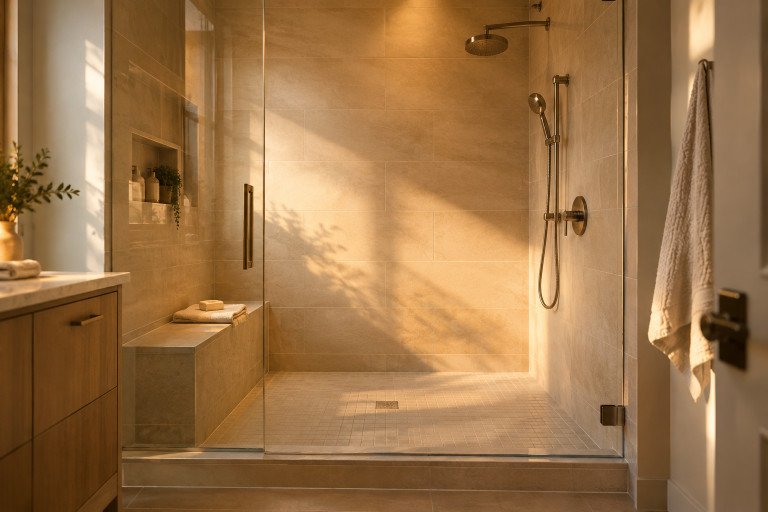
There is no universally best bathing fixture. A standard tub can suit young children and people who enjoy soaking. A low-threshold shower can reduce the step into the bathing area, while a walk-in tub offers seated bathing and a low-entry door. Barrier-free shower designs may be appropriate when a level transition is a priority.
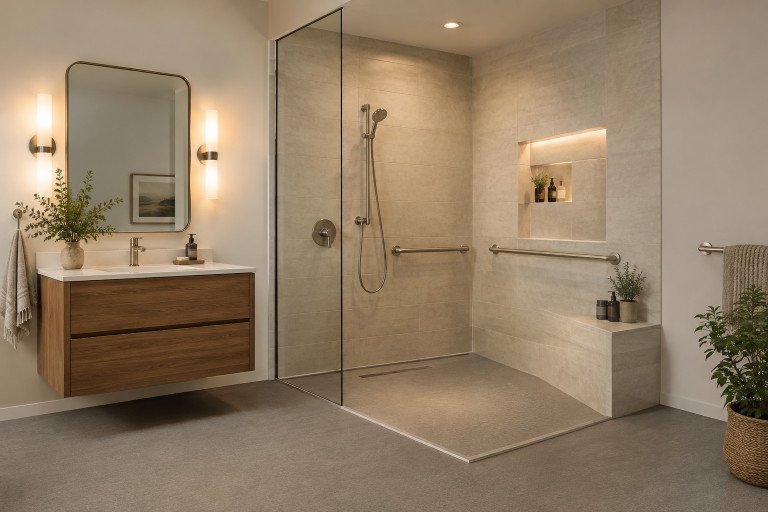
Useful features include a handheld showerhead, a built-in or fold-down seat, reachable controls, and properly installed grab bars. If grab bars may be needed now or later, plan wall reinforcement before the walls are closed. HomeFit guidance for safer living can help households think through changes that support comfort at different ages.
4. Choose Flooring for Wet Conditions
Highly polished flooring can be difficult to navigate when wet. Textured porcelain, matte-finish tile, and smaller tile formats can provide more visual and physical grip than a glossy uninterrupted surface. Ask how grout, transitions, sealers, and cleaning products will affect the floor over time. The floor should also be installed so water is directed toward the drain rather than allowed to migrate into adjacent materials.
5. Select Materials That Reduce Cleaning Work
Low-maintenance does not mean maintenance-free, but fewer seams and grout lines can mean fewer places for soap residue and moisture to collect. Large-format tile, solid-surface wall panels, and quartz vanity tops can simplify cleaning. Natural stone can be attractive but may require more specific care.
Is the surface nonporous, or does it need periodic sealing?
Which cleaners are safe to use?
Can a damaged section be repaired or replaced?
How will the material perform with daily water exposure?
6. Improve Ventilation and Moisture Control
Concord’s seasonal weather changes make moisture management worth planning year-round. Confirm that the bathroom fan exhausts outdoors, not into an attic or wall cavity, and use it during bathing and afterward as appropriate. The EPA’s bathroom remodeling guidance also emphasizes correcting leaks, managing moisture, and venting bathroom air directly outside. Ventilation works best alongside sound waterproofing, intact caulk, and water-resistant wall construction.
7. Use Layered Lighting for Better Visibility
One ceiling light often creates shadows at the mirror and inside the shower. Combine general lighting with vanity task lights, wet-location-rated shower lighting where needed, and soft night lighting for after-dark use. Clear contrast between the floor, walls, fixtures, and hardware can make changes in level, puddles, and clutter easier to notice.
8. Create Storage That Keeps Walkways Clear
Storage is a safety and cleaning decision, not just a style choice. Recessed shower niches, medicine cabinets, vanity drawers, and wall-mounted cabinets can reduce counter clutter. Keep everyday toiletries and towels between knee and shoulder height when possible, and store cleaning products close enough to use without obstructing the path through the room.
9. Keep Safety Features Attractive
Accessible details can blend into a modern design. Coordinated grab bars, lever handles, integrated seating, clean-lined storage, warm lighting, and streamlined wall panels can look intentional rather than institutional. These features can help people recovering from injuries, visitors, children, and older household members alike.
10. Plan the Remodeling Budget in Layers
Divide the budget into essential repairs, helpful upgrades, and wish-list features. A complete estimate should identify demolition, disposal, plumbing, electrical work, waterproofing, ventilation, permits, inspections, cleanup, and allowances for hidden repairs. Compare scope, exclusions, warranties, and change-order procedures, not only the bottom-line price.
11. Choose a Remodeling Partner With Relevant Experience
A bathroom project may involve water lines, drains, electrical circuits, ventilation, waterproofing, and finish installation in one small space. Ask prospective contractors about licensing, insurance, references, permit responsibilities, written warranties, project scheduling, and how they will protect and clean the home during construction.
12. Follow a Clear Remodeling Process
List daily problems and set goals for safety, cleaning, storage, and style.
Inspect the plumbing, wiring, ventilation, walls, and floor before finalizing finishes.
Review layout options and fixture locations before materials are ordered.
Confirm the written scope, permits, timing, cleanup, and warranty coverage.
Complete a final walkthrough and test drains, doors, lighting, and support features.
13. Common Questions About Safer Bathroom Remodeling
Is a walk-in shower always better than a bathtub?
No. The better choice depends on bathing habits, household members, room size, accessibility goals, and future plans. A tub can remain valuable for families with young children or households that prefer soaking.
Can a small bathroom be made easier to use?
Yes. A better door swing, compact fixtures, brighter lighting, wall-mounted storage, clear pathways, and a simpler shower layout can make a small room feel more functional.
Do low-maintenance materials eliminate cleaning?
No. They can reduce scrubbing and sealing requirements, but regular cleaning, ventilation, and leak checks are still important.
What should a bathroom remodeling estimate include?
It should clearly identify labor, materials, demolition, disposal, plumbing, electrical work, waterproofing, ventilation, permits, inspections, cleanup, and potential repair allowances.
14. Build Around Real-Life Use
The best bathroom remodels solve everyday problems before they focus on decoration. By improving access, managing moisture, choosing practical surfaces, adding useful storage, and planning the budget carefully, Concord homeowners can create a bathroom that is safer, easier to maintain, and more comfortable for years to come.
Related Posts





I love having dance parties in the kitchen with my family, traveling, and mason jar creations.
Follow on Pinterest