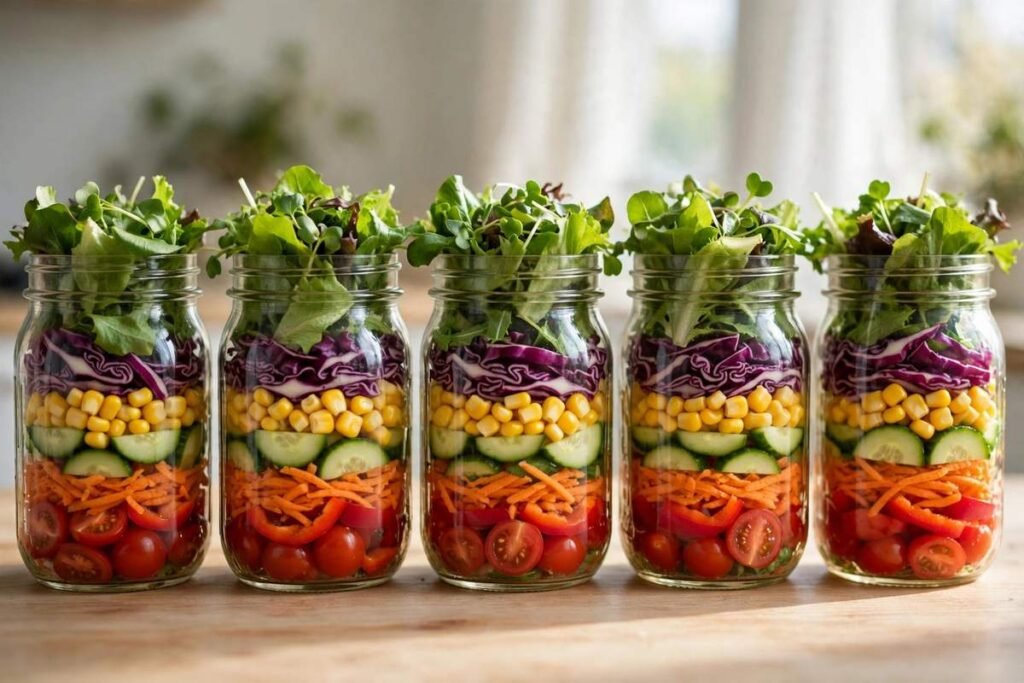
Sunday nights in my house are loud. Between homework and bedtime, I used to pack Monday’s lunch in a rush, and the greens always went in last, right on top of the dressing. That’s exactly backwards. Most mason jar salad recipes work because of one thing: the order you pack the jar.
Dressing at the bottom, dry greens at the top, and everything else layered between, and a jar holds a crisp salad for 3 to 5 days in the fridge. I pack mine in a wide-mouth quart jar, and I haven’t thrown out a soggy lunch since I started stacking it right. Ever opened a wilted jar at work and wondered what’s going wrong? Here’s how you’ll fix it for good.
The Order That Keeps a Salad Jar Crisp
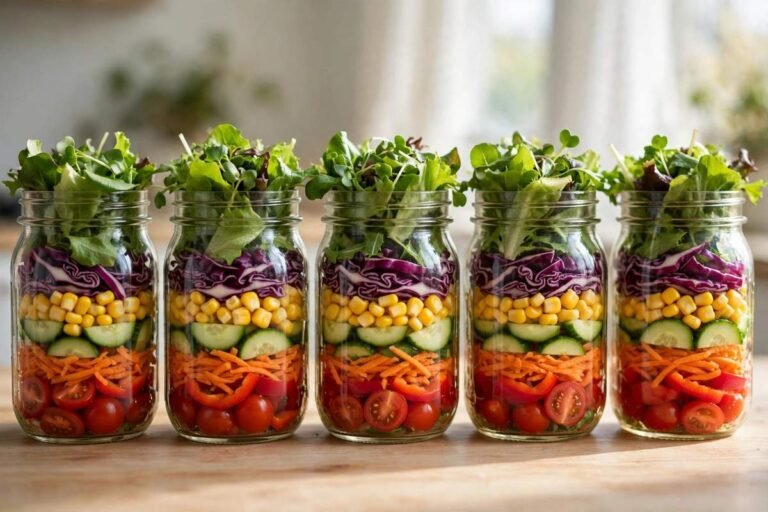
The order is the whole recipe. Pack from wettest and heaviest at the bottom to driest and lightest at the top, and the dressing doesn’t touch the greens until you dump the jar into a bowl.
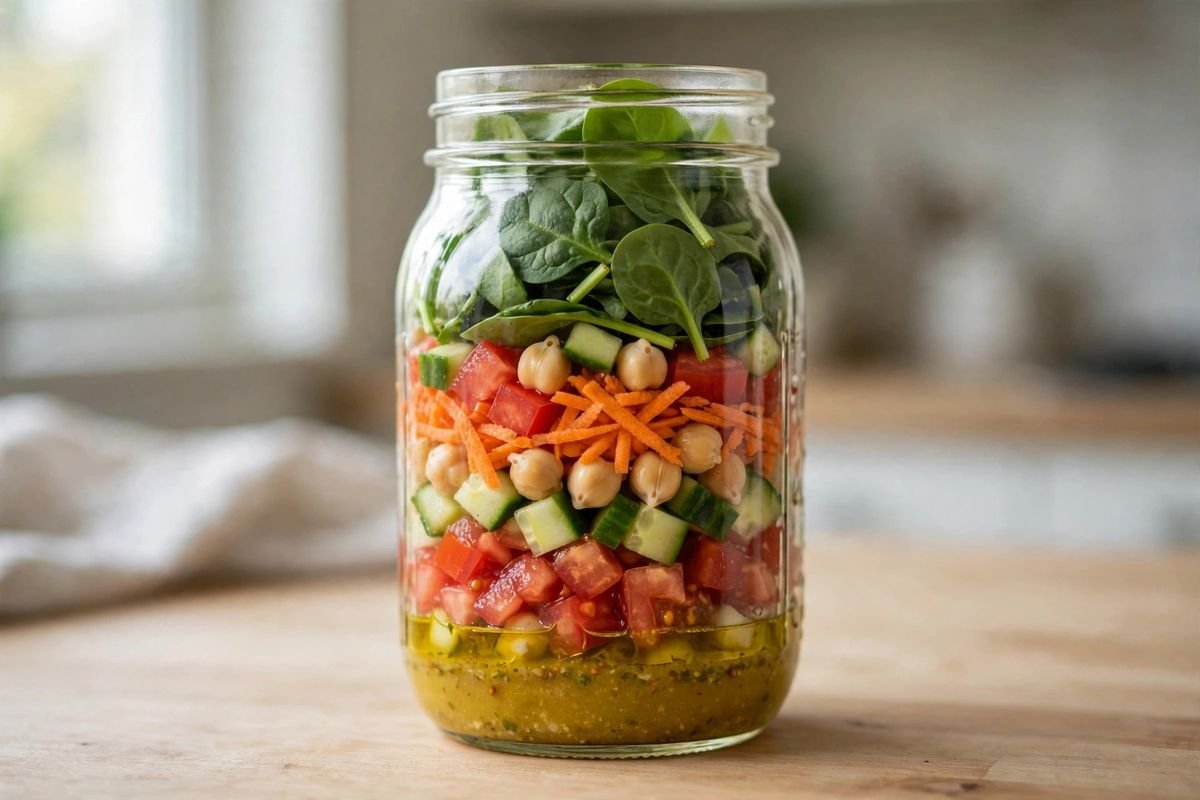
- Dressing first. Pour 2 to 4 tablespoons straight into the bottom of the jar. It’s the only thing that can sit there all week without hurting anything.
- Hard vegetables and sturdy add-ins next. Carrots, cucumber, tomatoes, bell pepper, celery, onion, beans, olives. These can rest right on the dressing without going soft.
- Protein and grains in the middle. Chicken, chickpeas, quinoa, hard-boiled eggs, cheese, cooked rice. This layer stays dry, above the dressing but below the greens.
- Soft and crunchy toppings. Feta, nuts, seeds, dried fruit. Crunchy bits like nuts stay dry here instead of sinking into the dressing.
- Greens last. Spinach, romaine, spring mix, arugula, chopped lettuce. They sit at the very top, far from the dressing, so they stay dry and crisp.
Leave an inch of headroom at the top, and don’t cram the jar full. The greens need that space to stay dry! When it’s time to eat, give the jar a shake and dump everything into a bowl, and you’ll coat the whole salad at once instead of eating a dry top and a wet bottom.
This is the exact order the folks over on the meal-prep boards land on after a few weeks of trial and error:
“**Dressing** \- Olive oil, balsamic, Dijon mustard, lemon juice, salt, pepper, oregano. **Ingredients** \- Cherry tomatoes \- Celery \- Onion \- Bell pepper \- Broccoli \- Feta cheese \- Black olives \- Spinach mix \- Boiled egg \- Cucumber \- Carrots ALWAYS PUT DRESSING AT THE BOTTOM AND SPINACH AT THE TOP”
– r/mealprep, September 2026 (149 upvotes)
The yes-or-no test for your own jar is simple: tip it on its side and roll it a quarter turn. Dressing creeping up the sides toward the greens means you packed it too wet or too tight. Clean sides mean the layers are holding.
Three Mistakes That Make a Salad Jar Go Soggy
A jar that goes mushy by day two almost always fails in one of three ways, and all three are fixable at the counter. Once you’ve seen them, they’re easy to avoid.
Wet greens. Water left on washed lettuce or spinach is the fastest way to wilt the whole jar. Run your greens through a salad spinner, then pat them dry with a paper towel before they go on top. You’ll get the full 5 days that way, and the jar keeps its crunch.
Warm food straight in. Hot quinoa, rice, chicken, or roasted vegetables create steam inside the jar, and that steam settles on the greens as water. You can’t rush this step and still keep the greens crisp.
Cool every cooked ingredient completely before you layer it in, or you’re asking for a soggy lid of greens. This matters for safety too, since warm food in a sealed jar sits in the range where bacteria grow fastest.
A jar that’s too small or packed too full. A narrow or pint-size jar is hard to dump out, and stuffing it forces the layers together so the dressing climbs. If you can’t reach the salad with a fork, the jar’s too narrow. Use a wide-mouth quart jar for a full lunch and leave that inch of headroom.
5 Easy Salad Jar Combos to Start With
Once the order is set, the ingredients are up to you. Not sure where to start? Here are five to copy, each built for a wide-mouth quart jar, with the layers listed from bottom to top and a cheap swap for anything pricey.
The Cobb. Ranch at the bottom, then cherry tomatoes, cucumber, and shredded carrot; diced chicken, crumbled bacon, and a hard-boiled egg in the middle; romaine on top. Swap the chicken for canned chickpeas to drop the cost.
The Greek. Red-wine vinaigrette, then cucumber, tomato, red onion, and kalamata olives; chickpeas and feta in the middle; romaine on top. Full recipe and dressing here: Greek salad in a jar.
The Taco. Salsa and lime dressing, then corn, tomato, and jalapeño; seasoned beef or chicken and black beans in the middle; cheddar and romaine on top, with tortilla strips added the morning you eat it. See the taco salad jar for the full build.
The Apple Harvest. Apple-cider vinaigrette, then diced apple, celery, and red onion; shredded chicken and walnuts in the middle; spinach on top. The apple stays crisp because it never touches the dressing until you eat. This one is built out in our apple harvest mason jar salad.
The Sesame-Crunch. Sesame-ginger dressing, then edamame, shredded cabbage, and carrot; chicken and cooked quinoa in the middle; spinach on top with a sprinkle of sesame seeds. A high-protein lunch that costs less than the deli version.
The people who pack these every week say the same thing: the order matters more than the ingredients.
“order matters way more than ingredients. Dressing at the bottom, then hard stuff that won’t absorb it like cucumbers or tomatoes, then your protein and grains in the middle, greens on top. Keeps everything from getting soggy.”
– r/MealPrepSunday, January 2026 (17 upvotes)
Notice the pattern in all five: the flavor changes, never the order. Get that order down and you’ll build a new combo from whatever’s left in the fridge on Sunday!
How Long Do Mason Jar Salads Last in the Fridge?
A properly layered mason jar salad keeps in the fridge for 3 to 5 days, which is the window the USDA’s FoodKeeper storage guide gives for prepared salads held at 40 degrees or below.
How long yours actually lasts comes down to the details. Dry greens, fully cooled cooked food, and dressing kept at the bottom push a jar toward the full 5 days.
Anything with avocado, sliced apples, or soft greens like arugula is better eaten in the first day or two. Add croutons, tortilla strips, or a sliced avocado the day you eat, never at packing time, so they won’t turn soft in the jar!
Keep the jar upright in the fridge, not on its side, so the dressing can’t climb toward the greens. If a jar has sat at room temperature for more than two hours, or one hour on a hot day, toss it rather than chill it again — that’s the USDA’s two-hour rule.
What to Use Instead of a Mason Jar
Any wide-mouth container with a tight lid works the same way, as long as you keep the dressing at the bottom and the greens on top.
A tall glass storage container, a plastic deli quart, or a wide jar from a pasta sauce all hold a layered salad. Skip anything narrow, since you can’t get the salad out without shaking the layers together, and skip a jar with an old rubber seal that no longer grips.
A mason jar is convenient, but it isn’t magic! It’s the widest, cheapest lidded glass most of us already have, which is why these recipes are built around it.
Mason Jar Salad Recipes FAQ
Can I layer warm rice or chicken straight into the jar?
No. Cool every cooked ingredient to room temperature first, or the steam wilts the greens and the jar sits in the range where bacteria grow fast.
Which size jar holds a full lunch?
A wide-mouth quart (32 ounce) jar holds a full meal; a pint works for a side salad. Wide mouth matters because you need to dump the salad into a bowl to eat it.
How much dressing goes in the bottom?
Two to 4 tablespoons is enough for a quart jar. Any more and the dressing climbs the sides and reaches the greens before lunch.
Related Posts




I love having dance parties in the kitchen with my family, traveling, and mason jar creations.
Follow on Pinterest