
Yes, Twickets is a legitimate platform — and for anyone who’s been burned by a tout site before, that verdict deserves some weight behind it. Twickets Ltd is a registered UK company, holds a strong rating on Trustpilot based on thousands of verified reviews, and has earned public endorsements from major artists and promoters who actively direct fans there as a safe resale option. That’s a credibility trifecta most secondary ticketing platforms can’t match.
is twickets legit — Is Twickets Legit? An Honest 2025 Review
Still, “legit” doesn’t automatically mean “perfect.” There are fees to understand, edge cases where things go wrong, and a buyer protection process that works — but only if you know how to use it.
Below: how the platform actually works, what those trust signals really mean, how Twickets handles disputes and non-delivery, and exactly what fees you’ll pay on both sides of a transaction.
What Is Twickets and How Does It Work?
Twickets is a UK-based fan-to-fan ticket resale platform where sellers are prohibited from listing tickets above the original face value. Unlike profit-driven secondary marketplaces — where a £60 concert ticket can reappear for £300 — Twickets structurally prevents touting by capping every listing at the price the seller originally paid.
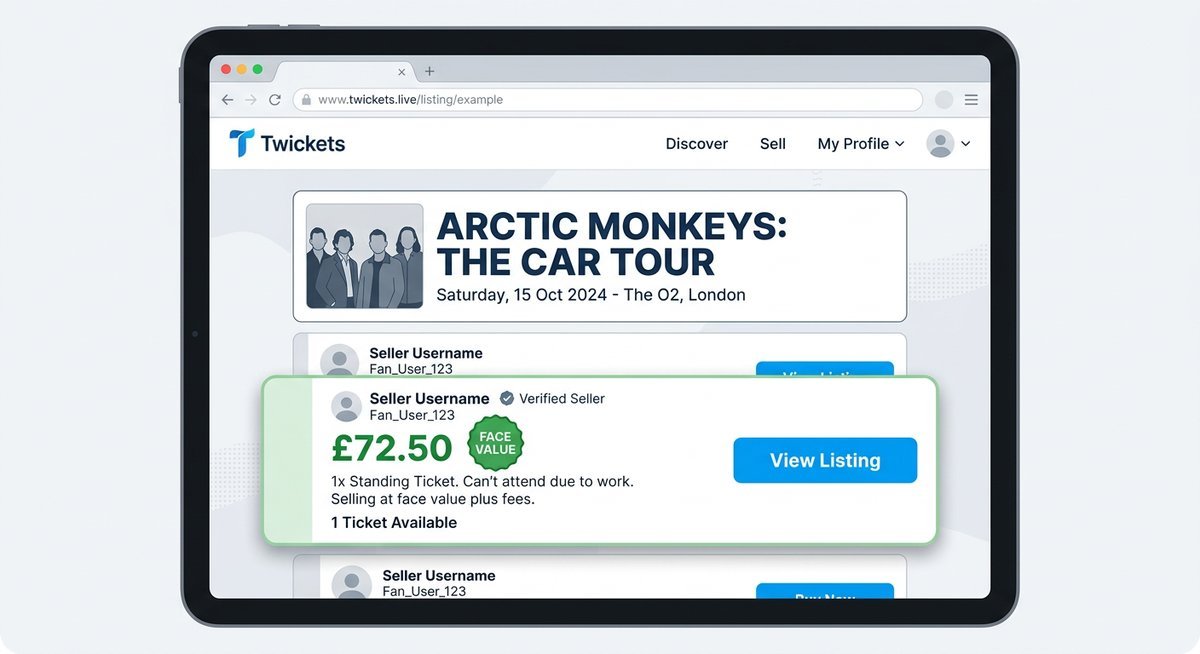
The face-value resale model explained
Founded in 2014 by Richard Davies, Twickets launched as a direct ethical counterpoint to sites like Viagogo and StubHub, where scalpers routinely extracted hundreds of pounds in profit from fans. The platform’s core rule is simple: list at face value or below, or don’t list at all.
Early growth was deliberately tied to Twitter (now X), where fans could broadcast spare tickets to their own followers using event-specific hashtags. That social-first approach gave Twickets an organic, community feel that set it apart from anonymous marketplace giants from the start.
The model also solves a genuine problem for sellers. Someone who can no longer attend a gig wants their money back — not a profit. Twickets gives them a legitimate, trusted channel to recover exactly what they spent.
How a typical transaction works
The buyer and seller journey on Twickets is straightforward, though it differs slightly depending on ticket format. Here’s how a standard transaction unfolds:
- Seller creates a listing — The seller registers, enters the event details, uploads proof of purchase, and sets a price at or below face value.
- Buyer finds the listing — Via the Twickets website, app, or a shared social media link. The listing displays the event, seat details, and total price including any service fee.
- Buyer completes payment — Payment is processed securely through the platform; the seller does not receive funds immediately.
- Tickets are delivered — Depending on the ticket type, delivery is via PDF download, e-ticket transfer through the original ticketing provider, or mobile wallet. The method is specified in the listing.
- Funds released to seller — Once delivery is confirmed, Twickets releases payment to the seller, minus the platform’s seller fee.
| Ticket Type | Delivery Method | Typical Timeframe |
|---|---|---|
| PDF / Print-at-home | Direct file download | Immediate on purchase |
| Mobile e-ticket | Transfer via original provider (e.g., Ticketmaster) | Within 24–48 hours |
| Physical ticket | Post or in-person handover | Agreed between parties |
The escrow-style payment structure — holding funds until delivery is confirmed — is one of the key ways Twickets differs from informal resale on social media, where money changes hands with no safety net at all.
Is Twickets Safe? Trust Signals and Credibility Indicators
Plenty of platforms claim to be trustworthy. Twickets actually has the receipts: a UK Companies House registration, a solid Trustpilot rating, and public endorsements from artists who’ve told their own fans to use it.
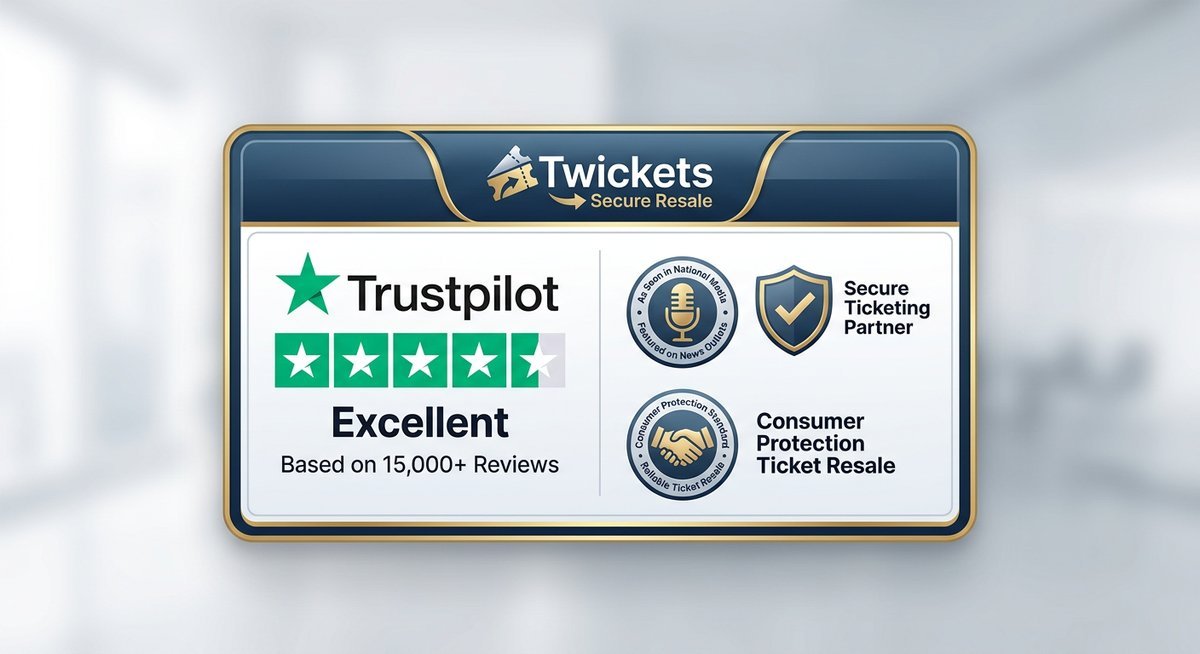
Company registration and regulatory standing
Twickets Ltd is registered at Companies House in England and Wales — company number 08831525 — and has been operating since 2014, giving it over a decade of trading history. That longevity matters. Fly-by-night scam platforms don’t survive ten years of scrutiny from consumer journalists, regulators, and hundreds of thousands of transactions.
The platform operates within the framework of the UK’s Consumer Rights Act 2015, which requires secondary ticket sellers to disclose the face value of tickets, the original seat or standing location, and any restrictions on use. Twickets’ face-value model means it is structurally aligned with these obligations in a way that profit-driven resale sites are not.
Trustpilot score and review sentiment
According to Trustpilot, Twickets holds a rating of approximately 4.2 out of 5 stars across more than 3,000 reviews — a “Great” classification on the platform’s own scale. Recurring positive themes include fast e-ticket delivery, genuine valid tickets, and a responsive customer support team that resolves issues without excessive back-and-forth.
The most common complaints centre on slow seller response times and occasional difficulty reaching support during peak event periods. Neither issue is unique to Twickets, and neither suggests systemic fraud — they’re operational friction, not red flags.
| Trust Signal | Detail |
|---|---|
| Companies House registration | Twickets Ltd, number 08831525, registered since 2014 |
| Trustpilot rating | ~4.2/5 from 3,000+ verified reviews |
| Years in operation | 10+ years (founded 2014) |
| Regulatory alignment | Compliant with UK Consumer Rights Act 2015 secondary ticketing rules |
Artist and venue endorsements
Ed Sheeran, Adele, and Radiohead have all publicly directed fans to Twickets as the place to resell tickets safely. That kind of endorsement doesn’t come from a sponsorship deal — it comes from artists who are genuinely fed up watching their fans get gouged by scalpers.
Promoters have taken notice too. AEG Presents and several independent UK promoters actively recommend Twickets to fans holding spare tickets. When the organisations that sell the tickets in the first place point you toward a specific resale platform, that says something.
Buyer Protection: What Happens If Something Goes Wrong?
Buying from a stranger always carries some risk — the question is what happens when things go sideways. Twickets offers a buyer guarantee covering non-delivery and invalid tickets. If a seller fails to transfer tickets or the tickets are rejected at the venue, you can raise a dispute through support and claim a full refund. Resolution requires investigation rather than automatic reimbursement, so save your order confirmation and any messages.
Twickets’ buyer guarantee and dispute process
The platform’s stated policy is straightforward: if you don’t receive what you paid for, Twickets will investigate and issue a refund. Raising a dispute means contacting Twickets support via email with your order reference, proof of non-delivery or rejection, and any relevant correspondence. Twickets does not publish a fixed resolution timeline publicly, so buyers should expect a few business days at minimum — not an instant reversal.
Invalid tickets at the door are the worst-case scenario, and Twickets takes these cases seriously. In practice, the face-value model itself reduces fraud incentive significantly: sellers aren’t profiting beyond what they originally paid, which filters out the purely mercenary bad actors common on profit-driven resale platforms.
Payment security and chargeback options
Twickets processes payments through Stripe — the same infrastructure behind Shopify, Amazon, and thousands of other major platforms. Stripe’s built-in fraud detection screens transactions before any money changes hands, which adds a quiet but meaningful layer of security.
Paying by credit card gives buyers a second line of defence entirely independent of Twickets. Under Section 75 of the UK Consumer Credit Act, credit card purchases between £100 and £30,000 carry statutory protection — meaning your card provider shares liability if the seller defaults. PayPal’s buyer protection offers comparable recourse for lower-value transactions. If Twickets’ own dispute process stalls, escalating directly to your card issuer is a legitimate and often faster route.
| Protection Layer | Who Provides It | When It Applies |
|---|---|---|
| Twickets buyer guarantee | Twickets platform | Non-delivery or invalid tickets |
| Stripe fraud detection | Stripe (payment processor) | At point of transaction |
| Section 75 protection | UK credit card provider | Purchases £100–£30,000 |
| PayPal buyer protection | PayPal | Item not received or significantly not as described |
Red flags to watch for
The single biggest warning sign on any peer-to-peer ticket platform is a seller asking to move the conversation off-platform. Never exchange contact details or complete payment outside Twickets — doing so voids any protection the platform can offer.
Before completing a purchase, cross-reference the ticket details against the event’s official listing: date, venue, seat or standing section, and ticket type should all match exactly. Discrepancies — even minor ones — are worth querying with the seller through Twickets’ messaging system before paying.
Where seller history is visible, a profile with previous completed transactions is a reassuring signal. First-time sellers aren’t automatically suspicious — everyone starts somewhere — but a brand-new account selling premium tickets to a high-demand event warrants extra caution. Trust your instincts, verify the details, and keep every message on-platform.
Twickets Fees Explained: Does Face Value Really Mean No Markup?
Twickets enforces a strict face-value cap on ticket prices, meaning sellers cannot list above what they originally paid. Buyers do pay a service fee on top of that price — typically around 10% of the ticket value — so the total cost is slightly above face value, but nowhere near the 2x–5x markups common on profit-driven resale platforms like StubHub or Viagogo.
Buyer Fees
Twickets charges buyers a service fee of approximately 10% of the ticket price, subject to a minimum charge. On a £50 ticket, that means a buyer pays roughly £55 in total. Compare that to a typical resale listing on a profit-driven platform, where the same £50 face-value ticket might be listed at £120–£150 before booking fees are added on top.
| Platform Type | Face Value Ticket | Total Buyer Cost (approx.) | Markup Source |
|---|---|---|---|
| Twickets | £50 | ~£55 | 10% service fee only |
| Profit-driven resale (e.g. Viagogo) | £50 | £120–£180+ | Seller profit + platform fees |
Seller Fees
Sellers are also charged a fee — reportedly around 10% of the sale price — deducted before the payout is processed. This means a seller listing a £50 ticket receives approximately £45. The model is transparent: neither party profits beyond recovering the original cost, which is the entire ethical premise of the platform.
The honest caveat is that service fees do erode the pure “face value” promise slightly. A buyer pays marginally more than the original ticket price, and a seller receives marginally less. For most users, that trade-off is entirely reasonable — the alternative is either losing money on a ticket you can no longer use, or paying extortionate resale prices to attend a sold-out show.
Frequently Asked Questions
Is Twickets safe to buy tickets from?
Yes. Twickets is a registered UK company (Companies House number 08831525) that processes payments through Stripe, holds a 4.2/5 Trustpilot rating across thousands of reviews, and offers a buyer guarantee covering non-delivery and invalid tickets. Paying by credit card adds Section 75 statutory protection as an independent safety net.
Does Twickets charge fees on top of the face value price?
Buyers pay a service fee of roughly 10% on top of the ticket’s face value. Sellers also pay approximately 10%, deducted before payout. On a £50 ticket, the buyer pays around £55 and the seller receives about £45. These fees fund the platform’s operations, buyer protection, and payment processing.
How do I know my Twickets ticket is genuine and valid?
Twickets requires sellers to provide proof of purchase when creating a listing. Tickets are delivered via PDF download, e-ticket transfer through the original ticketing provider (such as Ticketmaster), or mobile wallet — depending on the ticket type. Cross-reference the event date, venue, and seat details against the original listing before the event.
What happens if a seller on Twickets doesn’t send the tickets?
Contact Twickets support with your order reference and evidence of non-delivery. The platform holds seller funds in escrow until delivery is confirmed, so your money hasn’t gone directly to the seller. Twickets investigates and issues refunds for confirmed non-delivery cases. You can also escalate to your credit card provider under Section 75 if the dispute stalls.
How does Twickets compare to StubHub or Viagogo?
The fundamental difference is pricing. StubHub and Viagogo allow sellers to set any price they want, routinely resulting in 2x to 5x markups above face value. Twickets caps every listing at face value or below. You’ll pay a modest service fee on Twickets, but the total cost stays close to what the original buyer paid — a fraction of what profit-driven resale platforms charge.
Can I sell tickets on Twickets?
Absolutely. Register on the platform, create a listing with the event details and proof of purchase, and set your price at or below face value. Once a buyer purchases and delivery is confirmed, Twickets releases payment minus the seller fee. The process is designed to recover your cost, not generate profit.
The Verdict
Twickets is legitimate, well-regulated, and meaningfully safer than the profit-driven resale giants. A decade of trading history, verifiable company credentials, consistent Trustpilot ratings, and artist endorsements all point in the same direction. The 10% service fee is the cost of doing business on a platform that actively prevents scalping — and compared to the alternative of paying triple face value on Viagogo, most fans will consider that a bargain.
Use common sense: stay on-platform, verify ticket details before paying, and pay by credit card for maximum protection. Do those three things and Twickets is one of the safest ways to buy or sell event tickets in the UK secondary market.




Leave a Reply