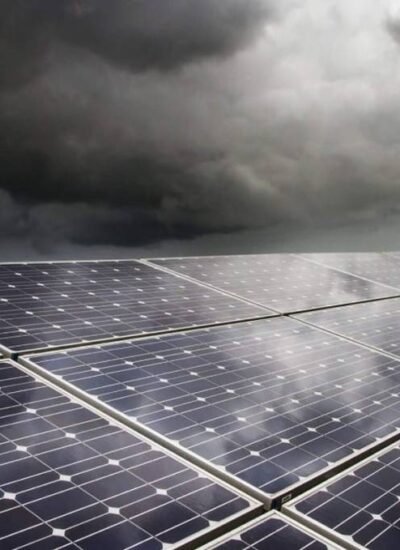
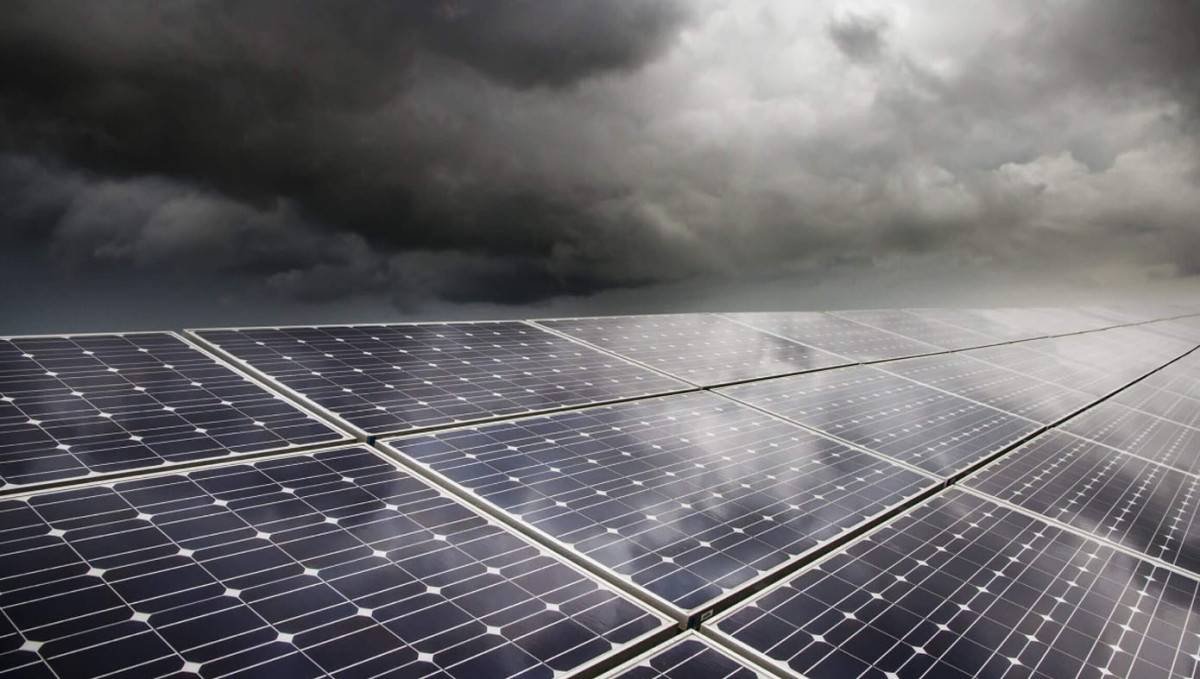
Yes. Solar panels generate electricity on cloudy days. They produce less than on sunny days, but they do not stop working. The question is not whether they work. It is how much they produce and whether that matters for your decision to install solar.
On a heavily overcast day, solar panels produce 10 to 25 percent of their rated output. On a partly cloudy day with intermittent sun, they produce 50 to 80 percent. On a bright overcast day with thin high clouds that diffuse sunlight evenly, they can produce 30 to 50 percent. The exact number depends on cloud thickness, panel technology, and your location. Here is what happens, why, and how it affects your solar investment.
How Solar Panels Generate Electricity From Cloudy Skies
Solar panels run on light, not heat. They convert photons into electricity through the photovoltaic effect. Direct sunlight delivers the most photons per square inch, which is why panels produce maximum power on clear days. But diffuse light, which is sunlight scattered by clouds and atmosphere, also contains photons. Every photon that hits the panel contributes to electricity generation regardless of whether it arrived directly from the sun or bounced through a cloud first.
This is different from solar thermal systems, which use sunlight to heat water and genuinely do not work on cloudy days because they need direct infrared radiation to raise water temperature. Photovoltaic panels and solar thermal panels are completely different technologies. The confusion between them is the source of the persistent myth that solar does not work in cloudy weather.
In fact, solar panels operate more efficiently at cooler temperatures. A bright cool day with thin cloud cover can produce close to full rated output because the panels are more efficient in the cold and the diffuse light is still substantial. The same panels in 100-degree heat on a clear day lose 10 to 15 percent of their efficiency to temperature derating. Clouds block some light but also cool the panels, partially offsetting the loss.
How Much Power Panels Produce by Cloud Type
| Sky Condition | Typical Output |
| Clear, direct sun | 90–100% |
| Partly cloudy, sun visible | 50–80% |
| Bright overcast, thin high clouds | 30–50% |
| Heavy overcast, dark storm clouds | 10–25% |
| Rain | 10–20% |
| Fog or heavy mist | 5–15% |
A partly cloudy day can actually produce surprising output. When clouds pass in front of the sun and then clear, the panels receive not only the direct sunlight but also light reflected off the edges of nearby clouds. This is called the cloud edge effect and can briefly push panel output above their rated capacity. A 400-watt panel might briefly produce 420 watts during a cloud edge event. This is not sustained, but it contributes to total daily production.
What This Means for Cloudy Regions
Germany has more solar capacity installed than any other European country. It receives less annual sunlight than Seattle. Solar works in cloudy climates because annual production, not daily production, determines whether a system is financially viable. The total sunlight that falls on a location over the course of a year, measured in peak sun hours, is used to size the solar system to match annual electricity usage.
A home in Seattle that uses 10,000 kilowatt-hours per year simply needs a larger system than a home in Phoenix with the same usage. The Seattle system produces less per panel, so more panels are needed to meet the same annual total. The cost per watt is the same. The total system cost is higher because the system is larger. The financial return is lower because the same investment produces less electricity. But the system still produces electricity every day, cloudy or not, and still pays for itself over its lifetime if the incentives and electricity rates support it.
The annual peak sun hours for major U.S. cities illustrate the range. Phoenix receives approximately 6.5 peak sun hours per day averaged across the year. Denver receives 5.5. Chicago receives 4.0. Seattle receives 3.5. A solar system in Seattle needs to be roughly 85 percent larger than a system in Phoenix to produce the same annual output. This makes solar less financially attractive in Seattle, not non-functional.
Do Some Panels Perform Better in Cloudy Conditions
Yes, but the difference is modest. Monocrystalline panels with PERC technology perform slightly better in low-light conditions than polycrystalline panels. Heterojunction panels like those from REC and Panasonic perform better still because their cell architecture captures a wider spectrum of light. Bifacial panels capture reflected light from the ground, which partially compensates for reduced direct light.
The practical difference between the best and worst panel types in cloudy conditions is approximately 3 to 5 percent of daily production. This is not a large enough difference to choose one panel type over another solely for cloudy-day performance. System cost, warranty, degradation rate, and installer reputation are more important factors.
Microinverters and DC optimizers provide a meaningful benefit in cloudy conditions. When part of a string of panels is shaded by a passing cloud, a standard string inverter reduces the output of the entire string to match the lowest-performing panel. Microinverters and optimizers allow each panel to operate independently, so the unshaded panels continue producing at full available power while only the cloud-shaded panel drops. On partly cloudy days, this can increase total system output by 5 to 10 percent compared to a string inverter system without module-level power electronics.
Cloudy Days and Battery Storage
Cloudy days are the strongest argument for pairing solar with battery storage. On a sunny day, excess solar generation charges the battery. On a cloudy day, the battery discharges to cover the shortfall. This smooths the daily variation and makes the home less dependent on grid electricity during cloudy periods.
A solar-only system on a heavily overcast day draws electricity from the grid to cover the deficit, then exports excess solar on the next sunny day. With net metering at full retail rate, the grid effectively acts as a free battery. The cloudy day deficit is offset by the sunny day surplus. In states where net metering has been weakened or replaced with lower export rates, a battery captures more value from sunny-day surplus and discharges it during cloudy-day deficits. Cloudy regions with weak net metering are the optimal use case for residential battery storage.
Frequently Asked Questions
Does rain help or hurt solar panel output?
Rain reduces output while it is actively raining, typically to 10 to 20 percent of rated capacity. But rain cleans the panels, washing off dust, pollen, and bird droppings that accumulate on the surface and reduce output over time. A panel that is cleaned by regular rain produces more electricity in the days following the rain than a panel in a dry climate that accumulates dust. In rainy climates like the Pacific Northwest, panel soiling losses are minimal because nature handles the cleaning. In dry dusty climates, panel cleaning is a maintenance task the homeowner must perform or pay for.
What about snow covering the panels?
Snow that completely covers a panel blocks all light and reduces output to near zero for as long as the snow remains. But panels are dark, slick, and angled. Light snow melts and slides off within hours on a sunny day. Heavy snow may take a day or two. The annual production loss from snow cover in snowy climates is typically 1 to 3 percent, which is factored into production estimates by reputable installers. Bifacial panels with a transparent back sheet capture light reflected from snow on the ground, which partially offsets the loss from snow on the front of the panel.

Leave a Reply