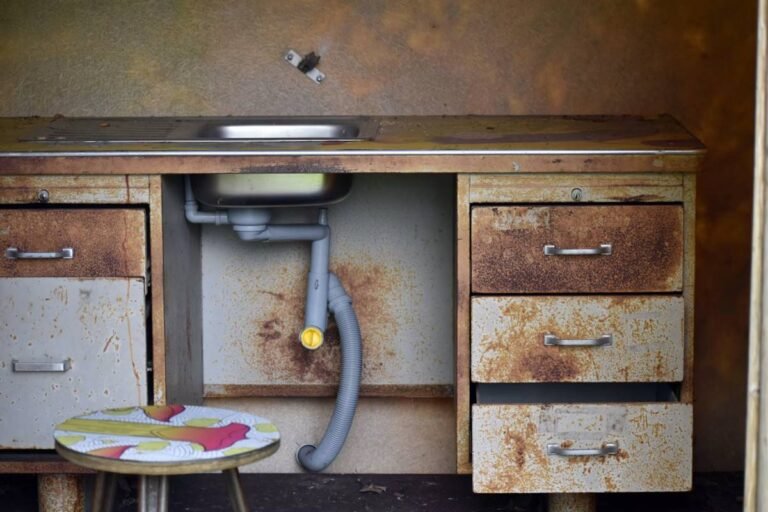
The space beneath a sink often becomes a catchall for cleaning sprays, grocery bags and spare supplies. When that cabinet gets crowded, everyday items can press against drainpipes, hide damp patches and make small leaks harder to notice. Over time, those minor problems may lead to swollen cabinet panels, mold growth or damaged fittings. Understanding the common signs of water damage helps you catch trouble before the cabinet needs major repairs.
The Hidden Risks of Overstuffed Cabinets
A full cabinet can place steady pressure on the curved drain trap, flexible hoses and shutoff valves. A large detergent bottle leaning against a pipe may seem harmless, but repeated bumps each time you reach inside can loosen a threaded connection. Heavy containers can also bend flexible supply lines or make them rub against sharp cabinet edges.
Crowding creates another problem: poor visibility. You may miss corrosion, mineral deposits or a slow drip behind a stack of supplies. If a fitting looks crooked, a hose appears strained or water returns after drying the area, contact a qualified local professional. Homeowners in the area can consult a plumber armadale for inspection and repairs involving household plumbing.
Spotting Moisture and Silent Drips Early
Check beneath the sink once a month and after anyone moves stored items. Run your hand over the cabinet base, then use a flashlight to inspect the back corners and areas around pipe connections. A musty smell, peeling surface material or a pale crust around a fitting can indicate moisture even when you don’t see active dripping.
Place a dry paper towel beneath each connection, turn on the faucet and let the water run for about one minute. Any wet mark helps pinpoint the source. Since indoor mold growth and moisture are closely connected, dry spills promptly and address recurring dampness. This guide to spotting hidden water problems early offers more clues to watch for elsewhere in the home.
Smart Organization That Protects Fittings
Clear a few inches of open space around every pipe, valve and hose. That gap prevents stored products from pushing on plumbing parts and gives you a clear view during quick inspections. Keep tall bottles along the cabinet sides where they can’t fall inward, and store heavier items on a low shelf outside the cabinet when possible.
Choose shallow, removable bins for sponges, dishwasher tablets and small cleaning products. If a leak develops, you can lift out one or two containers instead of emptying a loose pile while water spreads. Avoid attaching rigid organizers to pipes or wrapping storage around supply lines. A washable cabinet mat can contain a small spill, though it should be lifted regularly so moisture doesn’t remain trapped underneath.
Calling an Expert for Pipe Realignments
Some under-sink problems need more than tidying. A drain trap that sits at an angle, a connection that separates when touched or a hose pulled tight between two points may need professional realignment. Don’t force parts back into position, since overtightening plastic fittings can crack them and twisting a hose may damage its internal lining.
Turn off the local water valve if a supply connection is leaking, remove everything from the cabinet and place a container beneath the affected area. Take a clear photo before moving anything so the plumber can see the original position. Leave the cabinet empty after the repair until the base is fully dry. Once everything is back in place, keep the fittings visible so the first sign of a returning drip has nowhere to hide.
Related Posts




I love having dance parties in the kitchen with my family, traveling, and mason jar creations.
Follow on Pinterest