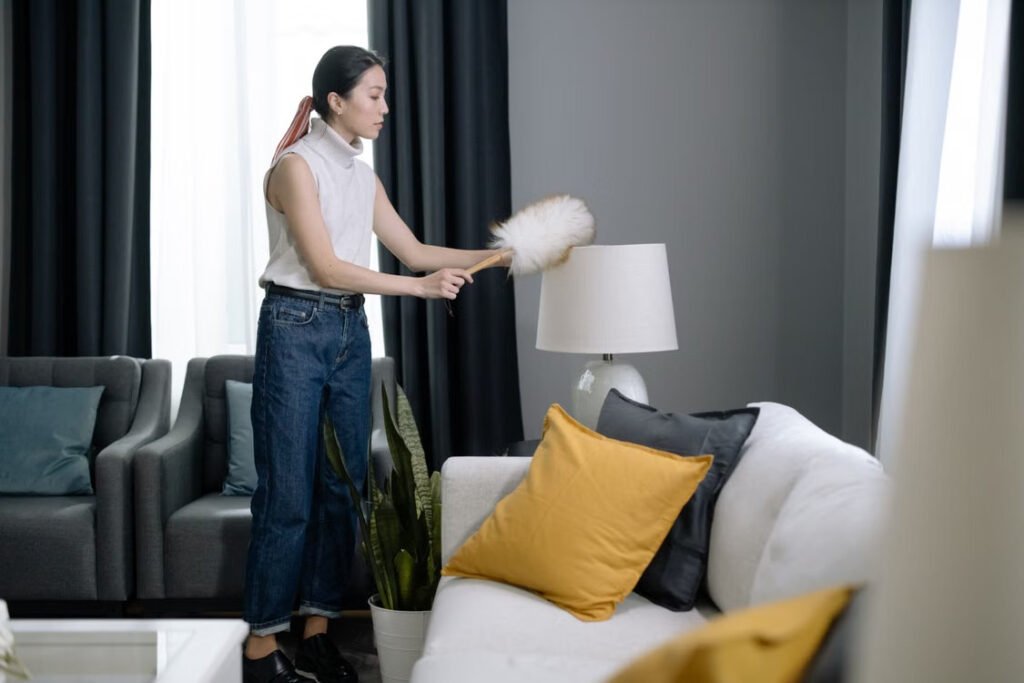
Dust can return to shelves and tabletops within hours of cleaning because the problem often starts beyond the surfaces you can see. Outdoor particles, fabric fibers, and an inefficient HVAC filter may keep adding material to the air. Cleaning technique also matters. Once you identify where dust enters and how it circulates, you can reduce buildup without wiping down every room each day.
Where Household Dust Actually Originates
Household dust is a mixture of material from inside and outside your home. Tiny fibers are shed from bedding, carpets, and upholstered furniture. Hair, skin flakes, pollen and tracked-in soil join the mix, while cooking and everyday activities create additional airborne particles.
Some homes get dusty faster because of drafty windows, high foot traffic, or pets that spend time outdoors. The most common causes of household dust also include open windows and cluttered surfaces that are difficult to clean thoroughly. For a closer look at these causes, you can read https://es.microfiberwholesale.com/blogs/blog/why-your-house-gets-dusty-so-fast. Pay attention to where dust appears first. Buildup near doors suggests outdoor debris, while heavy deposits around vents may point to an airflow or filtration issue.
Why Standard Dusting Falls Short
A dry feather duster often sends particles into the air, where they remain suspended before settling somewhere else. Use a slightly damp microfiber cloth instead. Its fine fibers capture material while the moisture keeps loose particles from escaping. Work from high surfaces to low ones so you can vacuum anything that falls.
If dust returns unusually fast across several rooms, the HVAC system may be circulating it. Dirty filters, duct leaks, or inadequate filtration can contribute to indoor dust and airflow problems. Homeowners who need help assessing their system can explore heating, cooling, ductwork, and indoor air quality services at bayairservices.com.
Inspect Your Air Ducts and Filters
Check your HVAC filter every month, especially during seasons when the system runs daily. Replace it when it looks gray or clogged, following the equipment manufacturer’s schedule and filter specifications. A filter that is too restrictive can reduce airflow, so avoid choosing one based only on the highest rating available.
Look at supply and return vents for visible buildup. Remove vent covers you can safely reach and clean them with a damp cloth or vacuum attachment. Dust streaks around registers, debris emerging from vents, or rooms with noticeably different airflow can signal a duct issue. Avoid reaching deep into ductwork yourself. A qualified technician can inspect accessible sections for loose connections, damaged seals, or contamination that needs professional attention.
Simple Habits to Stop Dust at the Source
Place washable mats outside and inside frequently used entrances, then remove shoes at the door. Vacuum rugs, carpets and upholstered furniture with a machine fitted with effective filtration. Since sofas can trap dust, pet hair and other debris, regular cleaning is also important. For more detailed advice, see https://masonjarbreakfast.com/how-to-properly-clean-and-maintain-your-couch-at-home/. In bedrooms, wash sheets weekly and clean beneath the bed, where fibers and hair tend to collect.
Keep windows closed on windy days or when pollen levels are high. Store extra blankets in containers and reduce decorative clutter on open shelves so surfaces are easier to wipe. Aim for a comfortable indoor humidity level and address persistent dampness or condensation, which can encourage mold growth.
Finally, clean in a practical order: wipe ceiling fans and shelves first, vacuum floors second, and mop hard surfaces last. Empty the vacuum outdoors if possible so captured dust doesn’t escape back into the room.
A spotless home won’t remain completely dust-free, but rapid buildup shouldn’t feel inevitable. If a clean white cloth turns gray soon after you wipe a vent or nearby table, start with the HVAC filter and the area around that register. That small inspection can reveal whether your cleaning routine needs an adjustment or the airflow system deserves closer attention.
Related Posts





I love having dance parties in the kitchen with my family, traveling, and mason jar creations.
Follow on Pinterest