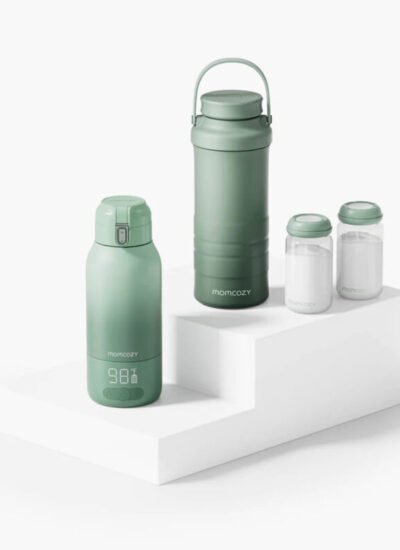
Gentle warming helps protect the quality of expressed breast milk, while overheating can damage heat-sensitive components and push milk into a higher-risk range for nutrient and bioactive loss. Research summarized in PubMed reports that electrical bottle warmers can exceed 80 °C, a temperature high enough that many beneficial milk properties disappear.
If you have ever worried about making milk “just warm enough” without ruining it, that concern is well founded. Breast milk is not the same as formula: it contains enzymes, immune factors, and other bioactive components that are more vulnerable to heat than standard infant feeds. A dedicated breast milk warmer is designed to give parents a more controlled, repeatable way to warm milk without the uneven heating that can happen with improvised methods.
Why breast milk needs gentler heat than standard bottle warming
Breast milk is biologically active, not just nutritionally complete. That distinction matters because its value comes from more than calories and protein. Studies and reviews indexed in PubMed describe human milk as a food with heat-sensitive regulatory components, including enzymes and immune factors, that can be compromised by excessive warming or pasteurization-style heating.
Heat-sensitive components are the first thing at risk
The most heat-sensitive elements in human milk processing are enzymes and immune cells. In one review, holder pasteurization was described at 62.5 °C for 30 minutes, a standard donor-milk process that reliably reduces bacteria and viruses but also destroys or compromises many beneficial bioactive components. That tradeoff is acceptable in some donor-milk settings, but it is not the goal for routine feeding of a baby’s own expressed milk.
A second PubMed review notes that donor milk pasteurization removes pathogenic bacteria but also damages bacteriostatic mechanisms and nutritional properties. In other words, the problem is not just “too hot” milk; it is any process that pushes milk into a range where heat-sensitive functional components begin to degrade.
Overheating can happen faster than parents expect
A simulation study on electrical bottle warmers found that some units can exceed 80 °C. That level is far above what is needed for feeding, and the report specifically states that above 80 °C many beneficial human milk properties are lost. This is the key practical issue for parents: a bottle can feel warmed on the outside while the milk inside has been heated unevenly or overshot the safe target.
A dedicated breast milk warmer matters because it is built to control temperature more consistently. Controlled warming reduces the odds of localized overheating, which is especially important when milk is being warmed for a newborn, a premature infant, or repeated daily feeds.
What research says about storage, time, and temperature
Warming is only one part of preserving breast milk quality. Storage conditions before warming also affect whether the milk keeps its intended composition. Evidence summarized in PubMed shows that time and temperature both matter, and that the “stable window” is narrower than many parents assume.
Room temperature has a short safe window
One PubMed study summarized breast milk as stable for about 3 hours at ambient temperature, with measurable biochemical and nutritional changes beginning beyond that point. The same summary identifies 3 hours as the boundary between the stable window and a higher-risk window for quality change.
That does not mean milk becomes unsafe at exactly 3 hours in every setting, but it does mean storage duration should be treated as a real protocol variable. If milk is left out, parents should follow their pediatric guidance and local milk-handling rules, but the evidence here is clear that time at room temperature is not neutral.
Refrigeration and freezing are storage tools, not warming tools
A PubMed review on collecting and banking human milk reported that raw breast milk can be safe at 4–6 °C for 72 hours, with little bacterial growth reported below 8 °C. Another study found no difference between milk stored at 4 °C and −20 °C over 14 days, suggesting that for that specific window, refrigeration and freezing performed similarly.
The practical takeaway is simple: storage should be managed separately from warming. Cooling and freezing help preserve milk before use, but when it is time to feed, the warming step still needs to be controlled so the milk does not lose the very properties storage helped preserve.
Why a dedicated breast milk warmer is better than improvised heating
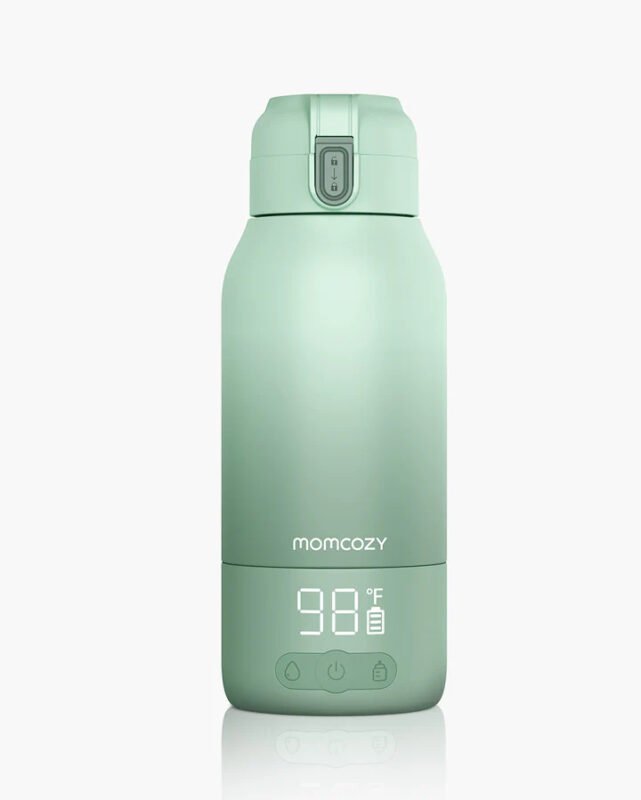
Many parents try hot water baths, stovetop warmth, or quick electrical warmers because they are familiar. The challenge is that breast milk quality depends on uniform, moderate heating, not just reaching a warm temperature. A dedicated breast milk warmer is useful because it reduces the two most common errors: overheating and uneven heating.
More consistent temperature control
The main technical advantage of a dedicated warmer is repeatability. Instead of guessing with a bowl of hot water or using a general-purpose bottle warmer that may overshoot, a dedicated device is designed for a narrower use case. That narrower design helps parents stay away from the temperature range associated with loss of beneficial milk properties.
For families feeding expressed milk several times a day, consistency matters. A repeatable warming method lowers variability from bottle to bottle, which is important if one caregiver is preparing feeds overnight, another is handling daytime bottles, or milk is being warmed during a short travel stop.
Lower risk of hot spots and uneven heating
Hot spots are a practical problem because they can create localized overheating even when the bottle does not feel excessively hot overall. While the PubMed sources here do not quantify hot-spot size, they clearly support the broader point: uneven or excessive heat can compromise milk quality. Dedicated warmers are designed to warm more evenly than improvised methods, which is why they are often preferred for expressed breast milk.
That matters for feeding safety as well as nutrient preservation. Milk that is heated too quickly may be less comfortable to feed, and overheating can create a bottle that is too hot to test by touch alone. A controlled warmer reduces that risk.
What to look for in a breast milk warmer
Not all warmers are equally useful for breast milk. The best options are the ones that prioritize temperature control, gentle heating, and predictable timing over speed alone.
Temperature control and gentle heating should come first
The most important feature is not rapid heat-up time; it is controlled warming that avoids overshooting. Evidence from PubMed shows that excessive heating, including some electrical bottle warmers, can exceed 80 °C and damage beneficial properties. A good warmer should therefore emphasize gradual heating and even temperature distribution.
If a product offers multiple modes, choose the one intended for breast milk or expressed milk rather than a generic “fast warm” mode. The goal is to reach a feeding temperature without crossing into the range that risks nutrient and bioactive loss.
Portability, compatibility, and workflow matter too
For home use, look for a warmer that fits the bottles you already use and is easy to clean after each session. For travel, compact size, battery or USB power options, and a simple setup can make a real difference when a baby needs a feed during a short stop or overnight trip.
Practical workflow matters because warming happens under time pressure. A device that is accurate but awkward to set up may be less useful than a slightly simpler warmer that parents can operate consistently. The best design is the one that makes the right temperature easy to repeat.
Practical warming and storage rules parents can follow
The evidence points to a few clear handling rules that are easy to apply at home. These are not complicated, but they do depend on being consistent.
Keep the storage window and warming window separate
If milk is at room temperature, the PubMed summary describing a 3-hour stability window suggests using it within that period whenever possible. If it is refrigerated, bring it up to feeding temperature gently rather than trying to warm it quickly. If milk has been stored for longer periods, the same principle applies: warmer use should be controlled, not rushed.
A dedicated breast milk warmer helps here because it makes the “final step” predictable. Parents can store milk safely, then warm only what is needed for that feeding. That reduces waste and lowers the temptation to reheat repeatedly.
Avoid methods that are hard to control
Microwave heating is a poor match for breast milk because it can heat unevenly, and uneven heating is exactly what can create hot spots and unexpected overheating. Very hot water or aggressive electrical warmers raise a similar concern if temperature is not well controlled. The goal is not maximum speed; it is controlled temperature rise with minimal nutrient loss.
If milk smells off, looks changed, or has been stored outside recommended conditions, warming is not the fix. Warming only affects temperature, not quality restoration. That is why storage discipline and gentle warming need to work together.
Final Takeaway
A dedicated breast milk warmer is worth considering because it supports the one thing breast milk needs most during preparation: controlled, even, gentle heat. PubMed-indexed evidence shows that overheating can damage heat-sensitive enzymes, immune factors, and other beneficial properties, while a simulation of electrical warmers found temperatures can exceed 80 °C, a range associated with loss of many beneficial milk properties.
For most families, the best approach is simple: store milk properly, warm only what you need, and use a device designed for breast milk rather than a general-purpose heat source. That combination helps preserve nutrients, improve feeding consistency, and reduce the risk of uneven temperatures at the bottle.




Leave a Reply