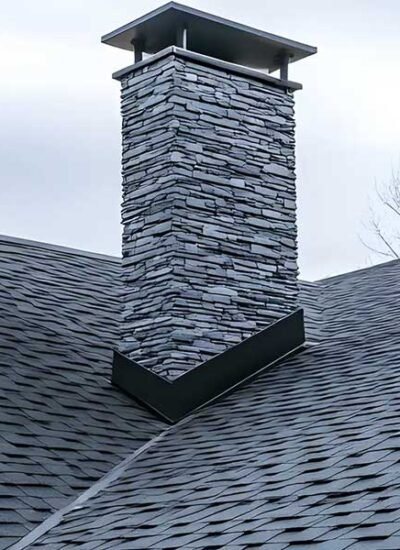
A composition shingle roof lasts 15 to 30 years on average, with the range determined almost entirely by the type of shingle installed. Three-tab composition shingles last 15 to 20 years. Architectural (dimensional) composition shingles last 25 to 30 years. Designer or luxury composition shingles last 30 to 50 years and are warrantied accordingly. The term “composition shingle” is the industry name for what most people call an asphalt shingle — a fiberglass mat saturated with asphalt and coated with ceramic mineral granules. The word distinguishes the modern fiberglass-based product from the older organic-mat shingles that were made with paper felt instead of fiberglass and have not been manufactured in the United States since the mid-2000s.
A composition shingle roof on a house in Phoenix will not last as long as the same roof on a house in Seattle — not because the materials are different, but because heat and UV radiation degrade asphalt faster than rain does. A composition roof on a poorly ventilated attic will not last as long as one on a well-ventilated attic, because trapped heat bakes the shingles from underneath while the sun bakes them from above. The material’s lifespan is only a starting point. The installation, the attic ventilation, and the climate determine whether the roof reaches year 25 or fails at year 15.
Types of Composition Shingles and Their Lifespans
| Shingle Type | Typical Lifespan | Thickness | Warranty | Installed Cost per sq ft |
|---|---|---|---|---|
| 3-Tab | 15-20 years | Single layer, uniform tabs | 20-25 years (prorated) | $4-$5 |
| Architectural / Dimensional | 25-30 years | Two layers laminated, random pattern | 30-year to “lifetime” (limited) | $5-$7 |
| Designer / Luxury | 30-50 years | Multi-layer, heavy, high-profile | Lifetime (limited, non-prorated) | $8-$12 |
The difference between a 3-tab and an architectural shingle is not just cosmetic. An architectural shingle is two layers of asphalt-saturated fiberglass mat laminated together, creating a thicker, heavier product that resists wind uplift and impact better than a single-layer 3-tab shingle. The extra thickness also means the shingle takes longer to erode to the point where the fiberglass mat is exposed — the primary endpoint of a shingle’s useful life. A 3-tab shingle exposes its mat roughly 5 to 10 years before an architectural shingle does, because there is simply less material between the weather surface and the mat.
“Lifetime” warranties on architectural and designer shingles are a marketing term, not an engineering prediction. A “lifetime limited warranty” typically covers manufacturing defects for as long as the original purchaser owns the home, but the coverage is prorated after a certain number of years — often 10 — and only covers the cost of replacement shingles, not the labor to install them. The warranty is not a lifespan guarantee. A shingle with a lifetime warranty that fails at year 22 due to normal weathering is not covered, because normal weathering is not a manufacturing defect.
Organic vs. Fiberglass Composition Shingles
If your house was built before the mid-1990s and the roof is original, the shingles may be organic-mat composition shingles rather than the fiberglass-mat shingles that are standard today. The distinction matters because organic shingles have a shorter lifespan and fail in different ways.
Organic shingles use a mat made of paper felt (cellulose) saturated with asphalt. Fiberglass shingles use a mat made of woven glass fibers coated with asphalt. The organic mat absorbs more asphalt during manufacturing, which made organic shingles heavier, more flexible in cold weather, and more resistant to tearing during installation. But the organic mat also absorbs water over time, and once water reaches the mat — through cracks in the asphalt coating, through granule loss, or through wicking at the cut edges — the mat swells, the shingle curls, and the degradation accelerates rapidly. A 25-year organic shingle roof in a wet climate often fails at 18 to 20 years because of mat absorption, not surface erosion.
Fiberglass shingles do not absorb water because the glass fibers are inert. The failure mode is different: the asphalt coating erodes from UV exposure and granule loss, the fiberglass mat becomes exposed, and UV radiation breaks down the mat’s binder until the shingle cracks and tears. Fiberglass shingles fail from the top down (surface erosion → mat exposure → mat breakdown). Organic shingles fail from the inside out (mat water absorption → swelling → curling).
What Shortens the Life of a Composition Shingle Roof
Five factors determine whether a composition roof reaches the upper or lower end of its lifespan range. None of them are the shingle brand.
- Attic ventilation. The single most overlooked factor in shingle lifespan. An attic that reaches 140°F in summer bakes the shingles from underneath, softening the asphalt and accelerating the loss of volatile compounds that keep the shingle flexible. The shingles curl, crack, and lose granules years earlier than the same shingles on a ventilated roof. Ridge vents, soffit vents, and adequate intake-to-exhaust airflow keep the attic within 10°F to 15°F of the outdoor temperature and can add 5 to 10 years to a roof’s life.
- Roof pitch. Steeper roofs last longer. Water runs off faster, debris does not accumulate, and the shingles dry faster after rain. A composition roof on a 12:12 pitch (45 degrees) lasts 5 to 8 years longer than the same shingles on a 4:12 pitch (18 degrees). The low-slope roof holds water longer, holds debris longer, and absorbs more UV radiation because the sun hits it at a more direct angle for more hours of the day.
- Climate and sun exposure. Southern and western roof faces in hot climates age faster than northern and eastern faces on the same house. The south-facing slope receives direct sun for the longest portion of the day and will show granule loss, curling, and cracking 5 to 7 years before the north-facing slope on the same roof. The roof replacement decision is often driven by the condition of one face while the other three faces still have years of life remaining.
- Installation quality. Shingles nailed too high (above the nail line), too low (through the seal strip), with too few nails (four instead of six in high-wind zones), or over-driven (puncturing the mat) will fail prematurely. A roof installed by a crew rushing to finish before a rainstorm is a roof that will leak and lose shingles 5 to 10 years before the shingle manufacturer’s engineering data says it should.
- Overhanging trees and debris accumulation. Tree branches that scrape the shingle surface in the wind wear through the granules in a linear pattern. Wet leaves that sit in valleys and behind chimneys hold moisture against the shingle surface for weeks. Moss and algae colonies on shaded roof faces retain water and produce acids that attack the asphalt. Removing overhanging branches and cleaning debris from the roof every year costs nothing and adds years to the roof’s life.
Signs That a Composition Shingle Roof Is Near the End of Its Life
A composition roof rarely fails all at once. It sends signals for years before it starts leaking — signals that are visible from the ground or from a ladder at the eave.
- Curling shingle edges. The edges of the shingle tabs curl upward, away from the roof deck. Curling means the asphalt has lost its flexibility and the shingle can no longer lie flat. A curled shingle catches wind and will tear off in the next storm.
- Bald spots where granules are missing. The asphalt coating is exposed and looks dark gray or black compared to the granule-covered surface. A few bald spots on an older roof are normal. Bald spots across more than 25% of a roof face mean the shingles are no longer protecting the mat from UV radiation.
- Granules in the gutters. Every composition roof sheds some granules over its life, especially in the first year after installation. But heavy granule accumulation in the gutters — enough to form a layer of grit at the bottom — on a roof over 15 years old means the shingles are eroding rapidly.
- Cracked or torn shingles. A shingle that is cracked through the mat is no longer waterproof. A few cracked shingles can be replaced individually. Cracked shingles across multiple roof faces mean the roof is failing systematically, not locally.
- Missing shingles after routine wind. Shingles that blow off during a 30 mph gust are not wind-damaged — they were already failing. The seal strip lost adhesion years ago, and the wind simply exposed a pre-existing condition.
The roof age test: If your roof is over 20 years old, go outside on a sunny day and look at the shingles from the ground. If the edges are curling, the surface looks patchy with dark spots, or there are shingle tabs in the yard, the roof is at the end of its life regardless of what the warranty says. Schedule a professional inspection before it starts leaking — it is cheaper to replace a roof on a dry Tuesday in October than to tarp it during a rainstorm on a Saturday night in February.
Composition Shingle Lifespan vs. Other Roofing Materials
| Roofing Material | Typical Lifespan | Installed Cost per sq ft | Cost per Year of Service |
|---|---|---|---|
| 3-Tab Composition | 15-20 years | $4-$5 | $0.22-$0.30/yr |
| Architectural Composition | 25-30 years | $5-$7 | $0.19-$0.25/yr |
| Designer Composition | 30-50 years | $8-$12 | $0.22-$0.33/yr |
| Metal (Standing Seam Steel) | 40-70 years | $9-$14 | $0.17-$0.28/yr |
| Slate | 75-200 years | $20-$35 | $0.14-$0.33/yr |
Architectural composition shingles are the most cost-effective roofing material in North America on a per-year-of-service basis — cheaper per year than 3-tab shingles and roughly tied with standing seam metal. They dominate the residential roofing market for exactly that reason. They are not the best roofing material, but they are the best value for the 85% of homeowners who plan to stay in their house for 10 to 20 years, not 50.
FAQ: Common Questions About Composition Shingle Roofs
Can I install a second layer of composition shingles over the existing roof?
Yes, in most jurisdictions, a single overlay is permitted. The overlay saves $2,000 to $4,000 in tear-off costs but reduces the new roof’s lifespan by 10% to 20% because the shingles cannot lie as flat over an existing layer. Building codes limit roofs to two layers total, so the next replacement will require tearing off both layers. Most roofing manufacturers reduce their warranty coverage on overlay installations. For a roof you plan to own for more than 10 years, a full tear-off is the better financial decision.
How do I know if my old roof has organic or fiberglass shingles?
Look at a torn or damaged shingle edge. If the mat inside is dark brown or black and feels like thick paper or cardboard, it is organic. If the mat is white or light gray and looks like woven fabric, it is fiberglass. An organic shingle roof over 20 years old in a wet climate should be replaced regardless of its apparent condition — the mat has almost certainly absorbed enough moisture to begin failing, even if the granules on the surface look intact.
A Composition Roof Lasts as Long as the Attic Lets It Breathe
The shingle type sets the ceiling on lifespan: 20 years for 3-tab, 30 for architectural, 50 for designer. The attic ventilation, the roof pitch, the climate, and the trees determine whether the roof reaches that ceiling or falls short by a decade. A 30-year architectural shingle on a poorly ventilated roof in a hot climate with overhanging trees will fail at year 18. The same shingle on a well-ventilated roof in a moderate climate with no tree cover will reach year 30 and still look serviceable.
If your roof is over 20 years old and you are not sure whether it was built with 3-tab or architectural shingles, go outside and look. If the shingles have cutouts (three rectangular tabs per shingle), they are 3-tab and the roof is past its design life. If they are a solid rectangle with a random, shadowed pattern, they are architectural and the roof may have another 5 to 10 years — but only if the attic is ventilated.


Leave a Reply