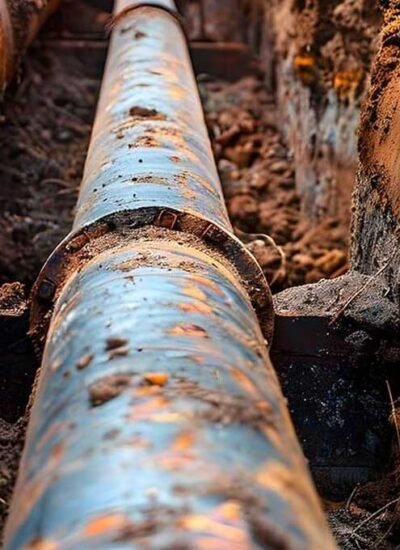
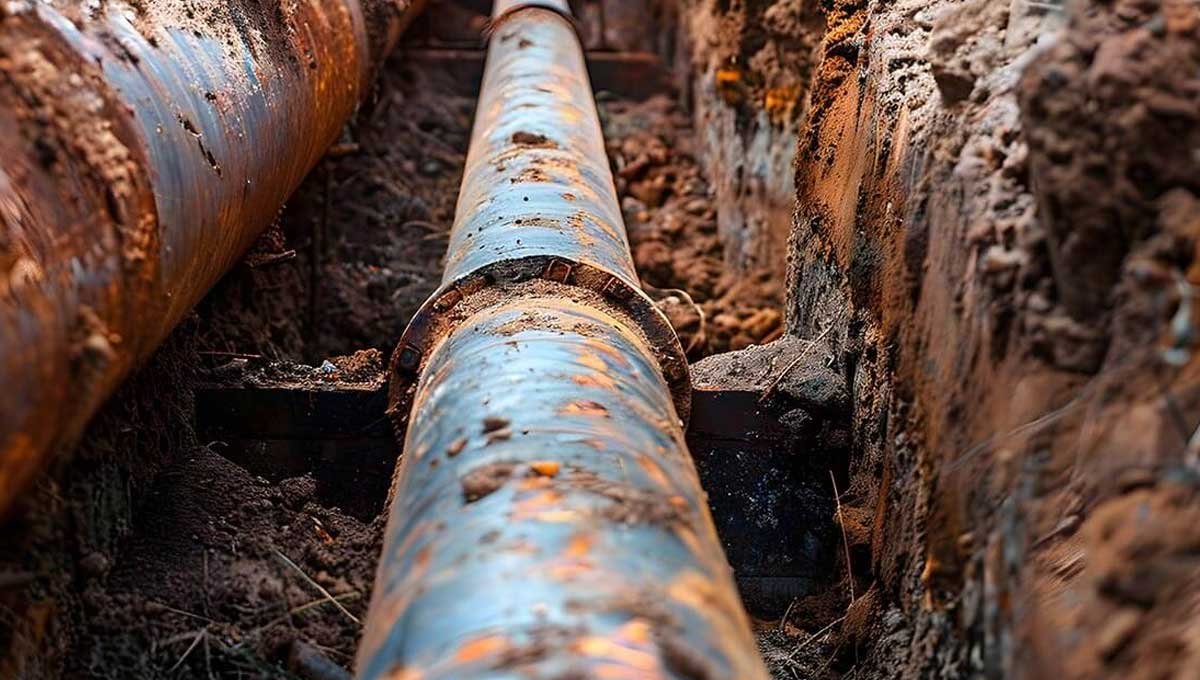
A pipe can look perfectly fine on the outside while completely failing on the inside. That’s the core problem with galvanized steel plumbing — the corrosion is invisible until water pressure drops, discoloration shows up at the tap, or a section finally gives out somewhere behind a wall.
For Houston homeowners in houses built before the mid-1980s, this isn’t a hypothetical. It’s a ticking timeline. And understanding what’s actually happening inside those pipes makes it a lot easier to decide when a patch repair stops making sense and a full replacement becomes the smarter move.
Why Galvanized Steel Was Used in the First Place
Galvanized pipe was the standard residential plumbing material for most of the 20th century. Steel pipe coated in a layer of zinc seemed like a solid solution: the zinc was supposed to act as a sacrificial barrier, slowing corrosion and extending the pipe’s life.
And it works, for a while. The zinc lining does protect the steel underneath — but it doesn’t last forever. Industry estimates typically put the useful lifespan of galvanized pipe at 40 to 70 years, depending on water chemistry, usage patterns, and local conditions. Given that Houston’s water supply varies across the region and many neighborhoods were built out between the 1950s and 1970s, a significant portion of the housing stock is well past that window.
Once the zinc layer is depleted, the steel underneath starts to rust. That rust doesn’t just sit there. It builds up in layers, narrowing the pipe’s interior diameter over time, and it flakes off into the water supply, causing everything from pressure problems to discolored water at the tap.
The Real Signs That Galvanized Pipes Are Failing
Some symptoms are obvious. Others homeowners tend to write off or misdiagnose. Knowing what to look for can save a significant amount of money in repeated patch repairs.
Rusty or brown-tinted water
If the first draw of water from a tap runs orange, brown, or murky — especially in the morning or after a period of non-use — that’s corrosion inside the pipes. Galvanized pipe rust contamination is a documented concern, and while the EPA regulates iron levels in drinking water, consistently discolored water signals a system that is breaking down from the inside out.
Low pressure throughout the house
This is the symptom most homeowners initially blame on the city supply or a single fixture. But when pressure is weak at multiple points throughout the home, the more likely culprit is internal buildup narrowing the pipe bore. Rust scale accumulates in layers over years, and a pipe that was once three-quarters of an inch in diameter can be functionally much narrower, dramatically restricting flow.
Recurring leaks in different locations
A single leak is a repair. Two leaks in different spots within a year or two are a pattern. When corrosion has progressed to the point where the pipe wall is weakening throughout the system, spot fixes are exactly that — fixes to isolated symptoms of a system-wide problem.
Pipe age over 30 to 40 years
If the house was built before 1985 and the original plumbing has never been replaced, the pipes are at minimum 40 years old. Even if visible symptoms haven’t fully emerged yet, internal corrosion is almost certainly underway. A plumber can often confirm this during an inspection by checking the condition at exposed sections or using a hydrostatic test.
What Galvanized Pipes Problems Cause Beyond Water Quality
Galvanized pipes problems in Houston homes don’t stop at water quality and pressure. There are downstream consequences worth understanding.
Appliance damage and shortened lifespans. Water heaters, dishwashers, and washing machines that draw from corroded galvanized lines are exposed to rust sediment and mineral-heavy water. This accelerates wear on heating elements, valves, and internal components.
Insurance and real estate complications. Some home insurers apply restrictions or surcharges to homes with galvanized plumbing. During real estate transactions, galvanized pipes frequently appear in inspection reports as a material concern, and buyers routinely negotiate credits or require replacement as a condition of sale. Sellers who address the issue before listing are in a much stronger position.
Risk of sudden failure. As pipe walls thin from corrosion, the risk of a pinhole leak or burst increases. In a slab-on-grade home — which describes the vast majority of Houston construction — a slab leak from a corroded pipe is a serious event, often requiring both plumbing repair and structural remediation.
What a Full Galvanized Pipe Replacement Actually Involves
This is where homeowners often have the most uncertainty. The phrase “whole-house repipe” can sound disruptive, expensive, and logistically complicated. The reality, when handled by a specialist crew, is considerably more manageable.
A repipe project typically follows this sequence:
- Assessment and quoting. A licensed plumber inspects the existing system, identifies the scope, and provides a fixed price based on the number of fixtures in the home. Pricing per fixture rather than per square foot eliminates the vague, open-ended quotes that make homeowners nervous.
- Access holes and pipe routing. The crew cuts small access holes in walls and ceilings to reach existing pipe runs. On most projects, the disruption is significantly less than homeowners anticipate.
- Installation of new pipe. The old galvanized lines are replaced throughout the home. For most specialist repipe companies working in the Houston area today, Uponor PEX-A has become the material of choice — it’s a cross-linked polyethylene pipe with superior flexibility, excellent resistance to freeze-thaw stress (relevant for Houston’s occasional cold snaps), and a long track record in residential applications. It doesn’t corrode, doesn’t scale internally the way metals do, and it’s significantly more workable than rigid copper, which allows crews to complete installations faster with fewer fittings and potential failure points.
- Pressure testing and permits. Responsible repipe contractors pull the required permits and conduct pressure testing to confirm the new system is performing correctly before any walls are closed.
- Drywall repair and paint. This is where many homeowners get caught out with contractors who don’t include restoration in their scope. A full-service repipe company patches all access holes, matches the existing texture, and repaints the affected areas — so the home looks as it did before the work started.
For homeowners researching their options, Repipe Solutions Inc. has a detailed breakdown of what galvanized pipe replacement involves at the whole-house level, including material specifications, the permitting process, and what the warranty covers.
Why Houston Conditions Make Replacement More Urgent
Houston’s water chemistry varies across the region. Some areas deal with harder water and higher mineral content, which accelerates internal pipe scaling. The city’s heat and humidity also affect how pipes behave, and the freeze events that periodically hit the region, the 2021 winter storm being the most dramatic recent example, can stress aging metal plumbing in ways that accelerate existing corrosion damage.
The soil conditions across Harris and the surrounding counties also matter. Homes on expansive clay soils experience foundation movement over time, which puts mechanical stress on rigid plumbing. PEX-A’s flexibility makes it significantly more forgiving in this environment than older steel pipe.
All of this compounds the natural age problem. A 50-year-old galvanized system in Houston has had decades of hard water, heat cycling, occasional freeze stress, and foundation movement working against it. The pipe that was installed in 1972 was never designed to handle all of that over five decades.
The Cost Question: What to Expect and What It Gets You
Whole-house repipe costs in Texas typically range from roughly $4,000 to $16,000, depending on home size, number of fixtures, and what’s included in the scope. That range is wide, which is why understanding what’s actually in a quote matters.
A low quote that excludes drywall repair leaves homeowners coordinating and paying for a separate contractor after the plumbers leave. A quote based on home location rather than fixture count creates the risk of geographic price markups. Fixed per-fixture pricing gives homeowners a consistent, transparent number and eliminates the guesswork.
For projects where the upfront cost is a concern, repipe specialists increasingly offer financing. A 24-month, 0% financing option, for example, spreads a $12,000 project into manageable monthly payments without interest, which changes the financial calculus for homeowners who might otherwise delay action and keep paying for recurring repairs.
The other cost factor worth noting: the transferable lifetime warranty. When a repipe comes with a warranty that transfers to the next owner, it’s not just a guarantee for the current homeowner — it’s a selling point on the property itself.
Key Takeaways
- Galvanized steel pipes have a finite lifespan, typically 40 to 70 years, and most homes built before 1985 are already in or past that window
- Rust-colored water, low pressure throughout the house, and recurring leaks in different spots are system-wide warning signs, not isolated incidents
- Internal corrosion narrows pipe diameter over time, restricts flow, and contaminates water — the damage isn’t visible from outside the pipe
- A full galvanized pipe replacement with Uponor PEX-A addresses the entire system rather than individual failure points, and specialist crews typically complete the work in one to two days
- Drywall repair, a transferable lifetime warranty, and fixed per-fixture pricing are features that distinguish a complete repipe scope from a basic contractor quote
Frequently Asked Questions
How do I know if my Houston home has galvanized pipes? Homes built before the mid-1980s are the most likely candidates. You can check exposed plumbing — in the garage, utility room, or under sinks — for a dull gray, slightly rough metal surface. Galvanized pipe has a different look and feel from copper (which is orange-brown) and PEX (which is flexible plastic tubing). A licensed plumber can confirm the material and assess its condition during an inspection.
Can I just repair sections of galvanized pipe rather than replacing the whole system? Technically, yes — but it’s worth understanding what you’re solving. A spot repair fixes the section that failed. It does nothing for the rest of the system, which is made of the same material and has experienced the same decades of corrosion. Many homeowners find themselves paying for two or three spot repairs over a few years before concluding that full replacement was the more cost-effective path from the start.
How long does a whole-house galvanized pipe replacement take in Houston? Most residential repipe projects are completed in one to two days. Specialist crews typically shut water off for windows of around five to six hours per day, meaning homeowners don’t lose water overnight and don’t need to relocate during the project.
Will a galvanized pipe replacement improve my water pressure? In most cases, noticeably. Internal rust scale narrowing the pipe bore is one of the most common causes of whole-house pressure reduction. Replacing corroded galvanized lines with properly sized PEX-A removes that restriction and restores flow throughout the system.
Does the pipe material matter, or is PEX-A marketing? The material difference is real. Uponor PEX-A is manufactured using the Engel method, which produces a more uniform molecular structure than other PEX manufacturing processes (PEX-B and PEX-C). This gives PEX-A superior flexibility, better performance at temperature extremes, and the ability to self-heal minor kinks. The American Society of Plumbing Engineers and major building codes recognize PEX-A as a premium residential piping option, and its track record in Houston residential repiping backs that up.
Conclusion
Galvanized pipes don’t fail dramatically most of the time. They fail slowly, quietly, and from the inside, which is why so many homeowners don’t act until the problem has already caused real damage. Understanding how the material ages, what the warning signs actually mean, and what a replacement project involves removes most of the uncertainty that leads to delayed decisions.
A home with modern plumbing is a more reliable, more insurable, and more sellable asset. For houses in Houston with aging galvanized lines, the question isn’t really whether to replace them — it’s whether to do it before or after the next significant failure.



Leave a Reply