 You’ve decided your child is going to learn Chinese. Brilliant. You’ve found a tutor, cleared a slot in the schedule, and then, it hits you. Which Chinese, exactly? If you’ve ever found yourself Googling “Mandarin vs. Cantonese” at midnight, you’re in good company. Many parents in Thailand face this exact question before booking private Chinese lessons (this is commonly referred to as เรียนจีน ตัวต่อตัว in Thai).
The good news? For most families, the answer is simpler than you might think.
What’s the Actual Difference Between Mandarin and Cantonese?
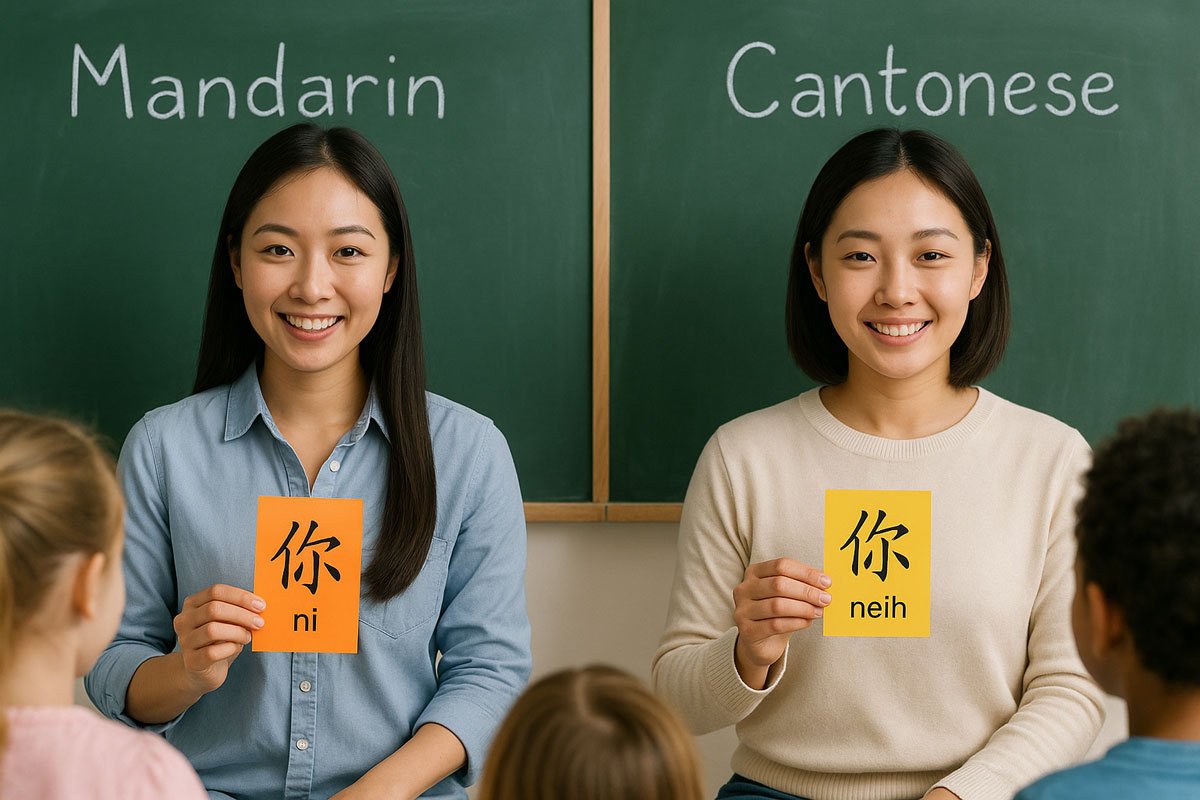
Both are Chinese languages, but they’re about as similar in speech as Thai and Vietnamese. They share a written script, which is why reading a Chinese menu feels consistent regardless of region. Spoken, however, they sound entirely different and are largely mutually unintelligible.
Mandarin is the official language of Mainland China, Singapore, and Taiwan. It’s what you hear in Chinese news broadcasts, business meetings, and international schools.
Cantonese, on the other hand, is dominant in Hong Kong, Macau, and parts of Guangdong Province in Southern China. Both are tonal languages, so neither is particularly “easier” for a Thai child to pick up.
Why Most Families Are Choosing Mandarin
The shift towards Mandarin among families is hard to ignore, and it makes a lot of practical sense.
China shares deep economic ties with other countries. For instance, Chinese investment in Thai infrastructure, tourism, and trade continues to grow, making Mandarin a genuinely useful professional skill. International schools across Bangkok and Chiang Mai are also incorporating Mandarin into their curricula at an increasing rate, meaning children who already have a foundation will have a clear advantage.
Beyond Thailand, Mandarin opens doors globally. It’s the most widely spoken language in the world by native speakers, and demand for Mandarin-proficient professionals spans finance, technology, and diplomacy. The pool of qualified Mandarin tutors is also significantly larger, giving parents more options when choosing the right fit for their child.
When Cantonese Might Actually Be the Better Fit
Cantonese isn’t the wrong choice. It’s simply a more specific one. If your family has Cantonese-speaking roots, starting your child in Cantonese preserves that cultural connection in a meaningful way. Some children also develop a genuine love for Hong Kong cinema or Cantopop, and learning the language deepens that passion considerably.
For these kids, Cantonese lessons can be deeply motivating.
What to Expect From Private Chinese Lessons in Either Language
A strong private tutor doesn’t just teach vocabulary. They observe how your child learns and adjust accordingly, whether that means slowing down on tones or making lessons more visual and game-based. This matters especially with tonal languages, where one-on-one attention helps children build correct pronunciation habits early, before mistakes become ingrained.
Within the Thai education system, children who receive personalised language coaching consistently outperform peers in classroom-only settings. Starting early with the right tutor and the right language makes a measurable difference.
Start Your Children on the Right Path!
Preparing your child for international school, a future career, or simply a broader worldview starts with one good decision. Mandarin is the practical choice for most families, but what matters just as much is the quality and fit of the tutor your child works with. The right teacher makes the language come alive.
If you’re ready, explore the best private Chinese lessons by qualified tutors who can help you choose the right language, giving your child the strongest possible start!




Leave a Reply