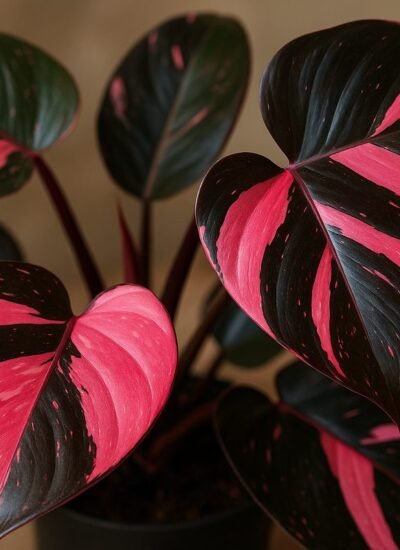
What Makes the Philodendron Pink Princess Special
The Philodendron Pink Princess has become something of a legend among houseplant enthusiasts, and it’s not hard to see why. This plant features deep, almost black-green leaves dramatically splashed with hot pink variegation. Each leaf displays its own unique pattern, making every plant a one-of-a-kind living masterpiece.
This eye-catching variety comes from the tropical rainforests of South America, specifically Colombia and Ecuador. What’s interesting is that the Pink Princess isn’t found growing wild in nature. It’s actually a hybrid cultivar of Philodendron erubescens, created through careful cross-pollination by Florida grower Robert McColley to achieve those signature marbled pink leaves.
Why Plant Collectors Love It
The Pink Princess has earned its place as a statement piece in any indoor plant collection. The unpredictable pink patterns mean you’ll never find two leaves that look exactly the same. Some leaves might show just a hint of pink, while others are almost completely covered in bubble-gum colored sections.
What really sets this plant apart is how it manages to look incredibly exotic while remaining relatively straightforward to care for. That combination of rare beauty and manageable maintenance explains why it’s become one of the most coveted houseplants around.
Light Requirements – Keeping That Pink Color Vibrant
Getting the light right is hands-down the most critical factor for maintaining those gorgeous pink leaves. Your Philodendron Pink Princess needs several hours of bright, indirect light every day. Without it, the plant will start producing green leaves instead, and that defeats the whole purpose.
A spot near a north or east-facing window usually works perfectly. The plant can handle a bit of direct morning sun, but you’ll want to protect it from harsh afternoon rays that can burn the leaves.
Here’s the thing about the pink variegation: it’s not permanent if conditions aren’t right. When the plant doesn’t get enough light, new growth comes in green. Once a leaf has turned completely green, there’s no going back. It won’t magically turn pink again, even if you move the plant to a brighter spot.
Reading the Signs
Your plant will tell you when something’s off with the lighting. If you’re seeing less pink on new leaves, or the leaves are getting smaller and greener, that’s your cue to find a brighter location. Leaves dropping off can also signal a light problem.
On the flip side, brown crispy spots or a washed-out, bleached look means the plant is getting sunburned. Just move it a bit further from the window or add a sheer curtain to filter the light.
Getting the Watering Schedule Right
Root rot is the number one killer of Pink Princess Philodendrons, so getting watering right matters. These plants like their soil to dry out partially between drinks. Stick your finger into the soil about an inch or two deep. If it feels dry at that depth, it’s time to water.
During spring and summer when the plant is actively growing, you’ll probably water about once a week. In fall and winter, the plant slows down, so you can stretch that to every week and a half or even two weeks.
When in doubt, wait another day. It’s much easier to save an underwatered plant than one that’s been sitting in soggy soil. Make sure your pot has drainage holes, and don’t let it sit in a saucer full of water.
Watering Techniques That Work
If your tap water is heavily chlorinated, let it sit out overnight before using it. Better yet, use filtered water if you have it. The plant’s roots can be sensitive to chemicals.
Try bottom watering if you want consistent results. Set the pot in a shallow tray of water for 15-20 minutes and let the soil soak up moisture from below. This method encourages the roots to grow deeper and helps keep fungus gnats at bay.
Creating the Right Environment
As a tropical plant, the Pink Princess does best in soil that drains well but still holds some moisture. Mix equal parts regular potting soil, perlite, and orchid bark. This combination keeps the roots happy without getting waterlogged.
Temperature-wise, aim to keep your home between 65-80°F. The plant will tolerate normal household conditions pretty well, just keep it away from cold drafts and heating vents.
Humidity is where things get a bit more demanding. These plants really thrive when humidity levels hit 50-60% or higher. If your home runs dry, especially in winter, consider getting a small humidifier. You can also set the pot on a tray filled with pebbles and water. As the water evaporates, it creates a more humid microclimate around the plant.
Skip the misting, though. It doesn’t do much for humidity levels, and the water droplets left on leaves can actually invite pests and fungal issues.
Growing More Plants and Keeping Them Shaped
Propagating a Pink Princess is surprisingly easy. Cut a stem that has a few leaves and several nodes (those little bumps where leaves grow from). Let the cut end dry out for a few hours, then pop it in a jar of water with the nodes submerged.
You’ll see roots starting to grow in a couple of weeks. Once they’re about an inch long, plant the cutting in soil and you’ve got a brand new Pink Princess.
These plants naturally want to vine and climb. Adding a moss pole gives them something to grab onto, which encourages bigger leaf growth and keeps the plant looking tidy. If you prefer a bushier look, prune it back in spring.
Feeding Your Plant
Feed your Pink Princess once a month during spring and summer with a balanced liquid fertilizer. Here’s the key: dilute it to quarter-strength. These plants have sensitive roots that burn easily with too much fertilizer.
Because variegated plants have less chlorophyll, they sometimes grow a bit slower than their all-green cousins. Don’t push it with extra fertilizer. And definitely skip feeding in fall and winter when the plant is resting.
Troubleshooting Common Issues
Leaves turning green is the most common complaint, and the fix is simple: more light. Move the plant closer to a window or supplement with a grow light.
Brown spots usually mean sunburn. Pull the plant back from direct sun. Brown, crispy leaf tips point to low humidity. Boost the moisture in the air around your plant.
Keep an eye out for spider mites, which seem to love Pink Princesses. Check the undersides of leaves weekly. Catch them early and they’re easy to deal with using insecticidal soap or neem oil.
Understanding the Price Tag
If you’ve shopped for a Pink Princess, you’ve probably experienced sticker shock. There are real reasons behind those high prices.
The plant is a patented cultivar grown primarily through tissue culture in labs, which is expensive. Even more challenging, the pink variegation is genetically unstable. Growers end up discarding a large percentage of baby plants that don’t show enough pink.
Big commercial growers won’t touch them because of the reversion risk. That leaves production to smaller specialty growers with higher costs. Add in the time it takes to grow a plant to a decent size, and you’ve got a perfect storm of supply and demand driving up prices.
The good news is that once you’ve got one, you can propagate it yourself and share the pink princess love with friends.




Leave a Reply