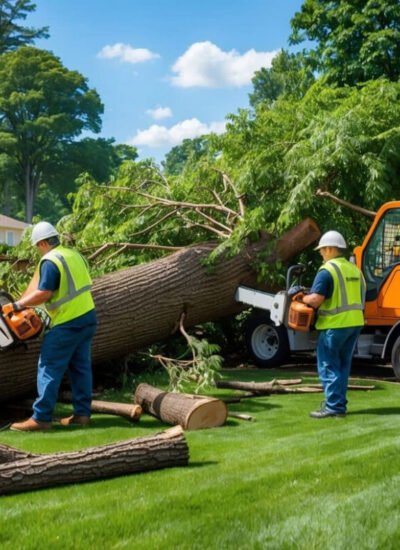
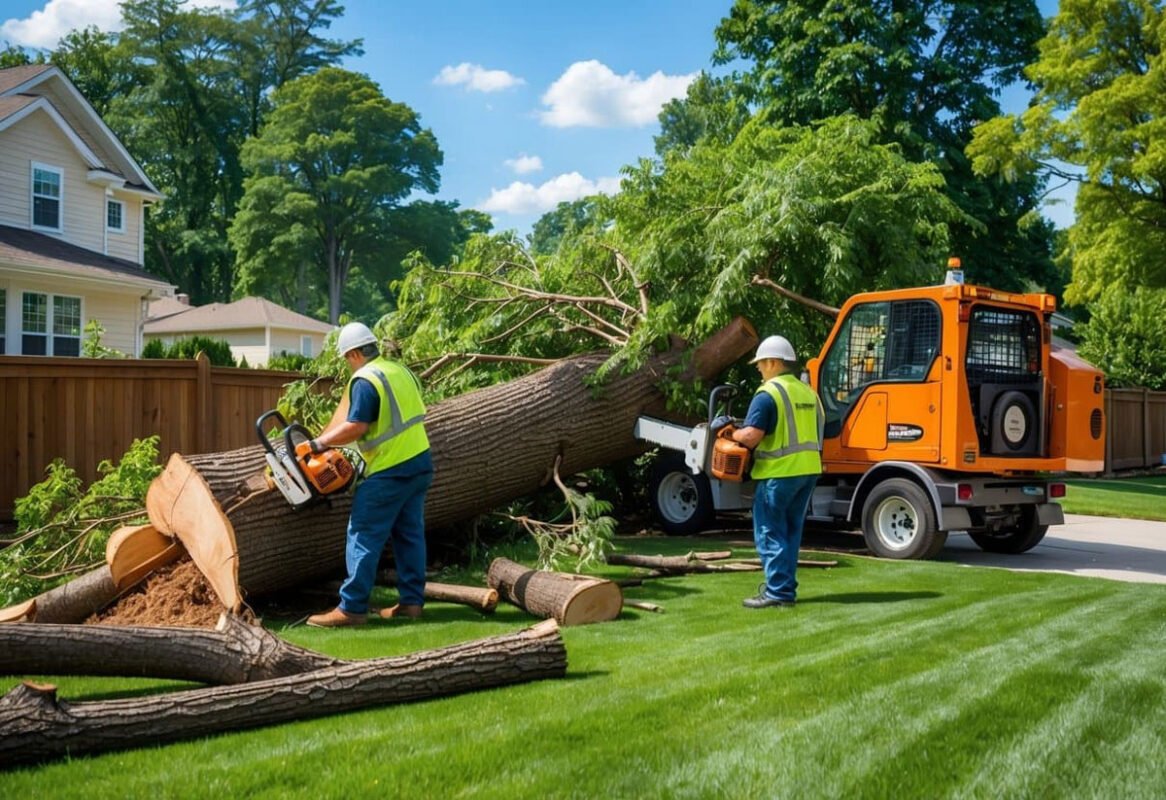
 Removing a large tree is rarely simple — and on a tight lot, it becomes even more delicate. Many mature trees grow just feet away from homes, fences, driveways, and utility lines. Add in local permit requirements and limited equipment access, and what might seem like a straightforward removal quickly turns into a carefully coordinated operation.
On smaller properties, there’s little room for error. Foundations, patios, overhead services, and neighboring structures all sit within range of falling debris or shifting weight. Careful planning, controlled dismantling, proper rigging, and ground protection are what keep the work precise and contained. Addressing staging areas, debris handling, root zones, and final site checks helps prevent costly repairs, supports insurance documentation, and keeps the project moving efficiently from start to finish.
Precision Planning on Tight Lots
Before any cutting begins, the entire site should be documented in detail. Record rooflines, siding, fences, driveways, irrigation heads, gas meters, and overhead service lines. Measure canopy spread, trunk diameter at breast height (DBH), lean direction, and visible weight bias to determine the appropriate removal method, such as sectional dismantling, crane support, or specialty rigging. A written site plan should outline drop zones, rigging anchor points, and equipment staging areas, typically prepared by a qualified tree removal service experienced in confined-lot projects.
Access planning often determines success on small properties. Confirm gate widths, overhead clearance, and soil load limits before equipment arrives to avoid repositioning mid-project. Protect turf with ¾-inch plywood roadways or composite mats, and flag underground utilities through required locates. When equipment movement is mapped in advance, crews reduce surprise adjustments that commonly cause incidental property damage.
Controlled Dismantling Techniques
Limited drop corridors and adjacent roofs constrain where sections can land. Sectional dismantling keeps each cut deliberate and supported; top-down removal with secured rigging lets crews lower limbs in controlled segments instead of dropping them. Fit friction devices such as port-a-wrap systems to regulate descent speed and limit swing radius over roofs or fencing.
Pre-tensioning heavier branches before final cuts reduces shock loading that can shift the trunk and cause unexpected movement. Designate a single ground lead to direct rope handling, confirm clear landing zones, and use rehearsed hand signals so each lowered section lands precisely where intended and crews stay coordinated for the next operation.
Structural and Utility Risk Mitigation
Large trees often extend over foundations, patios, retaining walls, and service lines. Before removal, inspect masonry for cracks, note settlement areas, and identify utilities within the root zone. Confirm required clearances from overhead electrical lines and coordinate locates for underground gas, water, and irrigation to prevent accidental strikes during equipment staging.
When canopy sections extend above structures, crane lifts can eliminate lateral swing and place loads directly into controlled landing zones. Confirm utility notifications and required shutdown windows in advance to prevent service interruptions or compliance issues.
Root Zone and Soil Management
Stump depth and remaining root mass determine how ground will settle after removal. Grind stumps to a depth consistent with planned replanting, turf restoration, or future construction to prevent uneven settlement, and remove surface roots that are lifting walkways while maintaining soil stability around adjacent trees to avoid unintended destabilization.
After grinding, replace grindings with compacted native soil rather than leaving loose debris, especially in high-traffic areas where settling causes trip hazards. Regrade and evaluate drainage patterns so water does not pool where canopy coverage previously moderated rainfall impact, and schedule a post-settlement check six to twelve months after work to confirm grading performance.
Post-Removal Property Safeguards
After sectional dismantling, small fragments can remain in gutters, planting beds, roof valleys, and lawn edges. A detailed cleanup should include hand-checking downspouts, gravel borders, HVAC pads, and under shrubs for wood shards or metal hardware. Photograph cleared areas and the exposed stump face to create a clear record of work completion.
Walk the property with the owner to review stump depth, soil replacement, and cleanup results. Provide written notes outlining any expected settling timelines and recommended follow-up care for transparency and peace of mind.
Large tree removal in confined spaces comes down to preparation and steady execution. Careful documentation, clearly defined drop zones, protected soil, and organized debris handling all help keep surrounding structures safe. Grinding the stump to the appropriate depth, replacing grindings with compacted native soil, and reviewing drainage patterns support long-term ground stability. Nearby trees should also be checked for increased wind exposure after canopy loss. When each phase is planned and recorded, property owners gain clarity and confidence. An experienced crew working methodically helps limit repair costs while preserving the integrity and value of the site.



Leave a Reply