A reliable hot water supply is fundamental to the comfort and hygiene of any home. However, water heaters, like all appliances, have a finite lifespan and will eventually require professional attention. Recognizing the early warning signs of a failing unit can save homeowners from unexpected cold showers, costly water damage, and significant inconvenience. We understand that discerning these indicators can be challenging, but being proactive can make all the difference.
One of the most straightforward indicators that your water heater may be approaching the end of its service life is its age. Most conventional tank water heaters are designed to last between 8 to 12 years. If your unit is within or beyond this age range, it’s wise to start monitoring its performance more closely. While some units might exceed this average, their efficiency often declines, and the risk of failure increases significantly. For tankless systems, the lifespan can extend to 20 years or more with proper maintenance, but age still plays a role in overall reliability.
Another tell-tale sign that your water heater is struggling is the presence of rusty water coming from your hot water taps. This often indicates corrosion within the water heater’s tank itself. Rust can compromise the tank’s integrity, leading to leaks and eventual failure. While sometimes rusty water can be attributed to corroded pipes in older homes, if the rust only appears when using hot water, the water heater is the likely culprit. This issue not only affects water quality but also signals a structural problem within the unit that cannot typically be repaired.
Frequent repairs are a clear signal that your water heater is becoming a money pit and might be nearing replacement. If you find yourself calling for service every few months to address issues like pilot light problems, thermostat malfunctions, or heating element failures, the cumulative cost of these repairs can quickly outweigh the investment in a new, more efficient unit. We often advise homeowners that if the cost of a single repair approaches 50% of the cost of a new water heater, replacement is generally the more economical and practical long-term solution.
Inconsistent temperatures or a complete lack of hot water are perhaps the most frustrating signs of a failing water heater. If your showers start cold, turn hot, then go cold again, or if the hot water supply runs out much faster than it used to, it indicates a problem with the unit’s ability to heat water efficiently or maintain a consistent temperature. This could be due to a faulty thermostat, a failing heating element (in electric models), or significant sediment buildup in the tank, which reduces its capacity and heating efficiency.
Finally, any evidence of storage tank leaks demands immediate attention. Even a small puddle around the base of your water heater can indicate a serious problem. Leaks often develop due to cracks in the tank caused by corrosion, excessive pressure, or sediment buildup. Once a tank begins to leak, it is almost always beyond repair and requires immediate replacement to prevent extensive water damage to your home. Ignoring a leak can lead to structural damage, mold growth, and significant repair costs for your property. Recognizing these signs early allows you to plan for a new installation rather than reacting to an emergency.
When to Choose New Water Heater Installation Over Repair
Deciding whether to repair an existing water heater or invest in a new installation is a common dilemma for homeowners. While a quick fix might seem appealing in the short term, a comprehensive diagnostic assessment by a qualified professional is crucial for making an informed decision that considers long-term costs and benefits. This assessment will help determine the root cause of the problem and the overall health of the unit.
One of the most definitive reasons to opt for replacement over repair is internal tank corrosion. As mentioned, rust inside the tank can lead to leaks. Once the protective lining of the tank is compromised, rust will continue to spread, and patching a corroded tank is not a viable or safe solution. A leaking tank means the entire unit needs to be replaced. Similarly, if the main structural components are corroded, it’s time for a new unit.
Heating element failure in electric water heaters or burner assembly issues in gas models can often be repaired. However, if these components fail repeatedly, or if the cost of replacing them is substantial, it points towards an aging system that is likely to experience other failures soon. The age of the unit, combined with the expense of the repair, often tips the scales toward replacement.
Another compelling reason for new installation revolves around energy efficiency upgrades. Older water heaters, especially those more than a decade old, are significantly less energy-efficient than modern models. They consume more energy to heat water, leading to higher utility bills. Investing in a new, energy-efficient model, such as an Energy Star-rated tank or tankless unit, can lead to substantial long-term savings on energy costs, effectively paying for itself over its lifespan. This is a consideration for homeowners and businesses alike, as both seek to minimize operational expenses. For those managing commercial properties in Los Alamitos, CA, understanding the nuances of when to repair versus replace is critical for operational continuity and cost management, much like homeowners need to make similar strategic decisions for their residences. Finding reliable support for these decisions, whether for a home or a business, is key. Homeowners looking for expert advice on this decision can find valuable insights on topics like Commercial Water Heater Repair Los Alamitos, which often covers the broader considerations for hot water system reliability.
Furthermore, if your current water heater is undersized for your household’s hot water needs, a new installation provides an opportunity to upgrade to a unit with appropriate capacity. This ensures you have an adequate and consistent supply of hot water for your family’s demands. Considering all these factors, a professional evaluation will provide a clear recommendation, helping you make the best decision for your home’s comfort and your budget.
Selecting the Right System: Tank vs. Tankless Water Heater Installation
When it comes to water heater installation, homeowners today have two primary options: traditional tank water heaters and modern tankless water heaters. Each system offers distinct advantages and disadvantages, making the choice dependent on your household’s specific needs, budget, and lifestyle. Understanding these differences is key to selecting the right system for your home.
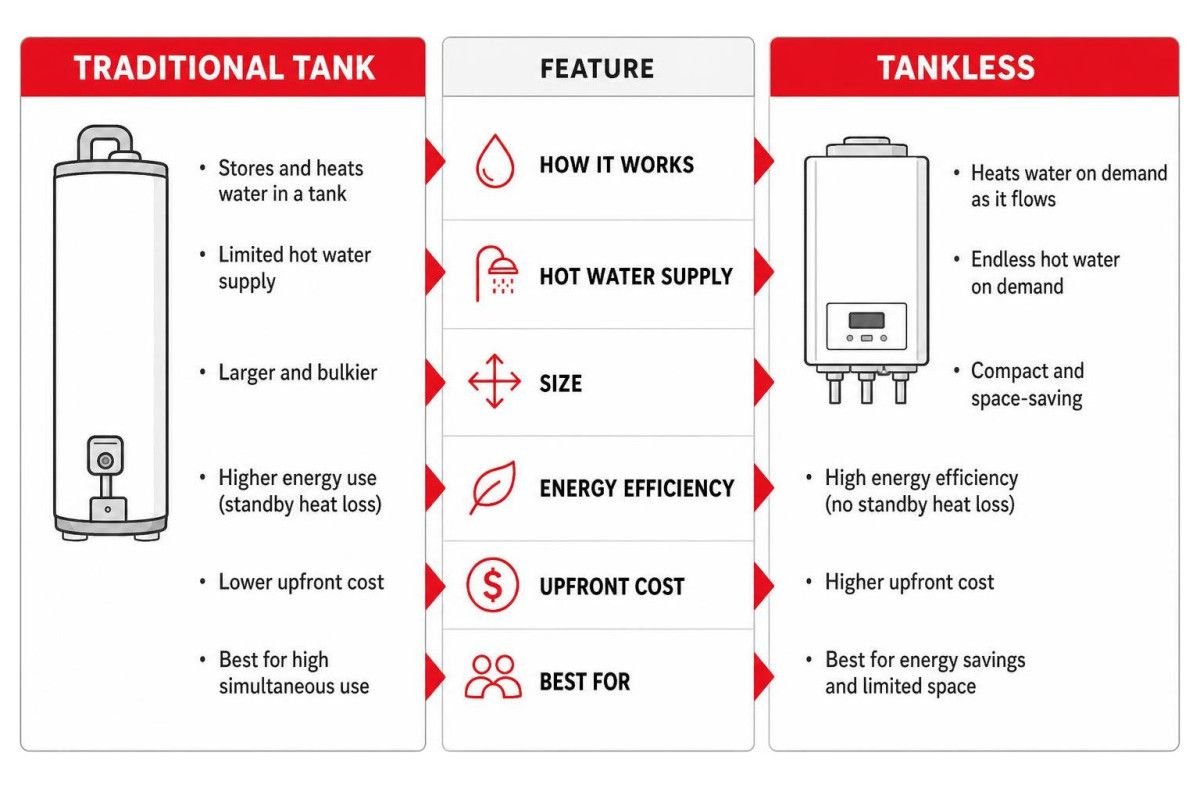
Traditional tank water heaters store and continuously heat a large volume of water in an insulated tank, typically ranging from 30 to 80 gallons for residential use. They are generally less expensive to purchase and install upfront. These systems provide a ready reserve of hot water, which is beneficial for homes with consistent, high-volume hot water demand, such as multiple showers running simultaneously. However, they are subject to standby heat loss, meaning energy is expended to keep the water hot even when it’s not being used. This can lead to higher energy bills compared to tankless models. Their large size also requires dedicated space in a utility closet, basement, or garage.
Tankless water heaters, also known as on-demand water heaters, operate differently. They heat water directly as it flows through the unit, eliminating the need for a storage tank. This means they provide an endless supply of hot water as long as the demand is continuous and within the unit’s capacity. Their compact size makes them ideal for homes where space-saving design is a priority, as they can be mounted on a wall. Tankless units are highly energy-efficient because they only heat water when needed, significantly reducing standby heat loss and potentially lowering utility bills. However, their initial purchase and installation costs are typically higher than traditional tank models. They also require proper sizing to ensure they can meet peak hot water demand without fluctuations.
The choice between the two often comes down to balancing initial cost, long-term energy savings, and hot water delivery method. Consider your household’s typical hot water usage patterns, the available space for installation, and your budget for both upfront costs and ongoing energy expenses.
Maximizing Efficiency with Tankless Water Heater Installation
For many homeowners, tankless water heater installation represents a significant upgrade in terms of comfort, convenience, and energy efficiency. The primary appeal of tankless systems is their ability to provide an endless hot water supply. Unlike tank models that can run out of hot water after a certain period of high demand, a properly sized tankless unit will continuously heat water as long as the faucet is open, ensuring everyone in the household can enjoy a hot shower without interruption.
This on-demand heating capability translates directly into lower utility bills. By eliminating standby heat loss, tankless water heaters only consume energy when hot water is actively being used. This can result in substantial energy savings over the lifespan of the unit, making them a more environmentally friendly and cost-effective option in the long run.
Beyond energy savings, tankless water heaters boast a longer lifespan compared to their tank counterparts. With proper maintenance, tankless units can last 20 years or more, often double the lifespan of a traditional tank water heater. This extended durability further enhances their long-term value proposition. Their compact size also frees up valuable space in your home, which can be particularly advantageous in smaller residences or for those looking to maximize storage.
To ensure optimal performance and longevity, descaling requirements are a critical maintenance aspect for tankless water heaters, especially in areas with hard water like Los Alamitos. Mineral deposits can accumulate inside the heat exchanger, reducing efficiency and potentially causing damage. Annual professional descaling, typically involving flushing the unit with a vinegar solution, is recommended to remove these deposits and maintain peak performance.
Finally, professional sizing is paramount for a successful tankless water heater installation. An undersized unit will struggle to meet your household’s peak hot water demand, leading to lukewarm water or insufficient flow rates. A qualified technician will assess factors such as the number of hot water fixtures, their flow rates, and your household’s simultaneous hot water usage patterns to recommend a unit with the appropriate flow rate (gallons per minute, GPM) and temperature rise capacity. This ensures your tankless system delivers the endless hot water and efficiency benefits you expect.
Crucial Steps for a Safe and Code-Compliant Water Heater Installation
A new water heater installation is more than just connecting pipes; it’s a complex process that must adhere to stringent safety standards and local building codes. These regulations are in place to protect your home and family from potential hazards such as carbon monoxide leaks, gas explosions, electrical fires, and water damage. Attempting a DIY installation without a thorough understanding of these requirements can lead to serious safety risks and costly penalties.
One of the first and most crucial steps is permit procurement. In Los Alamitos, as in many other municipalities, a permit is typically required for water heater replacement or installation. This ensures that the work is inspected by local authorities to verify compliance with all applicable codes. A professional installer will handle the permit application process, ensuring all necessary documentation is submitted and inspections are scheduled. Skipping this step can lead to fines, difficulties with insurance claims, and potential issues when selling your home.
Proper installation involves several technical considerations, particularly for gas-fired units. This includes ensuring adequate ventilation and correct sizing and installation of safety valves, such as the temperature and pressure relief (T&P) valve. This valve is a critical safety device designed to release water if the temperature or pressure inside the tank exceeds safe limits, preventing potential explosions. The discharge pipe from the T&P valve must be correctly routed to an appropriate drain, preventing scalding or water damage.
Proper venting is another non-negotiable aspect for gas water heaters. Exhaust gases, including dangerous carbon monoxide, must be safely expelled from your home. This requires a correctly sized and installed vent pipe that terminates outside the building, away from windows and air intakes. Issues with venting can lead to carbon monoxide buildup indoors, a silent and deadly threat. Electric water heaters, while not requiring venting, have their own electrical requirements that must be met, including dedicated circuits and proper wiring.
For gas water heaters, secure and leak-free gas line connections are paramount. Any compromise in these connections can lead to gas leaks, posing a severe fire and explosion risk. A professional plumber will use appropriate materials and techniques to ensure all gas connections are tight, tested, and compliant with local codes. They will also verify that the gas supply is adequate for the new unit’s BTU rating.
Why Professional Water Heater Installation Beats DIY
While the idea of saving money through a do-it-yourself water heater installation might be tempting, the complexities and potential hazards involved make professional installation the overwhelmingly superior choice. Entrusting this task to certified plumbers offers numerous benefits, starting with warranty protection. Most water heater manufacturers require professional installation for their product warranties to remain valid. A DIY installation, or one performed by an unlicensed individual, could void your warranty, leaving you responsible for the full cost of repairs or replacement if something goes wrong.
Professionals also ensure the correct installation of critical components like pressure reducing valves and thermal expansion tanks. A pressure reducing valve helps regulate incoming water pressure, protecting your water heater and other plumbing fixtures from damage due to excessive pressure. A thermal expansion tank is essential for tank-style water heaters, accommodating the expansion of water as it heats up, preventing undue stress on the tank and plumbing system. Incorrect installation or omission of these components can lead to premature water heater failure and potential damage to your home’s plumbing.
Perhaps most importantly, professional installation significantly mitigates the risk of water damage prevention. Improperly connected water lines can lead to leaks, which can cause extensive and costly damage to floors, walls, and foundations. Plumbers have the expertise and specialized tools to ensure all water connections are secure and leak-free, providing peace of mind. They also know how to properly drain and dispose of your old water heater, preventing environmental contamination and ensuring safe removal.
Beyond these practical considerations, licensed plumbers are trained to identify and address unforeseen issues that may arise during installation, such as outdated plumbing, insufficient electrical capacity, or inadequate gas lines. Their expertise ensures that your new water heater operates safely, efficiently, and in full compliance with all local codes, providing reliable hot water for years to come.
Essential Maintenance Tips to Protect Your Investment
Regular maintenance is crucial for extending the lifespan of your water heater, maintaining its efficiency, and preventing unexpected breakdowns. Just like any other major appliance in your home, a water heater benefits significantly from a proactive approach to care. By following a few essential maintenance tips, homeowners can protect their investment and ensure a consistent supply of hot water.
One of the most important maintenance tasks for tank-style water heaters is sediment flushing. Over time, minerals and sediment from your water supply can accumulate at the bottom of the tank. This buildup reduces the water heater’s efficiency, as it creates an insulating layer between the heating element or burner and the water. It can also cause noisy operation, reduce the tank’s capacity, and lead to premature failure. We recommend flushing your water heater once a year, or more frequently in areas with hard water, to remove these deposits. This involves connecting a hose to the drain valve and allowing several gallons of water to flow out until it runs clear.
Another vital component to inspect is the anode rod. Often referred to as the “sacrificial rod,” it’s designed to corrode before the steel tank itself. The anode rod attracts corrosive elements in the water, protecting the tank’s interior lining. Over time, the anode rod will deteriorate and needs to be replaced, typically every 3 to 5 years, depending on water quality. A professional inspection can determine the condition of your anode rod and replace it if necessary, significantly extending the life of your tank.
Periodically checking and adjusting your water heater’s temperature settings can also contribute to efficiency and safety. Most manufacturers recommend setting the thermostat to 120°F (about 49°C). This temperature is hot enough for most household needs, helps prevent scalding, and reduces energy consumption compared to higher settings. If you notice your hot water is too hot or not hot enough, a professional can safely adjust the thermostat.
Regularly performing leak detection checks around your water heater is a simple yet effective way to catch potential problems early. Inspect the tank, pipes, and connections for any signs of moisture, drips, or puddles. Even small leaks can escalate into significant water damage if left unaddressed. Early detection allows for timely repairs, preventing more extensive and costly issues.
Finally, scheduling annual professional tune-ups is perhaps the most comprehensive way to protect your water heater. During a professional service visit, a technician will perform a thorough inspection, check all components, test safety features, and address any minor issues before they become major problems. This includes checking the T&P valve, inspecting the burner or heating elements, examining gas lines for leaks, and ensuring all electrical connections are secure. For tankless units, professional descaling is a key part of this annual service. Regular professional maintenance ensures your water heater operates safely, efficiently, and reliably for its maximum lifespan.
Frequently Asked Questions about Water Heater Installation
Homeowners often have many questions when considering a new water heater installation. We’ve compiled answers to some of the most common inquiries to help you feel more informed and confident in your decisions.
How long does a standard water heater installation take?
The duration of a standard water heater installation can vary depending on several factors, including the type of water heater (tank vs. tankless), the complexity of the job, and whether any modifications to existing plumbing or venting are required. For a straightforward replacement of a tank-style water heater with a similar unit in the same location, the process typically takes between 2 to 4 hours. This includes draining and removing the old unit, positioning and connecting the new one, and testing its operation.
However, if you’re upgrading from a tank to a tankless system, or if the installation involves relocating the unit, upgrading gas lines, or modifying electrical connections or venting, the process can take longer, potentially a full day or even more. We always provide an estimated timeline after a thorough assessment of your specific installation needs.
What is the average lifespan of a newly installed water heater?
The average lifespan of a newly installed water heater depends significantly on its type and how well it is maintained. A conventional tank-style water heater typically lasts between 8 to 12 years. Factors such as water quality (e.g., hard water can shorten lifespan), usage patterns, and the frequency of maintenance (like anode rod inspection and flushing) play a crucial role.
Tankless water heaters, on the other hand, generally boast a longer lifespan, often lasting 20 years or more. Their design, which eliminates a storage tank prone to corrosion, contributes to this extended durability. However, proper annual descaling and maintenance are essential to achieve this longevity, especially in areas with mineral-rich water. Investing in regular professional maintenance for either type of unit is the best way to maximize its lifespan.
Do I need a permit for a new water heater installation?
Yes, in most jurisdictions, including Los Alamitos, a permit is required for a new water heater installation or replacement. This requirement is in place to ensure that the installation complies with local building codes, safety standards, and environmental regulations. These codes are designed to protect your home and family from potential hazards such as carbon monoxide leaks, gas explosions, electrical fires, and water damage.
A professional plumbing company will handle the permit application process on your behalf, ensuring that all necessary documentation is submitted and that the installation is inspected by local authorities. Attempting to install a water heater without a permit can lead to fines, difficulties with insurance claims in the event of an incident, and potential issues when you decide to sell your home. Always confirm permit requirements with your chosen professional installer.
Conclusion
Ensuring a reliable supply of hot water is fundamental to the comfort and functionality of any home. By understanding the key signs that indicate your water heater needs attention, making informed decisions between repair and replacement, and selecting the right system for your needs, homeowners can proactively manage their hot water systems. Whether you opt for a traditional tank or a modern tankless unit, the importance of professional installation cannot be overstated, guaranteeing safety, code compliance, and optimal performance.
Beyond installation, diligent preventative care through regular maintenance is the cornerstone of extending your water heater’s lifespan and maximizing its efficiency. Tasks like sediment flushing, anode rod inspection, and temperature adjustments, complemented by annual professional service, will safeguard your investment and minimize the risk of unexpected breakdowns. A well-maintained water heater ensures long-term reliability, providing consistent hot water for your daily needs and contributing to the overall comfort and value of your home.



Leave a Reply