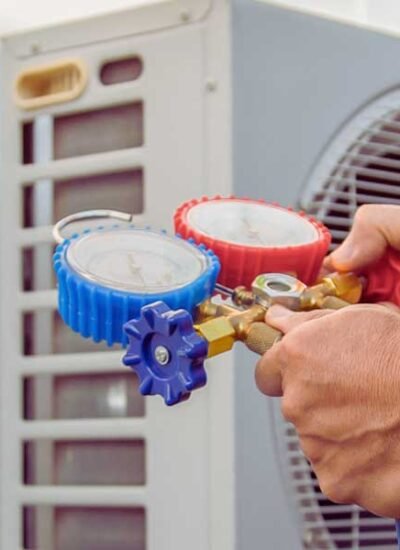
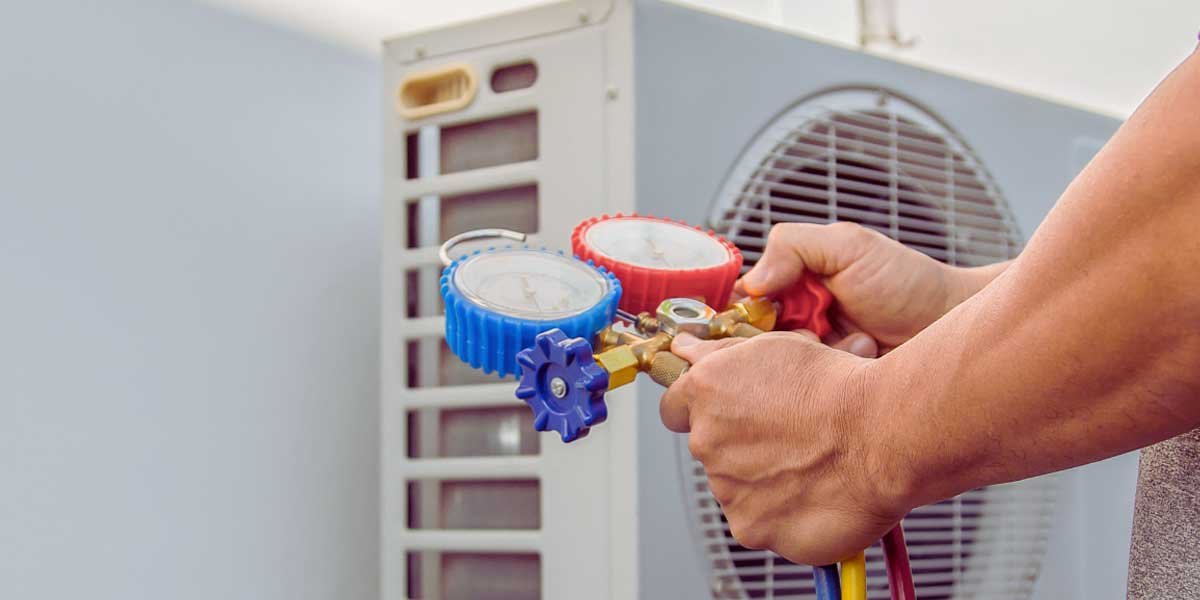
Low refrigerant in an AC is usually caused by a leak, not normal use. A properly sealed air conditioner should keep circulating the same refrigerant charge year after year.
That single detail changes the whole conversation. If a home air conditioner is low on refrigerant, the fix is not simply to add more and hope for the best. The system has lost charge because refrigerant escaped, was never charged correctly, or moved through a damaged part that can no longer hold pressure. Warm air from the vents is only the symptom.
For homeowners, the tricky part is that a low-charge system can look like several other AC problems. A dirty filter, a weak blower motor, a clogged coil, or a bad thermostat can also make a house feel sticky and slow to cool. Low refrigerant becomes more likely when poor cooling comes with ice on the evaporator coil, hissing near a line set, long run times, or a technician’s pressure readings that do not match the manufacturer’s target. What causes low refrigerant in AC is usually one of those pressure-loss problems, not ordinary summer operation.
Short Answer: AC Refrigerant Gets Low Because Something Went Wrong
Refrigerant is not fuel, and your AC does not burn it, consume it, or gradually use it up during normal cooling. Low charge points to leakage, incorrect charging, or service-related loss.
In a split central AC or heat pump, refrigerant moves through a sealed loop between the indoor evaporator coil and outdoor condenser. It absorbs heat inside, carries that heat outside, releases it, then repeats the cycle. When the charge drops, the system loses some of its ability to move heat, and the pressure-temperature balance inside the coil changes.
The U.S. Department of Energy says a professional maintenance visit should verify the correct refrigerant charge and airflow rate specified by the manufacturer. ENERGY STAR also warns that too much or too little refrigerant reduces efficiency, raises energy cost, and can shorten equipment life. That is why guessing at the charge is a bad habit. The right answer depends on the equipment, refrigerant type, airflow, outdoor temperature, and actual leak condition.
| Cause | How it happens | Common clue | Best next step |
|---|---|---|---|
| Evaporator coil leak | Corrosion or metal fatigue creates pinholes in the indoor coil | Ice on coil, weak cooling, oily residue near coil cabinet | Leak test and coil repair or replacement quote |
| Line set leak | Copper tubing rubs, kinks, corrodes, or cracks at a joint | Hissing, oily stain, charge loss after service | Pressure test and repair the damaged section |
| Loose service valve or Schrader core | A small valve does not seal after service or age | Slow leak near outdoor unit service ports | Replace or tighten valve component, then verify charge |
| Poor installation | Flared, brazed, or mechanical joints were not sealed correctly | Problem appears within months or a few seasons | Leak check installation joints and review workmanship warranty |
| Factory defect or damaged component | A coil, valve, or fitting leaves the factory with a weakness | Newer equipment loses charge without obvious abuse | Check equipment warranty before approving a major repair |
Refrigerant Leaks Are the Main Cause of Low AC Refrigerant
Most low-refrigerant calls come down to a leak somewhere in the sealed system, even when the leak is too small to see right away during a quick visual inspection.
Leaks often start as pinholes. They may form in the evaporator coil, condenser coil, copper line set, brazed joints, service valves, or fittings. A tiny leak can release charge slowly enough that the AC limps along for a season before the house feels uncomfortable. A larger leak can make cooling collapse in days.
One practical clue is oil. Refrigerant oil circulates with the refrigerant, so a greasy stain around a joint or coil can point toward a leak location. Another clue is sound. A noticeable hiss near a line or coil cabinet can mean refrigerant is escaping under pressure, although many real leaks are silent.
The awkward truth is that a technician may not find a very small leak during a quick visit. That does not mean the refrigerant disappeared mysteriously. It means the leak may need a more patient test: electronic detection, ultraviolet dye, nitrogen pressure testing, soap bubbles at suspect joints, or isolation of a coil or line set.
“It’s a waste of money to keep dumping charge into it, while being bad for the wallet it’s also bad for the environment. 8 years old is relatively young, to the point where the pieces that are leaking might be under warranty. Get a leak search, and a quote for proper repair…”
– r/hvacadvice, April 2026
Evaporator Coil Leaks: The Indoor Problem That Often Gets Missed
An evaporator coil leak is one of the most common reasons a home AC loses refrigerant, especially as the system ages and the indoor coil faces moisture, corrosion, and vibration.
The evaporator coil sits inside the indoor air handler or furnace cabinet. Warm return air passes across that cold coil, and the refrigerant inside the coil absorbs heat from the air. Because the coil lives in a damp environment and deals with constant temperature swings, it can become vulnerable to corrosion and stress over time.
Homeowners usually notice the result before they know the cause. The AC runs longer. The house cools poorly in the afternoon. Airflow may feel weaker if ice forms on the coil and blocks air movement. Sometimes water appears around the indoor unit after the frozen coil melts. That water can look like a drain problem even when the underlying issue is low refrigerant.
A coil leak can be repairable in some cases, but many residential coils are replaced rather than patched. The decision depends on coil age, refrigerant type, warranty coverage, leak location, labor cost, and whether the rest of the system is still worth investing in.
Line Set, Joint, and Service Valve Leaks
Low refrigerant can also come from the copper lines and connection points between the indoor and outdoor equipment, particularly where tubing rubs, joints age, or service valves fail.
The line set looks simple from the outside: one insulated suction line and one smaller liquid line. In practice, those copper lines may run through walls, crawl spaces, attics, basements, or exterior penetrations. Any place the tubing rubs against framing, bends sharply, corrodes, or connects to another component can become a leak point.
Service valves deserve special attention. A small Schrader core inside a service port works much like a tire valve. If that core loosens, gets damaged, or does not reseal after gauges are connected, the system can lose refrigerant slowly. This is one of the less dramatic causes, but it is also one of the more frustrating ones because the rest of the equipment may be healthy.
When a system loses charge soon after a repair or recharge, a valve, cap, flare, braze joint, or disturbed connection moves higher on the suspect list. A careful technician will usually inspect the areas that were touched before condemning an expensive coil.
Poor Installation Can Leave an AC Low on Refrigerant from the Start
A new or recently replaced AC can be low on refrigerant because the installation was charged wrong or because a connection was not sealed properly.
Installation quality matters more than many homeowners realize. A split system must be evacuated correctly, checked for leaks, and charged according to the manufacturer’s method. Some systems require weighing in refrigerant. Others require checking superheat or subcooling under specific operating conditions. If the installer cuts corners, the equipment may never run at its intended charge.
Bad installation can show up as undercharge, overcharge, moisture in the system, non-condensable gases, or a leak at a joint. The symptoms may be subtle at first: longer cooling cycles, high utility bills, rooms that never quite settle down, or a compressor that sounds strained on hot afternoons.
If a system is less than a few years old and already low, ask about labor warranty, parts warranty, and whether the installer documented the original charge and startup readings. That paperwork can save money and arguments later.
Age, Corrosion, Vibration, and Physical Damage
Older AC systems lose refrigerant more often because metal parts weaken, protective coatings wear down, corrosion spreads, and vibration works on tubing and joints year after year.
Outdoor units live a rough life. They sit through rain, heat, lawn chemicals, pet urine, salt air in coastal areas, falling branches, and the occasional string trimmer hit. Indoor coils face moisture, airborne chemicals, dust, and condensate. None of those conditions guarantees a leak, but they increase the odds as the system gets older.
Corrosion is especially sneaky. A coil can look mostly normal while one small area has already thinned enough to leak. Vibration can do something similar at brazed joints and tube bends. The system may pass a quick visual inspection and still lose pressure over time.
Age changes the repair math. A ten-year-old system with one accessible valve leak is different from a sixteen-year-old R-22 system with a leaking indoor coil. One is usually a repair conversation. The other may be a replacement conversation, especially if refrigerant and parts are expensive.
Signs Your AC May Be Low on Refrigerant
The most common signs of low AC refrigerant are weak cooling, long run times, ice on the coil or refrigerant lines, warm air from vents, and rising energy use.
These symptoms are not proof by themselves. They are clues. A dirty filter can cause ice. A bad capacitor can make the outdoor unit underperform. A clogged condensate drain can shut a system down. Still, when several symptoms line up, low refrigerant deserves a serious look.
- Warm air from supply vents: The AC runs, but the air is not cold enough to cool the house.
- Long cooling cycles: The system runs almost nonstop and still misses the thermostat setting.
- Frozen evaporator coil: Ice forms inside the air handler or on the larger insulated refrigerant line.
- Higher electric bills: The AC works longer to deliver less cooling.
- Hissing or bubbling sounds: Escaping refrigerant may make noise near a leak point.
- Humidity problems: The home feels clammy because the system is not removing moisture effectively.
- Short cycling after icing: The system may shut down or behave erratically once airflow and pressure fall out of range.
If you see ice, turn the cooling off and set the fan to on if your thermostat allows it. Do not chip at the ice with a tool. Let the coil thaw before anyone tries to diagnose airflow or refrigerant readings. A frozen coil can hide the real conditions a technician needs to measure.
Why Recharging the AC Alone Is Usually Not Enough
Adding refrigerant without fixing the cause can restore cooling for a while, but it does not solve the leak, loose valve, or installation fault that made the system low.
A recharge can be reasonable in a narrow situation: the leak is extremely small, the system is old, the homeowner understands the tradeoff, and replacement is already being planned. Even then, it is a temporary decision. It should not be sold as a real repair.
There is also a legal and environmental side. The U.S. Environmental Protection Agency requires technicians who handle refrigerants in stationary air-conditioning equipment to follow Section 608 rules, and refrigerant should not be intentionally released during service. Homeowners do not need to memorize those regulations, but they should know enough to avoid casual “top off” service that ignores leak diagnosis. EPA guidance for homeowners also advises working with dealers that employ EPA-certified technicians to handle refrigerants.
Too much refrigerant is not safer than too little. An overcharged system can run high pressure, cool poorly, and stress the compressor. A correct charge is a measured condition, not a guess.
How a Technician Finds the Cause of Low Refrigerant
A proper diagnosis checks both refrigerant charge and the conditions that can mimic low charge, especially airflow across the indoor coil, before blaming the sealed refrigerant circuit.
A good technician should not walk in, attach gauges, and immediately sell refrigerant. The readings only mean something when the system is clean enough and moving enough air to test properly. If the blower is weak or the filter is blocked, pressure readings can mislead the diagnosis.
- Check airflow first. The technician looks at filter condition, blower operation, coil cleanliness, and return-air restrictions.
- Inspect visible refrigerant components. Service valves, caps, brazed joints, coils, and line sets are checked for oil, corrosion, rub marks, or obvious damage.
- Measure operating conditions. Pressures, temperatures, superheat, subcooling, outdoor temperature, indoor wet bulb, and supply-return temperature split may all matter.
- Perform leak detection. Electronic leak detectors, bubbles, dye, or pressure testing help locate the leak rather than only proving the charge is low.
- Repair and verify. After repair, the system should be evacuated if opened, charged correctly, and tested under stable operating conditions.
That process takes more time than a quick recharge, but it separates a real repair from a disappearing act. The cold air should not be gone again next month.
Home AC vs. Car AC: Same Word, Different System
Home AC and car AC both use refrigerant, but diagnosis, service rules, leak points, and recharge methods are different enough that advice for one can mislead the other.
This matters because many search results mix the two topics. A car’s A/C system has hoses, a compressor driven by the engine or electric motor, vibration from driving, and service fittings designed for automotive equipment. A home central AC has a stationary split system, long copper lines, indoor and outdoor coils, and different refrigerant handling rules.
The basic principle is shared: refrigerant should stay inside a closed loop. The service path is not the same. Do not use automotive recharge advice on a home air conditioner, and do not assume a home HVAC diagnosis applies cleanly to a vehicle.
What Homeowners Can Check Before Calling for Service
You cannot safely confirm refrigerant charge without proper tools, but you can check the simple airflow and outdoor-unit problems that often look like low refrigerant from inside the house.
Start with airflow. Replace a dirty filter, make sure supply registers are open, check that return grilles are not blocked by furniture, and look for obvious ice on the indoor coil cabinet or refrigerant line. Then check the outdoor unit. It should be running during a cooling call, with the fan spinning and the coil reasonably clear of leaves, grass, and cottonwood fluff.
Do not add refrigerant yourself. In the United States, refrigerant handling for home AC systems is regulated, and the tools needed for safe recovery, charging, evacuation, and leak checking are not casual household items. A can, a hose, and a pressure color zone are not a diagnosis.
Before the service call, write down what you noticed: when cooling started getting worse, whether the coil froze, whether the outdoor unit runs, whether the filter was dirty, and whether the system was recently serviced. That small note saves the technician from playing detective with half the clues missing.
Should You Repair the Leak or Replace the AC?
The repair-or-replace decision depends on system age, leak location, refrigerant type, warranty coverage, compressor condition, total repair cost, and whether the leak can be fixed durably.
A newer system with a leaking service valve or covered coil usually deserves repair. A much older system with a major coil leak, unavailable parts, or an expensive refrigerant may not. The point is not that replacement is always better. The point is that another recharge can hide the real financial decision.
| Situation | Repair often makes sense when | Replacement may make sense when |
|---|---|---|
| Small accessible leak | The leak is at a valve, cap, or repairable joint | The system has multiple leaks or severe corrosion |
| Indoor coil leak | The coil is under warranty and the outdoor unit is healthy | The system is old and the coil repair is a large share of replacement cost |
| Older refrigerant system | Parts and refrigerant are available at a reasonable cost | Refrigerant is costly, parts are scarce, and efficiency is poor |
| Repeated low-charge calls | A specific leak is finally found and repairable | No durable repair has been made after repeated recharges |
Ask for two numbers if the diagnosis is serious: the cost to repair the specific leak and the cost to replace the system. A reputable contractor should be able to explain what failed, how confident they are, and what would happen if you do nothing.
Ways to Lower the Risk of Low Refrigerant Problems
You cannot prevent every refrigerant leak, but maintenance reduces the airflow, corrosion, vibration, and neglect problems that make AC failures show up earlier and cost more.
Annual maintenance should include airflow checks, coil inspection, electrical testing, condensate inspection, and refrigerant performance checks when symptoms justify them. The Department of Energy recommends maintenance of filters, coils, fins, and refrigerant lines for efficient AC operation, including checking refrigerant charge and testing for leaks during service.
- Change or clean filters on schedule so the evaporator coil gets proper airflow.
- Keep the outdoor condenser clear of weeds, leaves, mulch, and yard debris.
- Protect copper lines from rubbing against walls, framing, or sharp metal edges.
- Avoid spraying harsh chemicals near coils and refrigerant lines.
- Schedule service when cooling performance changes, rather than waiting for total failure.
- Keep installation and service records, including warranty documents and startup readings.
A clean system with good airflow is easier to diagnose. That does not make refrigerant leaks impossible, but it removes the noise from the signal.
FAQ About What Causes Low Refrigerant in AC
Can AC refrigerant get low without a leak?
AC refrigerant should not get low without a leak, incorrect original charge, or service-related loss. What causes low refrigerant in AC? Usually, it is a break in the sealed system, because refrigerant keeps cycling rather than being consumed.
How often should a home AC need refrigerant?
A home AC should not need refrigerant on a schedule. If it needs refrigerant every year, or even every few years, the system likely has an unresolved leak.
Is low refrigerant dangerous for the compressor?
Low refrigerant can damage the compressor because the system may run hotter, longer, and outside its intended pressure range. Compressor replacement is often one of the most expensive AC repairs.
Does ice always mean low refrigerant?
Ice does not always mean low refrigerant. Frozen coils can also come from dirty filters, weak airflow, blocked return ducts, dirty coils, or blower problems.
Can I run my AC if it is low on refrigerant?
You should avoid running an AC that may be low on refrigerant until it is checked. Continued operation can increase compressor strain and may turn a repairable leak into a larger bill.
Why did my AC lose refrigerant after a repair?
An AC that loses refrigerant after a repair may have a disturbed fitting, leaking service valve, incomplete repair, or a separate leak that was not found during the first visit.
Is Freon the same as refrigerant?
Freon is a commonly used name people apply to refrigerant, but it originally referred to branded refrigerant products. Technicians usually identify the actual refrigerant type, such as R-410A, R-22, or newer alternatives.
Final Takeaway
The cause of low refrigerant in AC is almost never ordinary use. It is usually a leak, a bad connection, poor installation, damage, corrosion, or a component that can no longer hold pressure.
The smartest move is to treat low refrigerant as a diagnosis that needs evidence, not as an invitation to keep topping off the system. Find the leak if the system is worth repairing. Price the repair honestly if it is not. Cold air feels good right away, but a sealed system that stays charged is what actually solves the problem.
Sources: U.S. Department of Energy central air conditioning guidance, ENERGY STAR heating and cooling maintenance checklist, and U.S. Environmental Protection Agency homeowner refrigerant guidance.



Leave a Reply