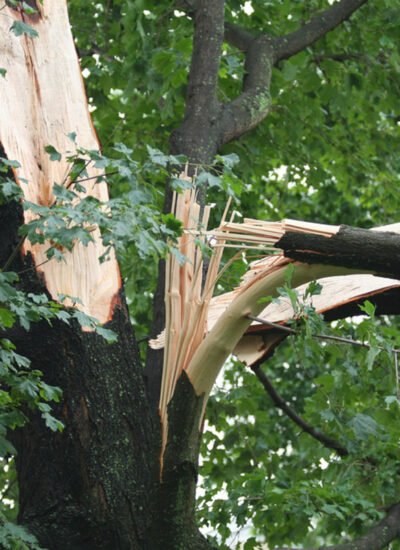
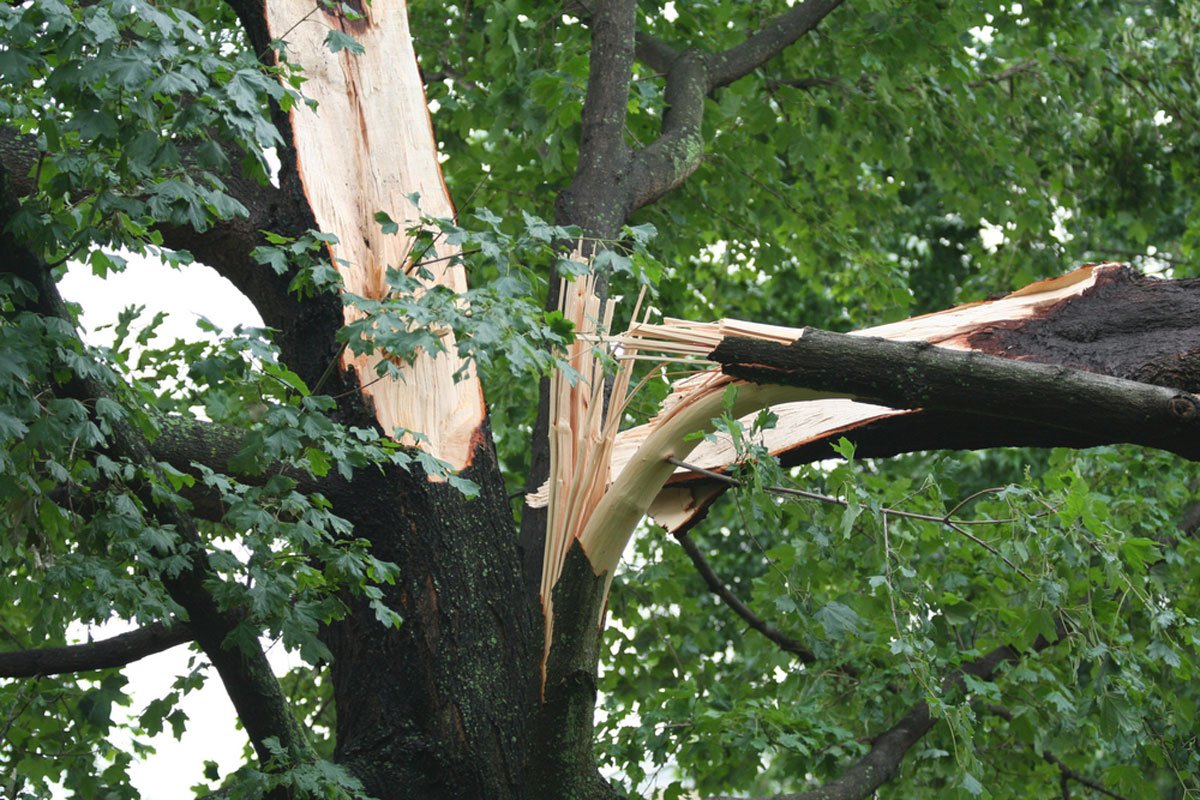
 There is nothing quite like the sound of a massive thunderclap to make you glance nervously at the oak tree towering over your driveway. We all love our trees for the shade and curb appeal they provide, but they can turn into liabilities the second the wind picks up. If you want to keep your roof intact, you need to know what to look for before the clouds turn gray. Most homeowners in our area rely on the professional tree service Chesapeake, VA offers to handle the heavy lifting. Still, you can do a lot of the initial detective work yourself just by walking your property once a month.
The Warning Signs of V-Shaped Unions
When you look at where a branch meets the main trunk, you want to see a nice, strong “U” shape. This is called a wide crotch angle, and it means the wood is well-integrated and sturdy. The real trouble starts when you see a tight “V” shape.
In these narrow unions, the bark from the branch and the bark from the trunk actually push against each other as they grow. This creates something called “included bark,” which prevents the two pieces of wood from ever truly bonding. During a storm, that V-junction acts like a natural wedge. A strong gust of wind can easily split the tree right down the middle because there is no structural connective tissue holding those two heavy pieces together.
Deadwood and Hangers
This might seem obvious, but dead branches are the first things to fly during a gale. A living branch has flexibility; it can bend and sway with the wind. A dead branch is brittle, heavy, and just waiting for a reason to fall.
Look for limbs that lack leaves when the rest of the tree is lush, or branches where the bark is peeling off in large chunks. Sometimes, you might even spot a “hanger”—a branch that has already snapped but is currently being cradled by other limbs. These are literal ticking time bombs. If you see wood that looks gray, brittle, or shows signs of fungal growth, it is time to get it down before it chooses its own landing spot on your car.
Cankers and Deep Cracks
If you see a section of bark that looks sunken, oozing, or discolored, you are likely looking at a canker. This is essentially an open sore on the tree caused by bacteria or fungi. Cankers eat away at the structural integrity of the wood underneath. If a heavy limb is growing out of a section of the trunk that has a large canker, that limb is much more likely to snap at the base.
Similarly, keep an eye out for deep vertical cracks that go through the bark and into the wood. A surface-level scratch is usually fine, but a deep fissure indicates that the internal structure of the tree is failing. If you see two cracks on opposite sides of the same limb, that branch is essentially held together by a prayer and should be removed immediately.
Cavities and Hollow Trunks
A hole in a tree might look whimsical, like something out of a childhood storybook, but in reality, it often means the tree is rotting from the inside out. Wood-decay fungi can hollow out the center of a branch or the main trunk.
While a tree can survive with some internal decay, there is a limit to how much it can tolerate. If more than a third of the branch is hollow, it has lost the majority of its strength. You can sometimes test this by gently tapping the wood with a rubber mallet; a hollow “thud” vs. a solid “crack” can tell you a lot about what is happening behind the bark.
The Lean and Root Issues
Sometimes the problem isn’t a single branch, but the way the whole tree interacts with the ground. If a tree suddenly starts leaning, or if you notice the soil mounding up on one side of the base (heaving), the root system is failing.
Weak roots mean the entire canopy is unstable. In a heavy rainstorm, the soil becomes saturated and loose. If the roots aren’t anchored properly, the weight of the branches will pull the whole thing over. Watch for “epicormic sprouts”—those tiny, thin little branches that shoot out from the base of the trunk. This is often a sign that the tree is stressed and trying to compensate for damage or disease elsewhere.
Final Word: Taking Action Before the Clouds Roll In
Spotting these issues early can save you thousands of dollars in home repairs and keep your family safe. While minor pruning is a DIY task for some, large limbs and structural cracks require professional expertise and specialized equipment. If you feel like your trees are looking a bit sketchy, it is always a smart move to call in a reputable tree service Chesapeake, VA locals trust to perform a safety audit. Taking care of a weak limb today is much cheaper and less stressful than pulling that same limb out of your living room tomorrow afternoon.



Leave a Reply