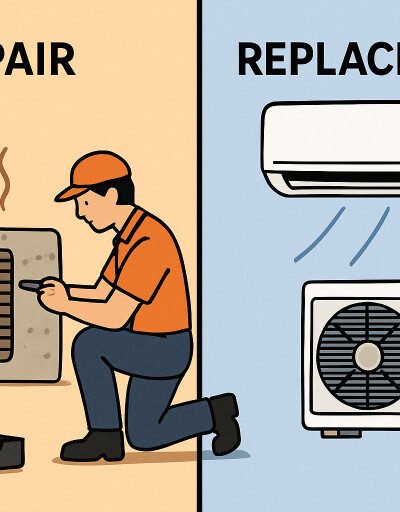
Dealing with air conditioner issues can be difficult: should you repair the equipment or invest in a new system? Homeowners must weigh several key factors to make an informed choice that ensures home comfort and long-term savings. Whether your cooling system starts making unusual noises or struggles to maintain a steady temperature, evaluating its condition is essential. For those in the area, you can find reliable AC repair in Freehold Township, NJ to help guide your next steps.
Both the age of your air conditioner and the costs associated with repairs matter when deciding whether to fix or replace. Many homeowners are surprised by how quickly efficiency and performance can decline as systems get older. Additionally, newer air conditioners not only cool more effectively but also consume less energy, ultimately saving you money on utility bills over time.
Assessing the Age of Your Air Conditioner
Most air conditioning units are designed to last 10 to 15 years, depending on the brand, installation quality, and maintenance history. Regularly serviced systems, especially those under ten years old, are often worth repairing if they encounter minor issues. However, units older than 12 years, especially those still using the now-banned R-22 refrigerant, are marked by decreased energy efficiency and higher repair and operating costs.
An older AC system is more likely to break down during stressful heat waves, so if your unit has reached the end of its typical lifespan, replacing it is generally recommended. According to the U.S. Department of Energy, upgrading to new energy-efficient models can lead to substantial utility savings and fewer maintenance headaches.
Evaluating Repair Costs
Some AC repairs are minor and relatively budget-friendly. Replacing a faulty thermostat or capacitor can be straightforward and low-cost for younger systems in good overall condition. However, when major repairs are required, such as compressor or evaporator coil replacements, expenses can be significant. A widely accepted guideline is the “50% rule”: if the estimated repair cost exceeds half the price of a new system, investing in replacement generally delivers greater value in the long run.
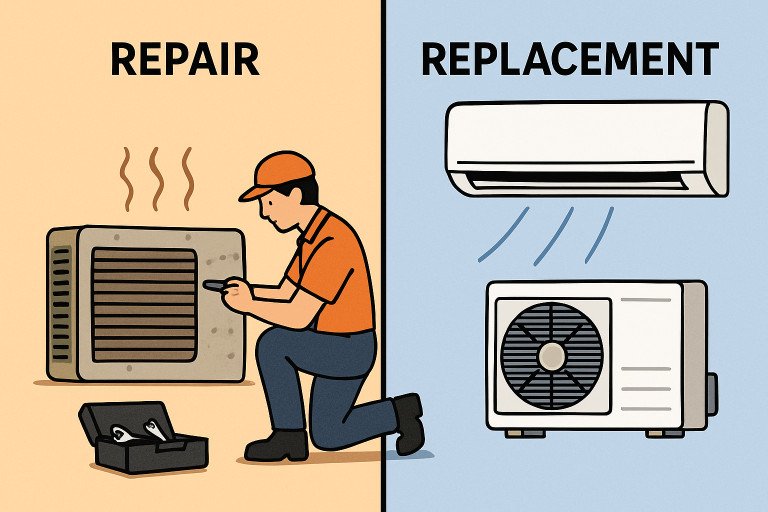
Keep in mind that frequent service calls due to recurring malfunctions quickly add up, both financially and in terms of inconvenience. As your system ages, even moderate repairs can signal the need for a more sustainable solution.
Considering Energy Efficiency
Energy efficiency is a key factor in your long-term home cooling costs. Air conditioners built a decade or more ago often have lower Seasonal Energy Efficiency Ratio (SEER) ratings, which translate into higher monthly energy use. Newer units have much higher SEER ratings, meaning they use less energy to achieve the same level of cooling. This efficiency can slash cooling costs by up to 20 percent, making the initial installation cost more attractive over time.
Besides the immediate savings on your energy bill, the switch to a modern, high-efficiency air conditioner supports broader environmental goals by reducing your carbon footprint.
Frequency of Breakdowns
Frequent AC breakdowns are more than just a hassle; they are often a sign your system is reaching the end of its operational lifespan or has underlying problems that can no longer be resolved cost-effectively. Each repair adds to your total costs and can leave you without cooling during the hottest days of the year. If you find yourself calling for repairs several times a season, replacement is the more reliable and economical solution for long-term comfort and peace of mind.
Environmental Considerations
The type of refrigerant your AC system uses has become increasingly important. Older units reliant on R-22 (commonly known as Freon) are being actively phased out in line with environmental protection guidelines. Replacement parts and refrigerant are becoming scarce and expensive, making repair of these systems less practical. Upgrading to a newer AC model that utilizes environmentally friendly refrigerants ensures compliance with current regulations and enables easier future servicing.
Financial Incentives and Rebates
Installing a new, energy-efficient air conditioner can be more affordable than many realize, thanks to incentives and rebates. Utility companies and government agencies frequently offer financial programs that encourage homeowners to upgrade to high-SEER systems. These rebates help offset installation costs and can bring the price of replacement even closer to what you might pay for repeated repairs.
Consulting with HVAC Professionals
Before deciding, consult a licensed HVAC technician. Professionals can evaluate your system’s age, efficiency, and repair needs, providing expert recommendations tailored to your specific situation and budget. Their experience allows you to make the most informed and practical choice for both your comfort and your financial future.
Final Thoughts
Choosing between air conditioner repair and replacement involves a careful assessment of age, repair costs, energy savings, and environmental impact. Carefully evaluating these factors and consulting with HVAC experts helps ensure the best outcome for your home’s comfort and your wallet. Prioritizing efficiency and reliability can make a significant difference in both your daily comfort and your monthly utility bills.


Leave a Reply