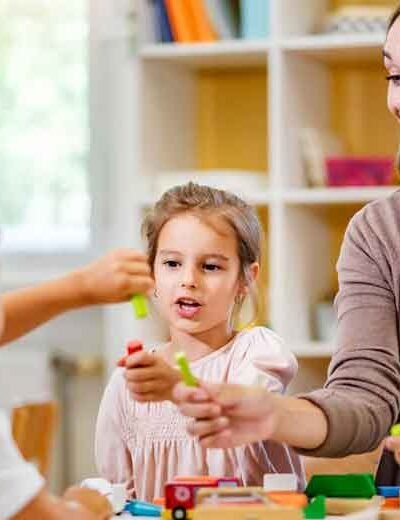
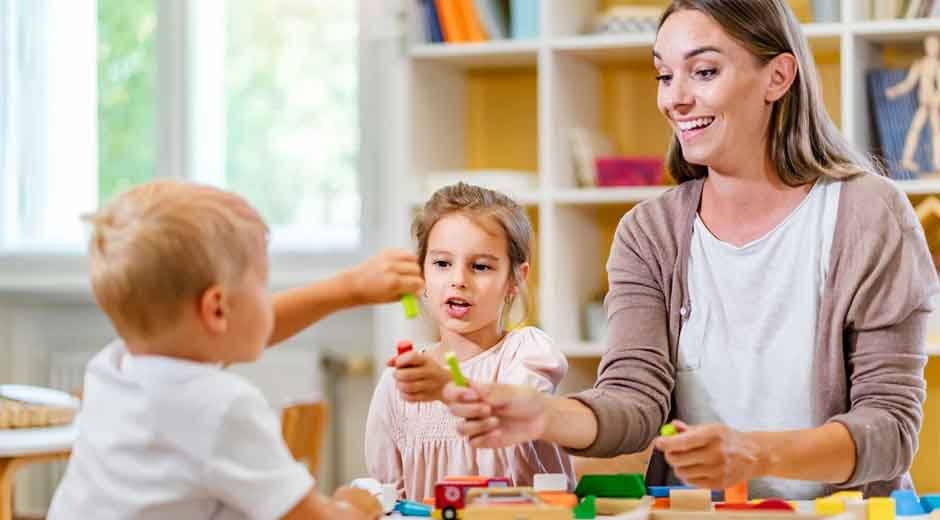
If you’ve researched ABA therapy in the Bay Area, you’ve probably encountered conflicting images of what it actually looks like. Some descriptions paint a picture of children sitting at tables, completing repetitive drills with flashcards and rigid compliance demands. Others show joyful kids playing, laughing, and learning naturally through activities they genuinely enjoy. So which is it? The truth is, modern ABA therapy — when done right — looks much more like the second scenario. Play isn’t just a break from “real therapy” or a reward for completing work.
Play is the therapy. It’s the primary vehicle through which young children learn communication, social skills, problem-solving, and emotional regulation. Quality ABA providers understand that when therapy feels fun, children are more engaged, more motivated, and learn faster and more meaningfully than they ever could through forced compliance at a table.
Here’s why play matters so profoundly in ABA therapy, what play-based learning actually looks like, and how it differs from outdated approaches that gave ABA a bad reputation.
Why Traditional ABA Got It Wrong
To understand why play matters, we need to acknowledge where ABA went wrong historically.
Early Applied Behavior Analysis, developed in the 1960s and 70s, was heavily table-based and adult-directed. Children sat in chairs for hours, completing discrete trial training—highly structured teaching that looked like:
Therapist: “Touch nose.” (models touching nose)
Child: (touches nose)
Therapist: “Good!” (gives small reward)
Repeat 10-20 times
Move to next target
While this approach produced measurable skill acquisition, it had serious problems:
- Children didn’t generalize skillsbeyond the therapy table
- Learning felt like work, leading to resistance and burnout
- Intrinsic motivation wasn’t developed—kids only performed for external rewards
- Social and play skills were neglectedin favor of rote compliance
- The approach didn’t respect children’s autonomy, interests, or emotional needs
Many autistic adults who experienced this traditional ABA describe it as traumatic, dehumanizing, and focused on compliance rather than genuine development.
Thankfully, the field evolved.
The Shift to Naturalistic, Play-Based ABA
Modern ABA therapy—particularly approaches like Natural Environment Teaching (NET), Pivotal Response Treatment (PRT), and incidental teaching—looks radically different.
These contemporary approaches are grounded in research showing that children learn best when:
- They’re engaged with preferred activities
- Learning happens in natural contexts (play, routines, community)
- They have choices and controlover activities
- Motivation comes from within, not just external rewards
- Skills are functional and immediately useful
Play-based ABA embeds systematic teaching into activities children already love—building with blocks, playing pretend, swinging at the park, baking cookies, splashing in water. These same ideas continue outside therapy sessions, where well-designed learning spaces at home support play, communication, and everyday skill development. The therapist follows the child’s lead, joining their interests while strategically creating opportunities to practice communication, social interaction, problem-solving, and other targeted skills.
The child experiences it as play. The therapist knows it’s a carefully designed intervention. Both are true.
What Play-Based ABA Actually Looks Like
Let’s compare how the same skill might be taught using traditional table-based ABA versus play-based, naturalistic ABA:
Teaching “Requesting”
Traditional Approach:
The child sits at a table. Therapist holds the preferred item (toy car) out of reach. Therapist prompts: “Say car.” The child says “car” (or approximation). The therapist immediately gives the car for 3 seconds, then takes it back. Repeat 20 times. Record data.
Play-Based Approach:
A child is playing with a racetrack on the floor. The therapist sits nearby with all the cars. The child reaches for a car. Therapist pauses, makes eye contact, and waits expectantly. If child doesn’t communicate, therapist models: “car” or “want car” or shows sign. Child attempts any communication (point, vocalization, word, sign). Therapist immediately gives car with enthusiasm: “Yes! Here’s the red car!” Child plays with car as long as they want, naturally reinforced. Throughout play session, multiple natural opportunities arise to practice requesting different cars, ramps, or “go!” Communication practice is embedded in 15 minutes of genuinely fun play.
The difference? In play-based ABA, the child is motivated by the actual activity, practices communication in a meaningful context, experiences natural consequences, and builds positive associations with both communication and the therapist.
Teaching “Imitation”
Traditional Approach:
Child sits at table facing therapist. Therapist says “Do this” and claps hands. Child imitates clapping. Therapist gives token. Repeat with different actions: touch head, wave, stomp feet. Child earns break after 10 correct responses.
Play-Based Approach:
Child and therapist are playing with play-dough. Therapist enthusiastically models flattening the dough: “Smash it!” Child imitates smashing. Therapist celebrates and expands: “Let’s roll it!” Models rolling. Child imitates. Throughout the activity, therapist embeds multiple imitation opportunities—making snakes, cutting shapes, hiding toys in dough—all within the context of a genuinely enjoyable activity. Imitation isn’t a separate “task” to complete; it’s part of shared play.
Teaching “Turn-Taking”
Traditional Approach:
Child and therapist sit at table with puzzle. Therapist places one piece. Says “your turn.” Child places one piece. Therapist gives praise and token. Repeat until puzzle is complete. If child takes piece out of turn, therapist blocks and says “wait.”
Play-Based Approach:
Child and therapist are rolling a ball back and forth, an activity child enjoys. Therapist says “my turn!” and rolls ball. Then “your turn!” and waits for child to roll it back. Natural excitement builds with each exchange. When child is engaged, therapist might introduce variations—”fast!” “slow!” “big roll!”—keeping it playful and dynamic. Turn-taking is learned through an activity with inherent motivation (fun game) rather than arbitrary compliance.
Why Play-Based Learning Works Better
The research strongly supports naturalistic, play-based approaches over traditional discrete trial training for several reasons:
1. Higher Engagement and Motivation
When children are playing with preferred items and activities, their attention and motivation are naturally high. They want to participate, which means they’re more receptive to learning.
A study published in the Journal of Applied Behavior Analysis found that children showed significantly higher levels of engagement and fewer problem behaviors during naturalistic teaching compared to table-based discrete trials.
2. Better Generalization
Skills learned during play naturally transfer to other play contexts. A child who learns to request during play with cars can more easily generalize that skill to requesting during snack time, at the park, or with peers—because the learning happened in a natural, varied context to begin with.
Traditional table-based teaching often results in “table skills”—children can perform the skill at a table with a therapist but don’t use it spontaneously in real life.
3. Intrinsic Motivation Development
When learning is embedded in enjoyable activities, children begin to experience the intrinsic reward of communication, social interaction, and problem-solving. They learn that communication works to get things they care about, that social interaction is fun, that persistence leads to success.
This builds internal motivation that lasts far beyond therapy sessions, whereas external rewards (tokens, edibles) often lose effectiveness over time.




Leave a Reply