
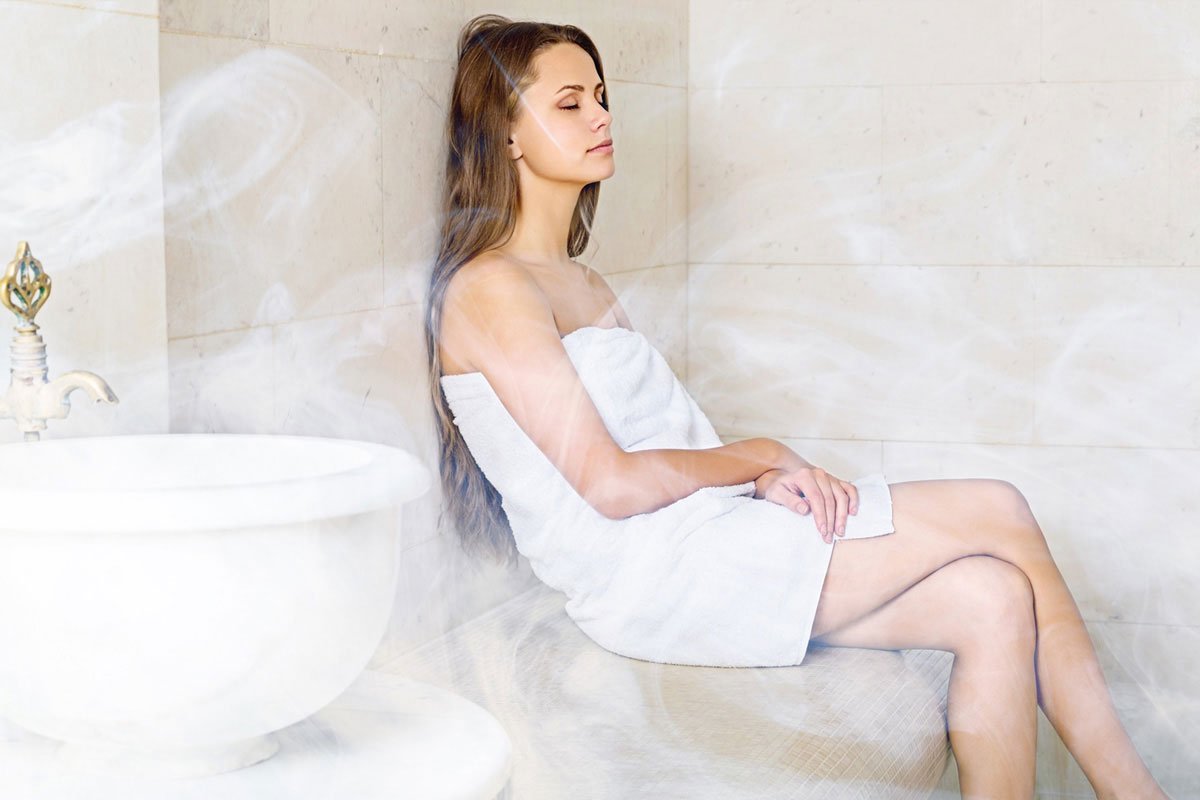
 There’s a version of at-home facial steaming that’s forgettable — a bowl of hot water, a towel draped over your head, a few minutes of warmth before you move on with your evening. And then there’s the version that actually changes how your skin looks the following morning and becomes the ten-minute ritual you genuinely look forward to.
The gap between the two often comes down to two decisions most people never think about: what goes into the water, and which type of water you’re using. Neither requires a specialty store run or expensive equipment. Most of what makes the difference is probably already somewhere in your kitchen.
This guide is for anyone who already steams — or has been curious about starting — and wants to move past the plain-water basics without overcomplicating a ritual that’s supposed to feel restorative, not like homework.
Quick Summary
The most effective steam session upgrades are simple ones: a small amount of dried chamomile or green tea for calming support, one to two drops of lavender essential oil if you enjoy aromatherapy, and distilled water in place of tap. Steam once or twice per week and apply your serums immediately afterward while skin is still warm — that post-steam window is when your routine products can work their hardest.
Why Steam Deserves More Intention Than Plain Water
Most people who steam at home do it the same way every session — boil water, lean over it, try to relax for a few minutes. It works. Steam softens sebum and debris that accumulates around pores, warms the skin surface, and creates a brief window afterward when skincare products tend to spread and absorb more readily. For a ten-minute ritual, that’s a meaningful return.
But plain water steam, while genuinely useful, leaves a few things on the table. Think of it the way you might think about a pot of plain hot water versus a mug of chamomile tea — both are hot water, but one carries a layer of intentionality into the experience that the other doesn’t. Two scientifically supported upgrades — what you add to the water, and the quality of the water itself — can shift the ritual from routine to genuinely restorative without adding complexity or cost.
This distinction matters particularly for people who treat steaming as a dedicated wellness window rather than a purely mechanical prep step. If you’re carving out time twice a week for a steam session, small intentional decisions around those two variables can make each one noticeably more worthwhile. The good news is that none of what follows requires anything you don’t likely already own.
What to Add to Your Steam (And What Belongs Nowhere Near It)
The world of steam additives has gotten cluttered with Pinterest aesthetics and influencer content that prioritizes visual appeal over any real skin benefit. Loose rose petals photograph beautifully scattered in a bowl of water. So does a single orchid. Neither of those is the point.
What actually matters is whether an ingredient’s active compounds are volatile enough to become at least partially present in warm steam — and whether they serve a purpose once they reach skin.
A few categories have earned consistent support:
Dried herbs and botanicals work reasonably well in this format. Their polyphenols and terpenes are sufficiently volatile to carry into steam in small concentrations. Chamomile is one of the most well-regarded options — its active compounds, including apigenin and chamazulene, have documented anti-inflammatory properties that make it a sensible choice for skin use, and it’s mild enough to suit most skin types. Green tea adds antioxidant support through its polyphenol content, particularly EGCG, which has been studied extensively for its effects on skin health and protection against environmental stress.
Essential oils require a genuinely light hand. For most users, one to two drops per full basin of water is a commonly used starting point — these are highly concentrated, and exceeding that amount meaningfully increases the risk of irritation, particularly around the eyes. Lavender is the most forgiving option for most people. Cold-pressed citrus oils — lemon, bergamot, lime — are worth skipping in steam applications, as they contain furanocoumarins that can increase skin sensitivity to UV light when applied topically; the International Fragrance Association (IFRA) sets specific limits on these compounds in leave-on skin applications for this reason. Steam-distilled citrus versions carry significantly less concern, but when in doubt, lavender is the more straightforward starting point.
What to leave out completely: anything thick, oily, or non-dissolving — milk, honey, carrier oils. In a bowl setup they simply sit at the bottom doing nothing for your skin. In a dedicated facial steamer, they can damage the device’s internal components.
If you want specifics — exact measurements, a breakdown of which additives work for which skin types, or a detailed comparison of ingredients — the facial steam additives guide from VivaAuraGlow’s Research Team covers twelve tested additives based on extended internal testing that takes the guesswork out of the decision entirely.
The Ritual Structure That People Actually Stick With
One of the most common reasons steaming gets abandoned after a few weeks is that the first attempt was too elaborate. Gathering six botanicals, setting up candles, creating a full spa atmosphere — it becomes an event, which means it doesn’t happen on a regular Tuesday night when your skin actually needs it.
The version that becomes a consistent habit is simpler. You need a clean face, a heat-safe bowl or a dedicated facial steamer, one chosen additive, and roughly twelve uninterrupted minutes. That’s the whole setup.
Evening tends to work better for most people. There’s no time pressure before work or appointments, and whatever serums you apply afterward have the rest of the night to do their work undisturbed. A loose sequence that holds up well: cleanse first — always before steaming, never after — then steam for seven to ten minutes (five to seven for dry or sensitive skin types), then move immediately into your serum application while skin is still warm.
That post-steam window is brief but genuinely useful. The warmth from steaming may temporarily support product spreadability and feel — a well-recognized effect in skincare that’s worth taking advantage of rather than letting pass while you check your phone.
Why the Water Itself Makes a Measurable Difference
This is the part that most beauty content skips entirely, and it genuinely matters — particularly if you’re using a dedicated facial steamer device rather than a simple bowl setup.
Tap water composition varies considerably by location. In hard water areas, it contains dissolved calcium and magnesium minerals that, when heated and converted to steam, can deposit trace residue on skin. For most people this is a minor point. For those with reactive, sensitive, or rosacea-prone skin, it can be enough to cause post-session irritation that gets incorrectly attributed to the steaming itself rather than the water.
The more immediate practical concern is what hard water does to a steamer device over time. Mineral deposits accumulate inside the heating element and water tank, gradually reducing steam output and eventually shortening the device’s useful lifespan. It’s the same mechanism that causes scale buildup inside kettles — except here, that buildup also affects the quality of the mist reaching your face during each session.
Distilled water reliably reduces mineral buildup and is widely recommended for this reason. It’s available at most grocery stores for roughly one to two dollars per gallon. For bowl-based steaming, the perceptible difference is subtle but noticeable in hard water areas — the steam feels cleaner, and skin tends to feel less tight afterward. For steamer devices, using distilled water consistently is one of the simplest maintenance decisions you can make to protect the investment.
For anyone who wants the full breakdown — how different water types affect steam quality, what scale buildup actually looks like inside a device, and how to troubleshoot a steamer that’s lost output over time — the guide on water quality for facial steamers from VivaAuraGlow’s Research Team covers it in practical detail worth bookmarking before any issues start.
The short version: distilled water is a low-cost change that protects your device and meaningfully improves the consistency of every session.
Common Mistakes That Quietly Undermine the Ritual
A few patterns reliably get in the way of what should be a genuinely beneficial routine:
Steaming too frequently. Once to twice weekly is a commonly recommended guideline for most skin types. More frequent sessions can work against the skin’s moisture barrier rather than support it — the opposite of the intended outcome. Dry and sensitive skin types should lean toward the lower end of that range and monitor how their skin responds before increasing frequency.
Letting sessions run too long. Seven to ten minutes is the range that consistently produces good results. Sessions pushed past twelve to fifteen minutes often leave skin feeling tighter and drier afterward — a sign the session went too long rather than not long enough.
Not following immediately with products. The post-steam window is real but short — roughly five to ten minutes. Steaming and then getting distracted before applying anything wastes the most useful part of the ritual.
Starting with too many new ingredients at once. Adding three botanicals and two essential oils in the same session makes it impossible to evaluate what’s helping and what isn’t. Start with a single addition, use it consistently for two to three weeks, and assess before adding anything else.
Frequently Asked Questions
Does adding something to steam water actually improve skin results?
Yes, with realistic expectations. Botanicals like chamomile and green tea carry active compounds — apigenin, chamazulene, and EGCG among them — that may provide mild anti-inflammatory or antioxidant support when partially present in steam. The effect is subtler than applying those same ingredients directly in a serum, but for people who steam consistently, the cumulative benefit of a well-chosen additive can be noticeable over several weeks of regular use.
Is it safe to add essential oils to facial steam?
Generally yes, in genuinely small amounts. For most users, one to two drops per full basin is a commonly used starting point. Essential oils are highly concentrated, and exceeding that amount increases irritation risk, particularly around the eyes. Cold-pressed citrus oils are worth avoiding due to their furocoumarin content and associated phototoxicity concerns — steam-distilled citrus versions carry considerably less risk, but lavender remains the most straightforward, widely tolerated choice for beginners.
Can I use any heat-safe container for a steam session?
A wide-mouthed heat-safe bowl works well. Whatever you use should be stable, non-porous, and wide enough that your face can hover comfortably eight to ten inches above the surface. The towel-over-head method helps retain steam and extends the useful temperature window of the session, though it’s not strictly required for the steaming itself to work.
Should steaming happen before or after cleansing?
Always cleanse before steaming. Steaming over a face that still has makeup, sunscreen, or daily surface buildup defeats the purpose of the session. A gentle cleanser before you begin ensures the steam is working on clean skin, not pushing surface residue around.
How long should each steam session last?
Seven to ten minutes suits most skin types well. Sensitive and dry skin types benefit from keeping sessions in the five-to-seven-minute range. Sessions beyond ten to twelve minutes consistently produce diminishing returns and, in many cases, leave skin feeling tighter than before — the opposite of what a well-timed session should produce.
Does what you add to steam help specifically with blackheads?
Steam prepares skin by softening sebum around congested areas, making subsequent cleansing or gentle extraction more effective. The additives themselves don’t change this core mechanism — their benefit is primarily in the sensory and skin-conditioning experience of the session. For blackhead-focused steaming, the cleansing or extraction step that follows the steam matters considerably more than what’s in the water.
Beauty Pro Tip
If you’re new to steam additives and not sure where to start, dried chamomile is the lowest-risk entry point for almost every skin type. Use one to two teaspoons steeped directly in your basin water, or brew a strong chamomile tea and use that as the base for your steam. It brings the concept of enhanced steaming into your routine without the concentration risks that come with essential oils, and its well-documented calming properties make it a sensible first step before you explore anything more tailored to your skin type.
Final Thoughts
Facial steaming is one of those rare skincare steps that earns its place precisely because of its simplicity — and the upgrades that genuinely improve it are equally simple. Thoughtful botanical additions, a switch to distilled water, and a consistent post-steam product routine don’t require overhauling what you’re already doing. They just make the ritual more intentional and the results more reliable.
For anyone already comfortable with layered hydration techniques like skin flooding, steaming fits naturally as the prep step that comes before — warming the skin surface and making everything applied afterward feel more effective. Start with one adjustment at a time, give it a few consistent weeks, and let your skin respond before adding anything else.



Leave a Reply