Introducing children to the lives of the saints is a meaningful way to pass on faith, values, and a sense of belonging to the Church’s long history. Saints are not distant, idealized figures; they were people who lived real lives, faced struggles, and responded to God with courage and love. When their stories are presented through engaging narratives and rich symbols, children can more easily understand and remember their examples. Teaching the saints in this way helps young learners see holiness as something approachable and relevant to their own lives.
Why Stories Matter in Teaching the Saints
Children are naturally drawn to stories. Long before they can grasp abstract theological concepts, they understand characters, conflicts, and resolutions. Stories about the saints give children a narrative framework for understanding virtues like kindness, perseverance, obedience, and compassion. Rather than simply telling a child to be patient or generous, a story shows what patience or generosity looks like in practice.
Saint stories also humanize faith. When children hear about Saint Francis of Assisi’s love for creation or Saint Thérèse of Lisieux’s small, hidden acts of love, they begin to see that holiness can be lived in everyday ways. Stories provide an emotional connection, allowing children to admire the saints, ask questions, and even imagine how they might act in similar situations. This narrative approach makes learning about the saints less like memorization and more like relationship-building.
The Power of Symbols and Visual Learning
Symbols play a crucial role in how children learn and remember information. Many saints are traditionally associated with specific symbols—keys, flowers, animals, or objects—that represent their lives or virtues. These symbols serve as visual shorthand, helping children recall important details long after the story has ended.
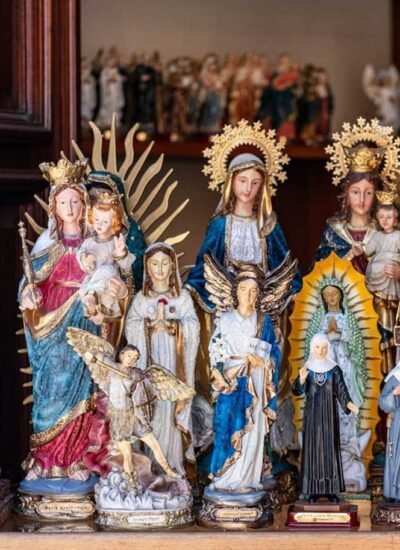
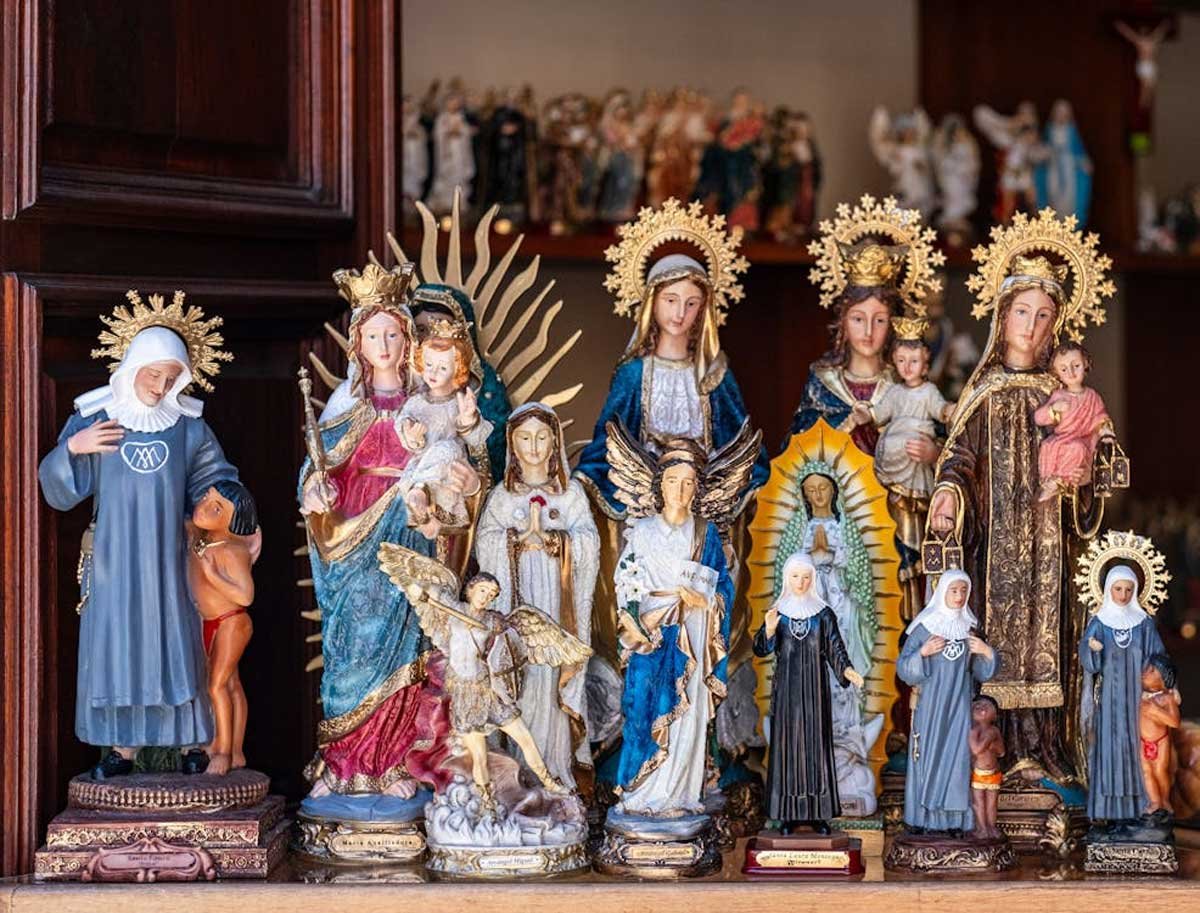
For visual learners, symbols reinforce memory and understanding. A palm branch can remind a child of martyrdom, while a lily may call to mind purity or trust in God. Using images, holy cards, statues, or illustrated books allows children to connect what they hear with what they see. Over time, these symbols become familiar points of reference, making the saints feel recognizable and close rather than distant historical figures.
Making the Saints Relatable to Daily Life
One of the most effective ways to teach children about the saints is to connect their stories and symbols to everyday experiences. When children see parallels between their own lives and those of the saints, the lessons become more meaningful. A child learning about a saint who showed kindness to the poor can be encouraged to look for small ways to help others at home or school.
Practical activities strengthen this connection. Drawing a saint with their symbol, acting out a short story, or celebrating a saint’s feast day with simple traditions helps children internalize what they have learned. Faith-based retailers such as The Catholic Company often offer age-appropriate books, artwork, and devotional items that incorporate both storytelling and symbolism, making it easier for families and educators to create immersive learning experiences. These tangible elements can support thoughtful conversations and reinforce spiritual lessons over time.
Using Saints to Teach Virtue and Identity
The saints provide powerful examples of virtue that children can aspire to without feeling overwhelmed. Each saint’s life highlights particular strengths—courage, humility, forgiveness, or faithfulness—that align well with moral formation. Teaching children to associate these virtues with specific saints and symbols gives them role models they can turn to throughout their spiritual growth.
Saints also help children develop a sense of Catholic identity. Learning that people from every culture, background, and period of history have found holiness shows children that faith is universal and enduring. As they grow familiar with the saints and their stories, children begin to see themselves as part of a larger community that reaches across time and place. This sense of belonging can be especially important in helping young believers feel confident and grounded in their faith.
Encouraging Ongoing Curiosity and Spiritual Growth
Teaching the saints through stories and symbols is not a one-time lesson but an ongoing journey. As children mature, their understanding can deepen, and they may return to familiar saints with new questions and insights. Encouraging curiosity—by inviting children to choose a favorite saint, ask why a symbol is important, or reflect on how a saint handled difficulty—keeps learning active and personal.
Parents and educators can foster this growth by revisiting saint stories throughout the liturgical year. Connecting saints to seasons, feast days, and family traditions reinforces continuity and meaning. Over time, children learn that the saints are companions in faith, offering guidance, inspiration, and intercession as they grow older.
Conclusion
Teaching children about the saints through stories and symbols brings faith to life in a way that is accessible, memorable, and deeply formative. Stories capture attention; symbols strengthen understanding, and both together help children see holiness as something real and attainable. By presenting the saints as relatable models of virtue and faith, parents and educators can nurture spiritual curiosity and a lasting connection to the Church’s rich tradition. In doing so, children learn not only who the saints were, but who they themselves are called to become.




Leave a Reply