
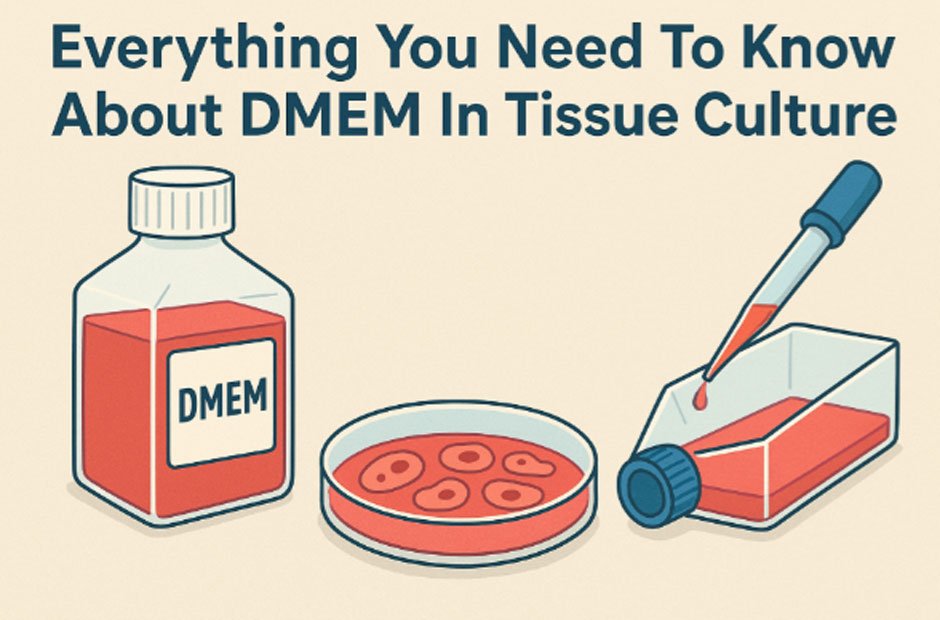
 What facilitates the success of contemporary tissue culture experiments?
Equipment, technique, and experience, of course, all play their role, but the selection of growth medium is still the most important factor towards reproducible results. Of the many culture media now on offer, Dulbecco’s Modified Eagle Medium (DMEM) is one of the most commonly used formulations in cell biology.
Its special composition delivers the vitamins, amino acids, and nutrients needed to feed cell lines, and it is a lab staple all around the world. Whether in simple fibroblast cultures or intricate recombinant protein expression systems, DMEM is a dependable mainstay.
Through investigation of its structure, uses, and benefits, a better understanding can be gained as to why it is so highly regarded across the globe in tissue culture. Read on to learn in-depth about how DMEM supports cellular growth and why it is considered crucial to experimental biology.
Composition and Importance of DMEM Media
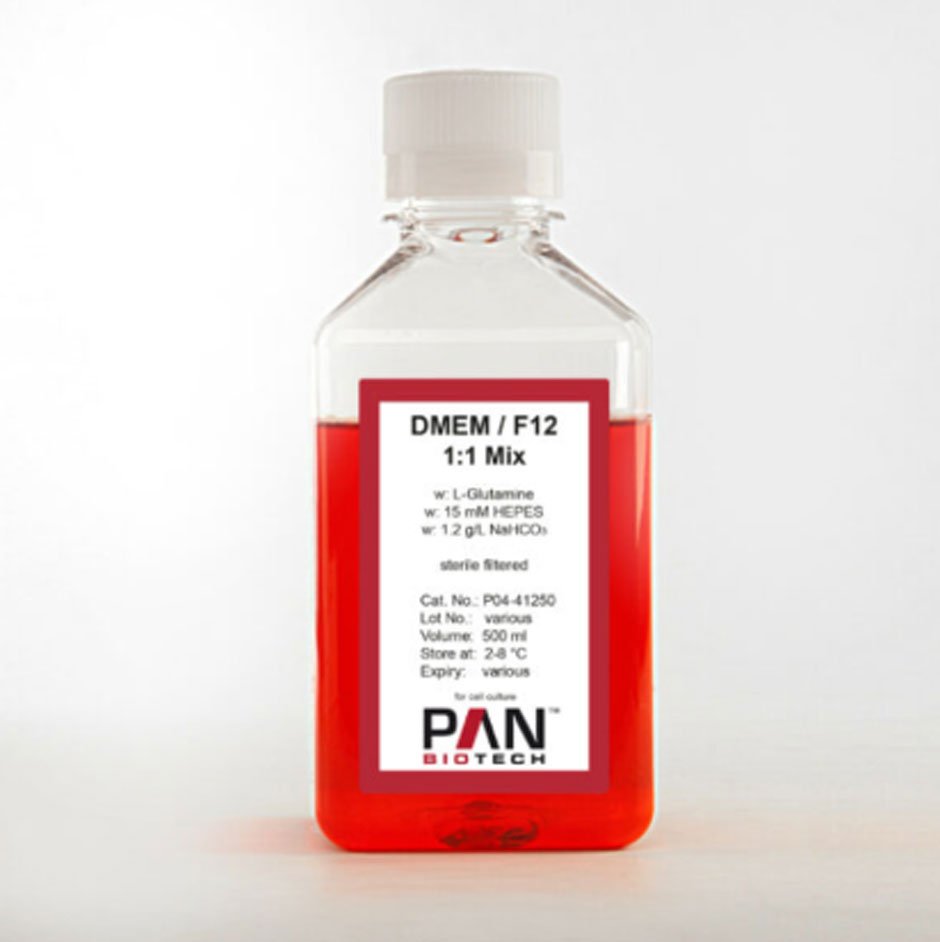
The basis of any cultural system is the nutrition available for cell growth and maintenance. DMEM media is a variation of Eagle’s Minimum Essential Medium, enriched with increased amounts of glucose, vitamins, and amino acids.
This variation was established to provide closer support to high-growth mammalian cells that require greater energy and nutrient intakes than regular formulas can provide. By providing high glucose concentrations, DMEM provides a sustained energy supply, which enables high cell metabolism.
In addition, its balanced composition of amino acids aids in protein synthesis, while salts and vitamins aid in maintaining cellular processes. It is supplemented with trace minerals to simulate physiological conditions more closely, making it usable for many types of cells.
This comprehensive blend has been formulated so it can be used in a broad spectrum of applications to provide consistency. In short, the nutrient formula prepared according to DMEM accuracy provides the optimal state for the cell culture experiment, so that the results of the experimentation remain intact and reliable.
Variants and Customization Options
One of the characteristic advantages of DMEM is that it comes in various versions suitable for particular research uses.
High-glucose DMEM (4.5 g/L glucose), for example, is used to culture metabolically active or growing cells, whereas low-glucose types (1 g/L glucose) more closely replicate conditions for cells grown in highly sensitive cultures to the presence of sugar.
In addition, sodium pyruvate supplementation can be added to supply an alternative energy source for some cultures. Phenol red, a pH indicator that is normally found in most media, permits convenient visual monitoring of medium conditions.
However, phenol red-free preparations are available for sensitive applications such as hormone research. Additional adjustment can be the omission or addition of L-glutamine, depending on the nature of the experiments.
Such features enable precise matching of culture conditions with the particular requirements of individual cell lines. Through flexibility, DMEM allows researchers to modify conditions and ultimately achieve more control over experiments and yield more applicable scientific findings.
Applications in Cell Biology
The potential of DMEM is much more extensive than its general function as a nutrient source. It is of value to a broad spectrum of mammalian cell types, such as fibroblasts, epithelial cells, and some neuronal cultures.
Its makeup makes it especially suitable for transfection experiments, recombinant protein synthesis, and drug discovery studies. For cancer research, DMEM supports tumor cell lines with high metabolic requirements, and in immunology, it offers a stable environment for lymphocyte proliferation.
Stem cell biology also uses DMEM to maintain undifferentiated states or to maintain differentiation pathways, depending on activation. Tissue engineering strategies use DMEM as a basal medium with the addition of growth factors or sera to trigger specialized effects.
Due to its flexibility, DMEM has now become a standard part of scientific research and industrial uses, offering a general template for cell experiments across many fields.
Advantages Over Other Media
When compared to alternative culture media, DMEM offers several clear advantages. Its enhanced nutrient formulation supports a broader range of cell types with greater efficiency, reducing the need for frequent media changes.
The high glucose concentration, in particular, ensures that cells with elevated metabolic demands can thrive without rapid nutrient depletion. Furthermore, DMEM’s adaptability allows it to be modified with specific supplements, offering a customizable platform that is not always available in other formulations.
The widespread use of DMEM also means that it is thoroughly validated across countless studies, ensuring compatibility with standard protocols and reducing the learning curve for new users.
Laboratories benefit from its proven consistency, which minimizes variability in long-term projects. Together, these advantages explain why DMEM has emerged as a go-to medium for tissue culture, combining nutritional richness, adaptability, and proven reliability in one formulation.
Practical Considerations in Usage

Proper handling and preparation of DMEM are crucial for maintaining cell health and ensuring reproducible results. Sterile filtration or purchasing pre-sterilized formulations prevents microbial contamination, while appropriate storage at 2–8°C preserves stability.
Supplements such as fetal bovine serum (FBS) are typically added to provide growth factors, though serum-free culture systems may use defined additives instead. Buffering capacity is another key factor; DMEM is often used with bicarbonate buffering, making it essential to maintain cultures in a CO₂-regulated incubator.
Additionally, researchers should match the formulation of DMEM with the specific metabolic profile of the cells being cultured. Thoughtful consideration of these practical aspects not only extends the longevity of cell lines but also safeguards experimental integrity.
Conclusion
By now, you can see why DMEM is such a cornerstone in tissue culture.
With its nutrient-rich formulation, versatile variants, and proven track record, it gives you the confidence to grow cells successfully and achieve reliable results.
When you match the right formulation to your experiment, you empower your research to thrive in every culture, every time!




Leave a Reply